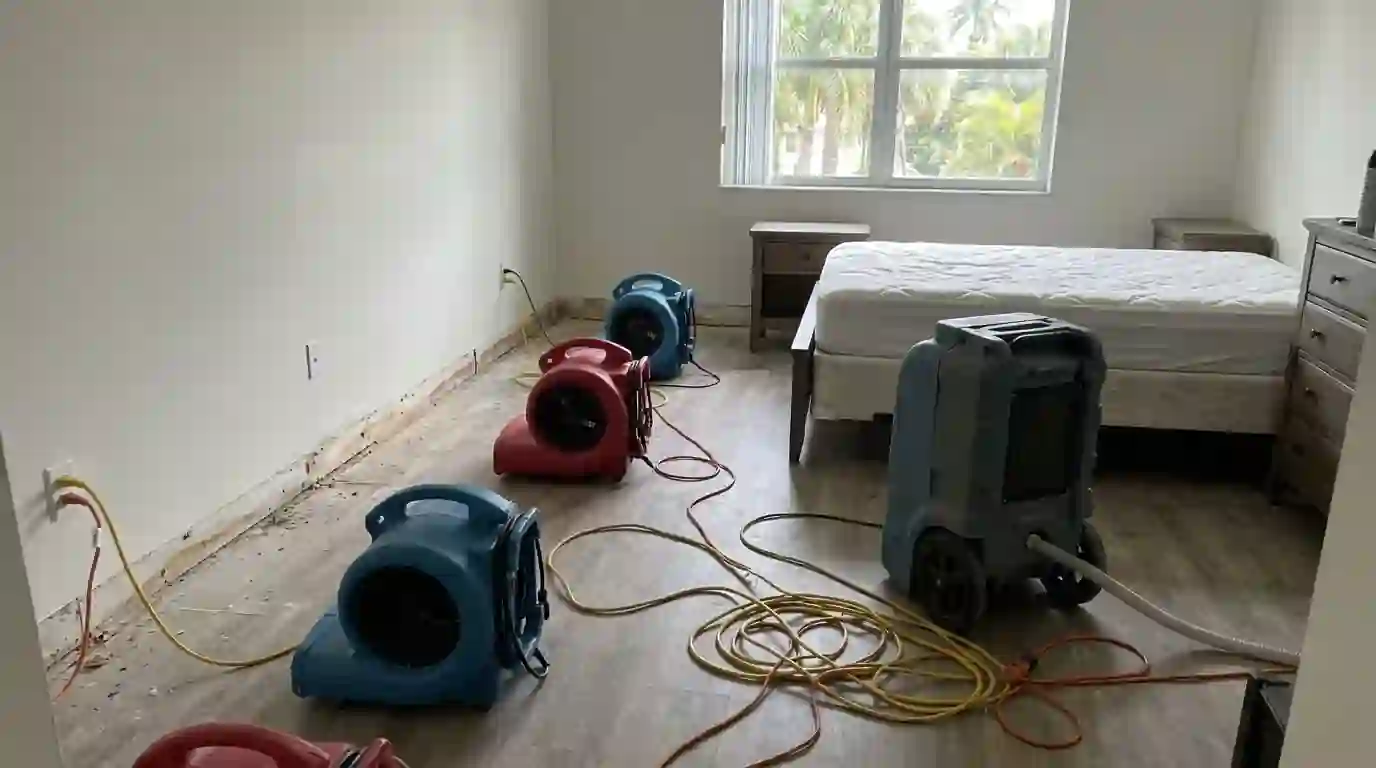
- EPA advises drying wet materials within 24 to 48 hours to prevent mold growth.
- Miami's dew points sit in the low to mid 70s for months, so wet materials dry slowly on their own.
- Indoor humidity between 30 and 60 percent is EPA's target range.
- Mold usually starts out of sight: behind baseboards, under cabinets and inside wall cavities.
Mold spores are everywhere, indoors and out. They do not cause trouble until they land on something damp and organic, like the paper face of drywall, the back of a baseboard or the underside of a cabinet. Give them moisture and a little time and they start growing.
Miami supplies the moisture without any help. That is why the drying window after a leak matters more here than in most of the country, and why the steps you take in the first two days decide whether you are dealing with a water job or a mold job.
What Miami air does to a wet wall
Water leaves a wet material by evaporating into the air around it. The drier that air, the faster the material dries. In Miami, the air is rarely dry. Average monthly dew points at Miami International range from about 58.5°F in January to about 74.4°F in August, and NWS Miami defines the local summer season as the stretch when dew points stay above 70°F, roughly from late May to mid October.
Relative humidity tells the same story. Miami's annual average is about 84% in the morning and 62% in the afternoon. Open a window to air out a wet room in August and you may be letting in more moisture than you are letting out.
Inside the walls, it is worse. A wet drywall cavity has almost no airflow, so the moisture has nowhere to go. A surface that feels dry to your hand can still read wet a quarter inch in, and that hidden layer is where growth begins.
The 24 to 48 hour window
EPA advises cleaning and drying damp or wet building materials and furnishings within 24 to 48 hours to prevent mold growth. That is not a promise that mold appears on hour 49, and it does not mean nothing can grow before then. It is the practical window in which drying stops most growth from getting started.
In Miami, natural drying alone rarely fits inside that window once water has soaked into drywall, carpet pad or cabinet bases. Fans help on surfaces. Real drying needs dehumidifiers to pull moisture out of the room air, air movers to push dry air across wet materials, and in some cases small holes or removed baseboards so air can reach inside the cavity.
The type of water matters too. Clean water from a supply line is the easiest to dry. AC condensate and appliance discharge are gray water, and under IICRC S500 guidelines, untreated gray water can become Category 3 after about 48 hours. The longer water sits, the more the job shifts from drying to removal.
Where mold usually starts first
Growth rarely shows up first in the middle of a wall. It starts where moisture collects and air does not reach. Check these spots after any leak:
- The back side of baseboards and the bottom few inches of drywall.
- Under kitchen and bathroom sink cabinets, especially the particleboard floor of the cabinet.
- Inside the air handler closet, on the platform and the wall behind the unit.
- Carpet tack strip and the underside of carpet pad.
- Behind furniture pushed tight against an exterior wall.
- The ceiling cavity above a bathroom or AC closet that leaked.
Steps that keep a leak from becoming a mold job
Stop the water and get the bulk of it out fast, as described in our first 24 hours checklist. Pull wet rugs, boxes and fabric items out of the room. Lift furniture off wet carpet.
Keep the AC running if the water came from a clean source and the air handler and ducts were not affected, and set it a few degrees cooler than usual so it pulls more moisture. Close windows on humid days. A portable dehumidifier in the wet room helps a lot; empty its bucket often or run its hose to a drain.
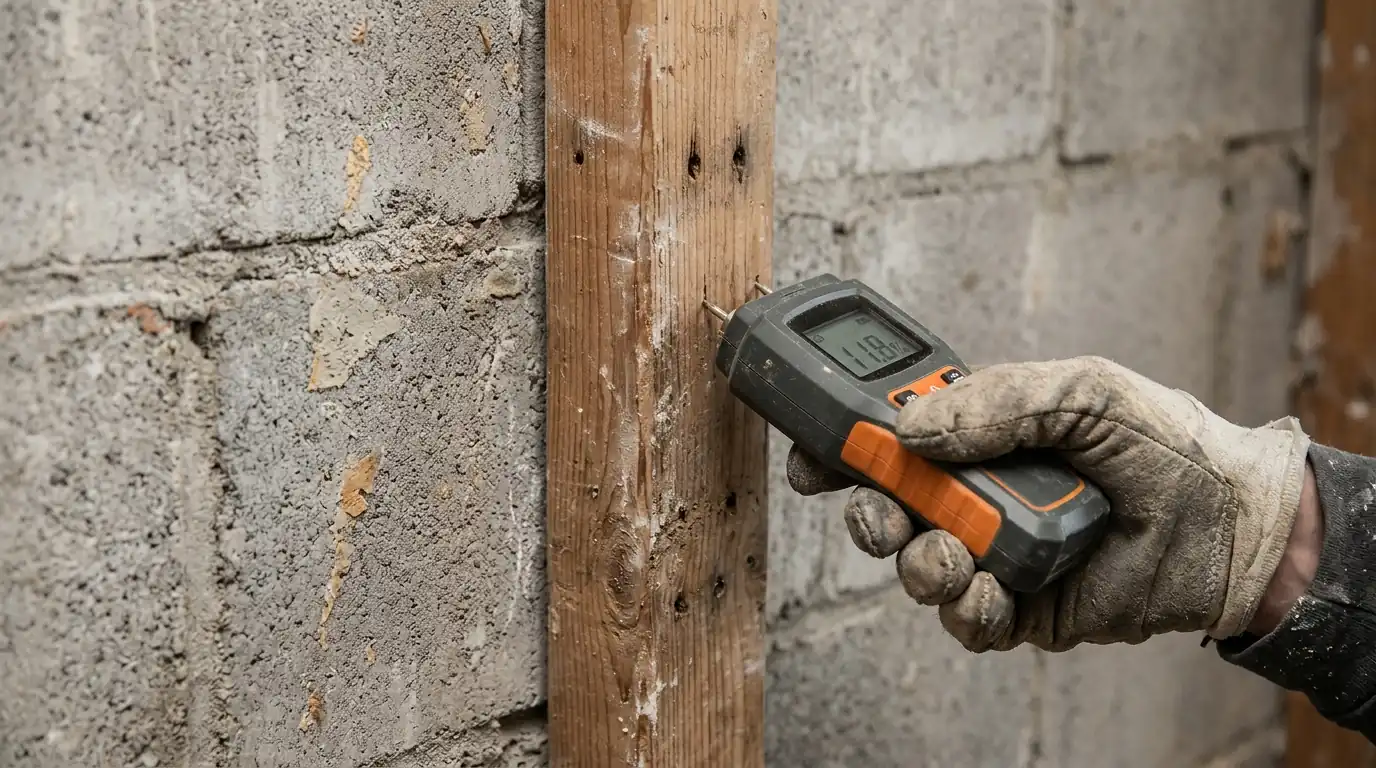
For anything beyond a small surface spill, structural drying with daily moisture readings is the reliable way to know materials reached a dry goal. After flooding, post-flood mold prevention adds cleaning and antimicrobial steps to the drying.
If you already see or smell mold
A musty smell that grows stronger when the AC starts or when you open a closet usually means growth is already underway somewhere. Spotting on drywall, a fuzzy patch behind a baseboard or dark staining on a closet platform confirms it.
EPA says a moldy area under about 10 square feet, roughly 3 feet by 3 feet, can usually be cleaned by the homeowner, while larger areas, extensive water damage or sewage contamination call for an experienced professional. Fix the moisture source first, or the growth will come back.
Florida separates mold assessment from remediation, and the same company cannot do both on the same job. If you want testing, an independent licensed mold assessor handles that, and a remediation crew handles mold remediation. Our article on mold assessors versus remediators explains how the two roles fit together.
Keeping indoor humidity in range all year
EPA recommends keeping indoor humidity between 30 and 60 percent. A cheap digital hygrometer tells you where your house sits. If readings stay above 60 percent with the AC running, the system may be oversized, the thermostat fan may be set to on instead of auto, or there may be a hidden leak adding moisture.
Run bathroom exhaust fans during showers and for a while after. Keep closet doors cracked in summer so stale air does not sit. Keep AC drain lines clear. Small habits like these cut the background moisture that turns the next small leak into a bigger problem.
Common questions
Will bleach stop mold from growing on wet drywall?
Bleach can lighten surface staining on hard, nonporous surfaces, but it does not fix the real problem, which is moisture inside the material. Drywall paper and the gypsum behind it stay wet and can keep growing mold under a bleached surface. Drying the material, or removing it when it is too far gone, is what stops growth.
Do I need to worry about mold if the leak was small and dried quickly?
A small clean-water spill wiped up the same day on tile or sealed surfaces is unlikely to cause mold. The risk rises when water soaked into drywall, carpet pad or particleboard and sat there for more than a day. If you are unsure, a moisture meter reading on the nearby wall settles it.
Why does my house smell musty only when the AC kicks on?
That pattern often points to growth near the air handler, on the coil, in the drain pan or on the closet walls around the unit, so the smell gets pushed through the house each cycle. Check the closet for standing water or staining. A clogged condensate drain is a common cause in South Florida.