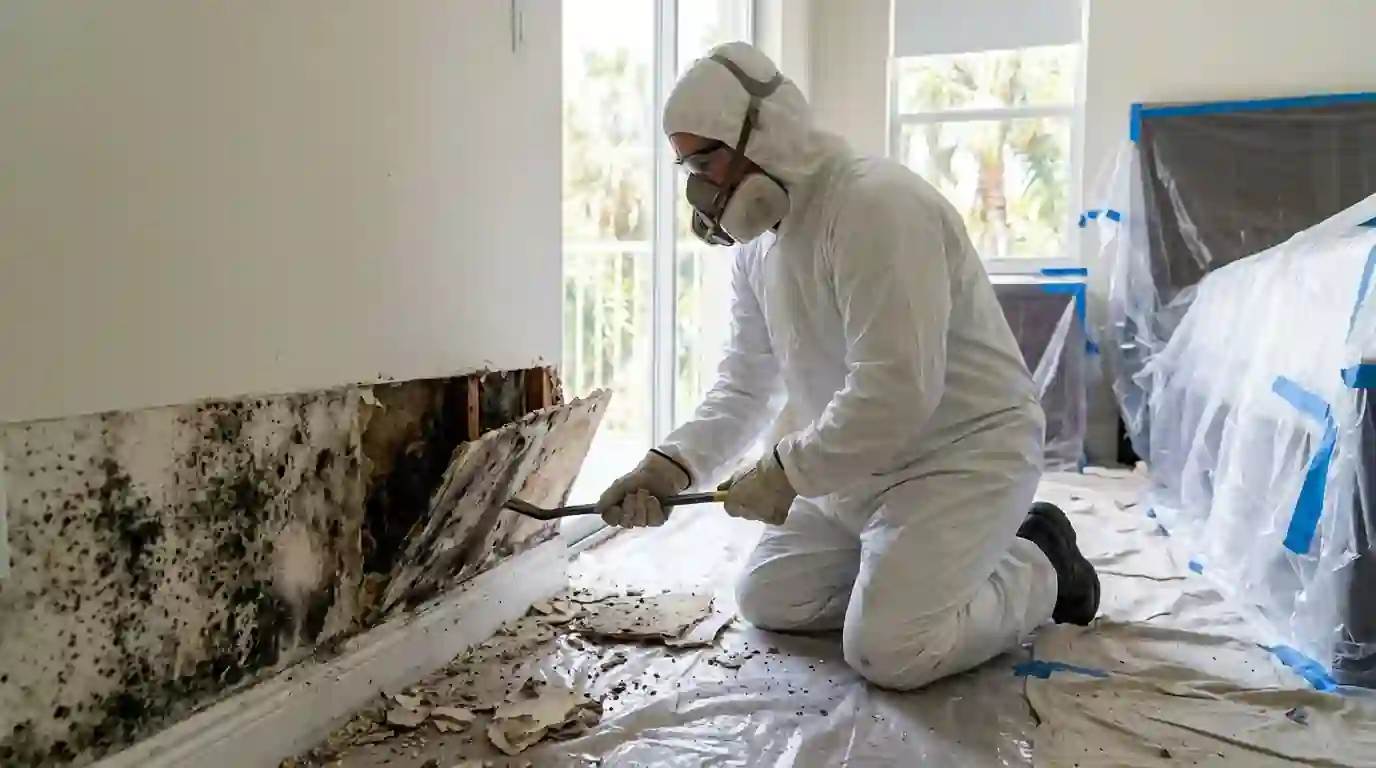
Dark mold is removed the same way as any other mold growth: contain the area, cut out porous material it has rooted into, HEPA vacuum and clean the framing, then dry and fix the moisture source. Color does not change the method. If you want to know the species, an independent licensed mold assessor can sample it before we start.
Homeowners usually call us after reading that black mold is a special category of danger. Here is the plain version. Many kinds of mold look dark green, gray or black, and you cannot tell which one you have by looking at it.
What matters for removal is how big the patch is, what it is growing on and why that spot stayed wet. Those three things set the containment, the tear-out and the drying plan, whatever shade the growth happens to be.
What the color of mold can and cannot tell you
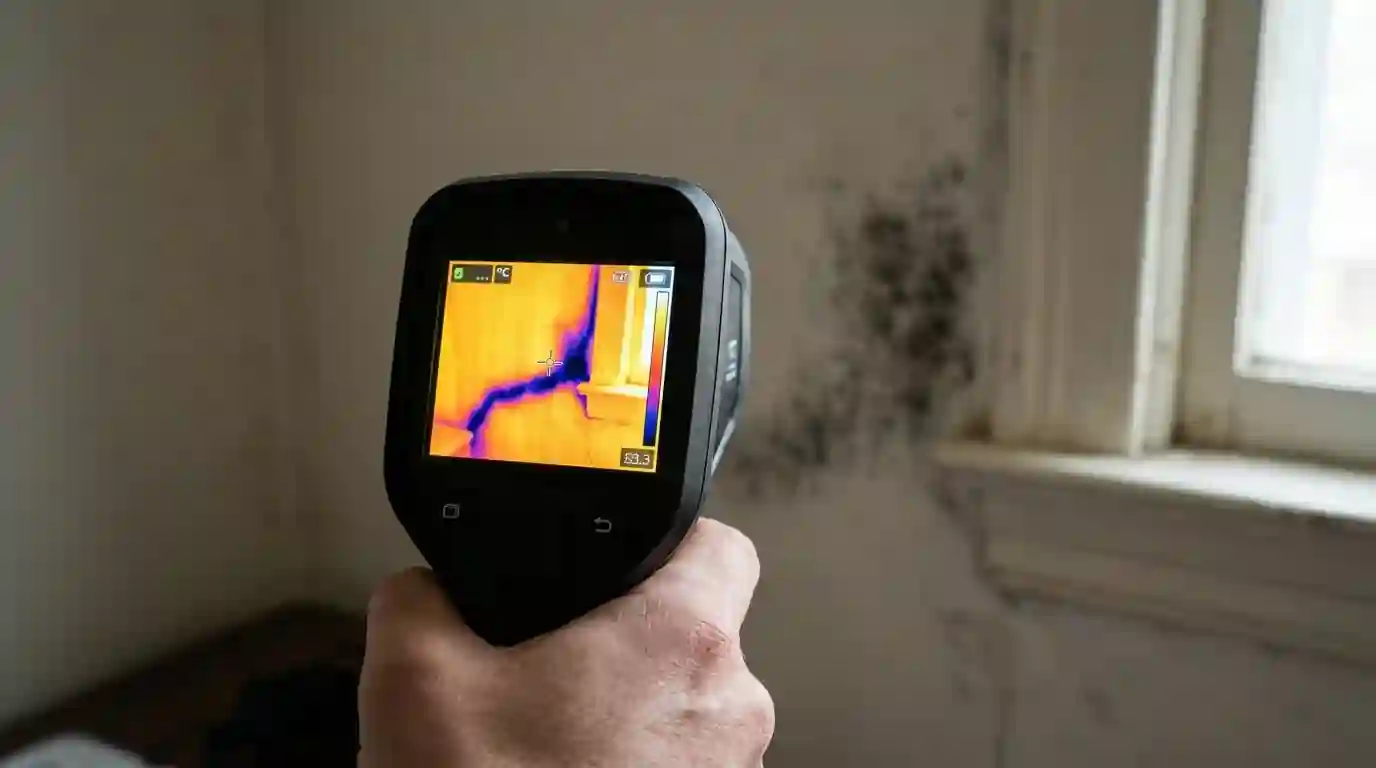
Dark coloring comes from pigments in the mold and from what it is growing on. Several common household molds are dark, and some that are usually lighter turn darker as they age. So a black patch is not automatically one species, and a green one is not automatically harmless.
Identifying a species takes sampling and a lab, which is the job of an independent licensed mold assessor in Florida, not the remediation crew. We do not test, and we do not guess at species from photos. If knowing the type matters to you, a buyer or your landlord, hire an assessor before we begin.
For general health questions, EPA guidance treats all indoor mold growth as something to remove and keep from returning, without ranking colors.
Why removal follows size and material, not shade
A dark spot the size of your hand on a painted bathroom ceiling and a 40-square-foot patch inside a wall after a leak are very different jobs, even if they look the same color. The first may be a simple cleaning. The second needs containment, tear-out and drying.
Material matters just as much. Mold on tile, concrete or sealed wood can usually be cleaned off the surface. Mold that has grown into drywall paper, ceiling board, carpet pad or insulation has fibers you cannot scrub out, so that material gets cut out and bagged.
EPA puts the line for do-it-yourself cleanup at about 10 square feet, roughly 3 feet by 3 feet. Above that, or when the growth came from sewage or extensive water damage, professional removal is the safer route.
- Small surface patch on a hard finish: often cleanable
- Growth inside drywall or insulation: cut out and bagged
- Over about 10 square feet: professional removal
- Tied to sewage or floodwater: treated as contaminated