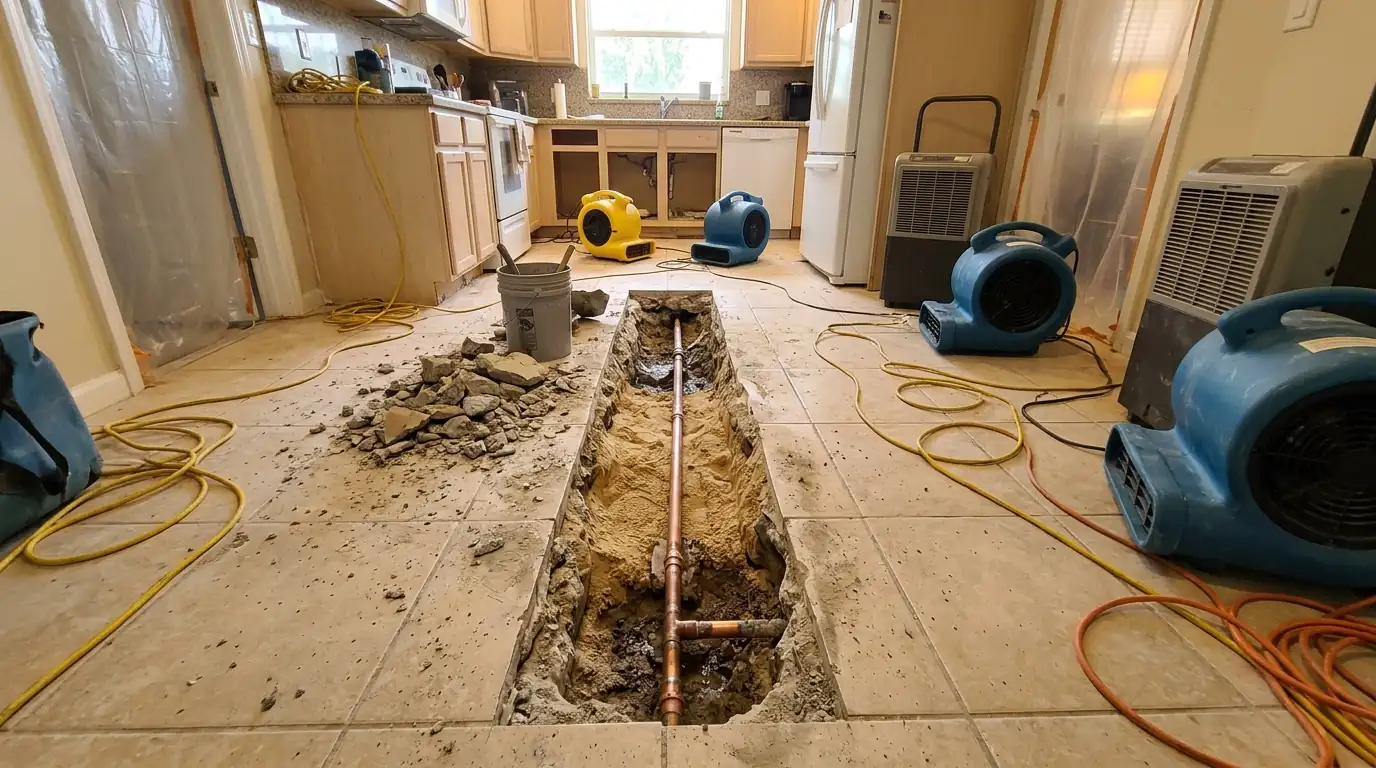
Watch your water meter with every fixture off; if the dial moves, call a plumber who handles slab leaks. Once they find and repair the line, a restoration crew dries the slab, the tile and the walls, removes damaged flooring and baseboards, and patches the opening in the floor. Concrete dries slowly, so the drying stage often takes longer than the pipe repair.
Almost every Miami home sits on a concrete slab with water lines and drains running through or under it. When one of those lines fails, water has nowhere to go but up through the concrete, sideways under the tile and into the bottom of the walls.
Slab leaks are a two-trade job. A leak specialist or plumber finds and repairs the pipe, either by opening the floor or by rerouting the line. The restoration crew deals with the water that already came through and puts the floor and walls back together.
Supply lines versus drain lines under the slab
Supply leaks are pressurized. They run all the time, raise the water bill and can make a floor warm when the hot line is involved. Water from a supply line starts out clean, which helps the restoration side.
Drain leaks only run when a fixture drains, and the water is not clean. In older South Florida homes, often those built before about 1974, cast-iron drain pipes tend to thin at the bottom, develop pinholes and wash out the soil under them. That kind of leak brings contaminated water and can affect how the slab is supported.
The type of line matters for cleanup. Drain-line water is handled as contaminated, and porous materials it touched are removed rather than dried, which our sewage backup cleanup process covers.
Concrete dries on its own schedule
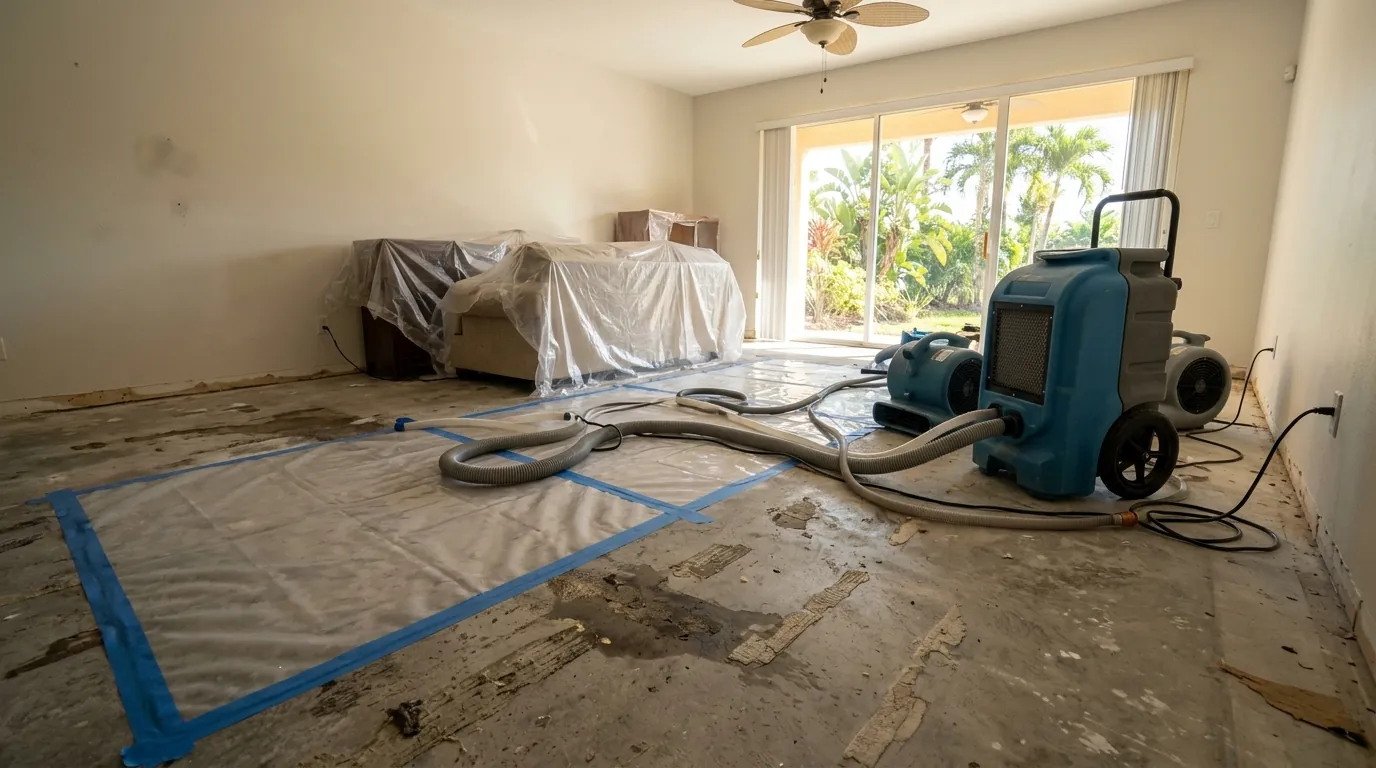
Concrete is dense, and restoration guidelines treat it as Class 4 specialty drying. Water soaks deep into a slab, then gives it up slowly through the surface, the grout lines and the base of the walls.
Miami's humidity slows it down further, so the crew uses low-humidity dehumidifiers, airflow across the floor and sometimes drying mats. Readings are taken in the concrete and in the walls, and structural drying continues until the slab matches a dry reference elsewhere in the house.
Rushing this stage leads to problems later: flooring adhesive that fails, wood or laminate that cups and baseboards that swell again.