Skip to content
Water, fire, storm and mold calls answered 24/7 across Miami-Dade and Broward(786) 664-2643
New KingstonWater & Restoration · Miami(786) 664-2643Answered 24/7
After the bolt

Lightning strike damage repair in Miami

A crack right overhead, a flash at the outlets, then the smell: lightning that hits a house or lands close by can start an attic fire, punch through the roof or burn out wiring inside the walls.

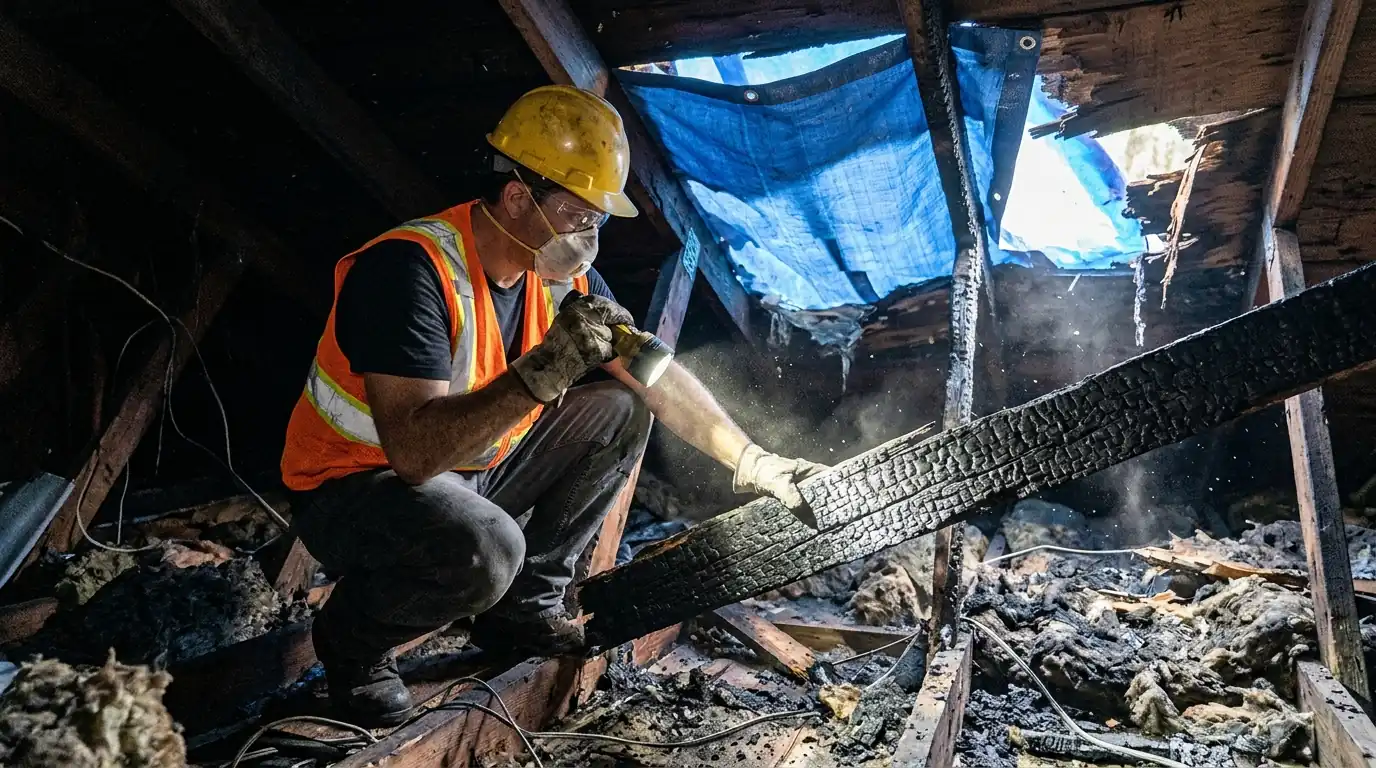
Restoration technician inspecting charred roof trusses in a Miami attic after a lightning strike, a blue tarp visible over the roof opening
Quick answer

If lightning hit your home, get everyone out and call 911 if you see or smell smoke, even with no flames, because attic fires can smolder. After the fire department clears the house, a licensed electrician checks the wiring. Our crew tarps and boards openings, cleans fire and smoke residue, dries any water and rebuilds what was damaged.

Summer storms build over South Florida on many wet-season afternoons, and lightning comes with them. Most strikes never touch a house, but one that does, or that hits a tree or pole beside it, can damage the structure in several ways at once.

You may have a scorched truss, a hole letting rain in, smoke through the attic and a dead circuit from one strike, and the repair has to take them in the right order.
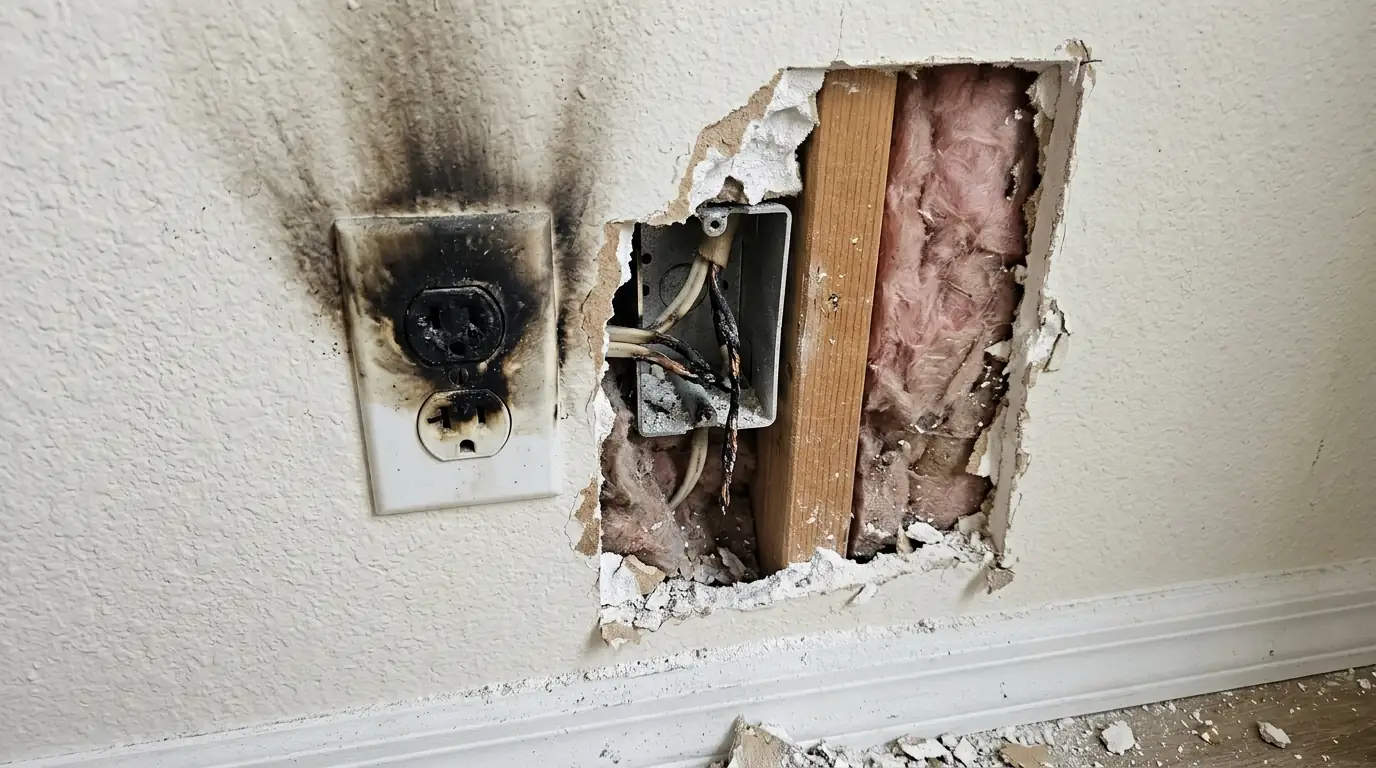
Close view of a scorched wall outlet beside an opened section of drywall in a South Florida home after a lightning surge

One strike, several kinds of damage

Lightning carries a huge amount of energy for a split second and takes the easiest way to ground, through a roof vent, metal flashing, a satellite mount, the wiring or the plumbing. Wherever the current meets resistance it makes heat, and heat in an attic full of wood and dust can start a fire.

So one strike can leave several jobs: fire at the entry point, smoke through the attic and rooms, an opening for the next rain, and wiring damaged even where nothing looks burned. A bolt that hits a pole or the ground nearby can also push a surge in through the service line, leaving no scorch mark at all.

Closing the house up safely

If any part of the house smells of smoke, leave and let the fire department check the attic and walls, and stay out of rooms under damaged roof.

Once the house is released, our crew covers every opening: a secured tarp over a roof puncture through emergency roof tarping, and plywood over glass broken by the blast or by firefighters. Soaked insulation and drywall come out right away instead of sitting wet in a hot attic, and hose water is extracted and dried like any other leak.

What the electrician handles and what we handle

Lightning can melt wire insulation, crack outlet boxes and damage the panel in ways only an inspection finds. That inspection, any rewiring and any panel or surge protection work belong to a licensed electrician under their own permit, and our crew stays off live circuits entirely.

We open the walls and ceilings the electrician needs to see, remove charred framing and insulation, and clean the oily soot burned wire leaves in a cavity. A fire inside a wall overlaps with our electrical fire damage process, and walls stay open until the electrical repair passes inspection.

Signs to act on

When to call about lightning strike damage repair

  • A burning smell from the atticLightning can ignite wood or insulation up there, and a fire may smolder for a while before smoke shows in the rooms below.
  • Cracked tiles or a small hole in the roofA strike can shatter roof tile, split decking or leave a charred puncture where it entered.
  • Scorched outlets or switch platesBlack marks on outlets in different rooms mean a surge traveled through the wiring.
  • Fresh cracks near the rooflineThe heat and force of a strike can crack stucco or chip block, often near a vent, chimney or tall corner.
  • A split tree close to the houseA strike on a nearby tree can send current through the ground into pipes or wiring, or drop heavy limbs on the roof.
  • Several devices dead at onceAn AC, a garage door opener and a TV failing after one storm points to a surge an electrician should trace.

Attic fire and smoke cleanup

A lightning fire usually burns trusses, decking, insulation and roofing felt, leaving heavy residue under the roof. Smoke drops through recessed lights, the attic hatch and the AC return into the rooms below. The crew works to ANSI/IICRC S700:2025, which sets out residue and odor assessment, source removal and HVAC cleaning for fire and smoke jobs.

Charred framing is removed or, where still sound, cleaned and sealed. Soot is tested and cleaned with the method that suits it, and lingering smell is treated at its source with odor removal rather than masked.

Badly burned trusses may need an engineer's framing design first, then your roofer replaces the covering.

Rebuilding and the claim file

With the electrical work signed off and the structure dry and clean, New Kingston rebuilds the interior: framing, insulation, drywall, texture, paint and trim, scheduled so each trade comes in once.

Your file holds photos of the entry point, the attic, every open wall and each room with residue, plus moisture logs and the scope. State law (section 489.147) keeps contractors out of coverage decisions and claim adjusting, so policy questions go to your agent or adjuster; the claim help page shows how the records are organized.

How the job runs

From your call to a finished room

  1. Wait for fire department clearanceNobody goes into the attic or opens walls until firefighters confirm no fire is left in the structure.
  2. Cover the roof and openingsTarps go over roof punctures and plywood over broken glass so the next storm cannot add more water.
  3. Remove what burned and what is soakedCharred insulation, damaged framing and wet drywall come out and are bagged, with photos of each.
  4. Open up for the electricianWalls and ceilings along damaged circuits are opened so the electrician can inspect and repair them.
  5. Clean, dry and deodorizeSoot is cleaned from the attic and rooms, the structure is dried to goal, and odor is treated where it starts.
  6. Rebuild after inspectionsFraming, drywall and finishes go back once the electrical work passes and the roof repair is done.

Questions

Lightning Strike Damage Repair questions

Lightning hit a tree in my yard. Could my house be damaged too?

It can be. Current from a tree strike can travel through the ground into buried pipes or the electrical service, and a split trunk can drop limbs on the roof. If devices died or you smell burning, have an electrician check the house.

How can I tell if there is still fire in the attic?

Often you cannot from below, which is why the fire department should check after any strike on the roof. Warm ceiling spots, a smoke smell that keeps growing or haze near the attic hatch mean leave and call 911.

My electronics died but nothing looks burned. Is that lightning damage?

Often it is a surge from a nearby strike coming in on power, cable or phone lines, and the same surge can damage hidden wiring. Have an electrician check the panel, and keep and photograph the dead devices for your insurer.

Does a lightning strike mean the whole roof has to be replaced?

Not always. Many strikes damage a small patch of tile, shingle or decking around the entry point. Your roofer decides on the covering, while we tarp it and repair the interior and burned framing below.

Is lightning damage handled as a fire claim or a storm claim?

That depends on your policy and how your insurer classifies the loss, and a contractor cannot interpret coverage. Our part is one clear record of the fire, smoke, water and roof damage for your adjuster.

Water, smoke or storm damage right now?

Call (786) 664-2643. A person answers at any hour, asks what happened, and tells you what to do while the crew gets moving.

Call (786) 664-2643 · 24/7