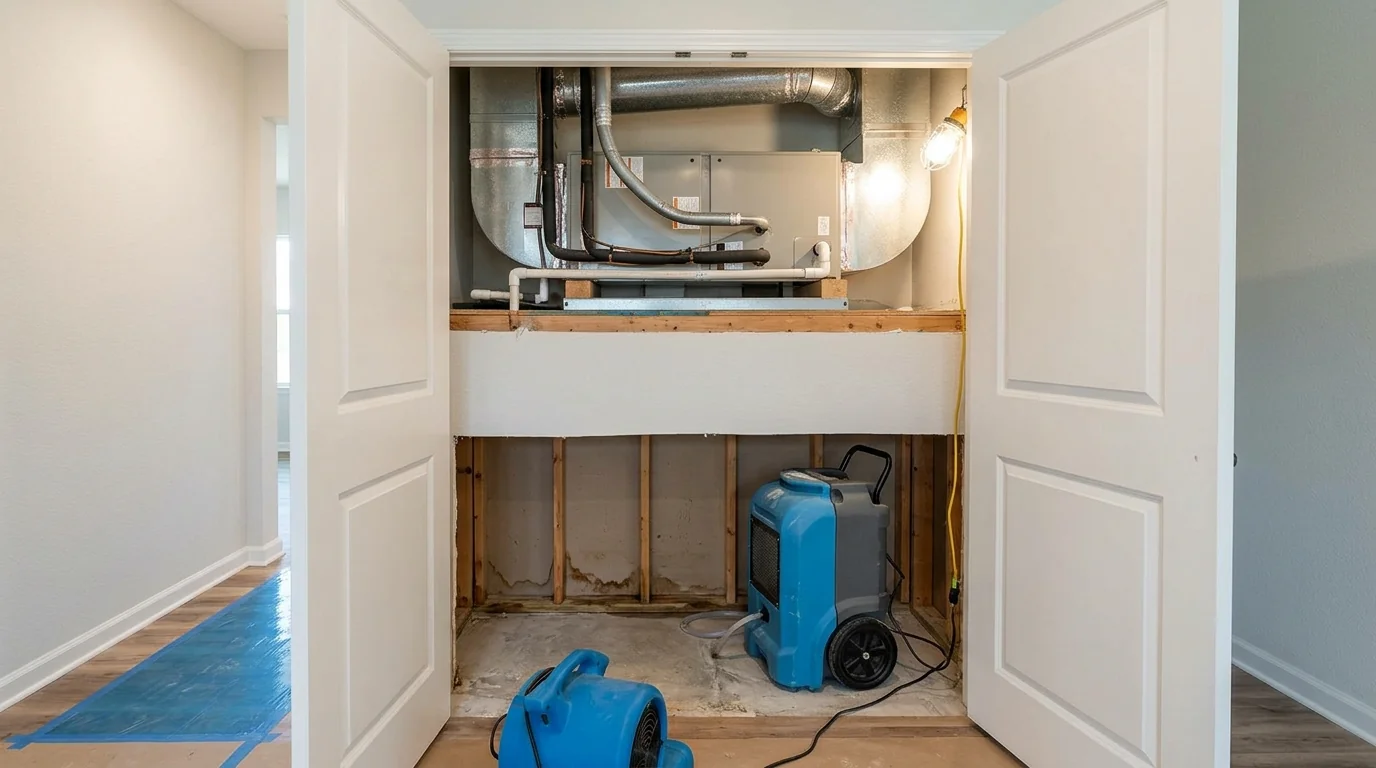
If water drips from your AC closet or a ceiling stain appears below the air handler in Miami Lakes, turn the system off and catch the water. A clogged condensate line is the usual cause. The crew dries the closet, wall and floor, removes wet drywall and any mold growth, and you have an HVAC tech clear the drain.
Miami Lakes grew on former Graham family dairy land starting in 1962, master-planned with curving roads, tree-lined streets and lakes behind many of the lots. The homes include single-family houses, townhomes and garden condos, and a large share were built between the 1960s and the 1980s.
Those decades matter for water damage. Air handlers sit in hall closets or garages, original water heaters and supply lines have been replaced unevenly, and roofs are aging. Add high groundwater and low lots that drain slowly in heavy rain, and a home here deals with moisture from inside and outside at once.
How a condensate line floods an AC closet
An air handler pulls gallons of water out of the air on a humid day. It collects below the coil and leaves through a narrow PVC drain. Once algae builds up in the trap, that drain stops, the pan fills, and the overflow ends up on the closet floor, the wall behind it, and sometimes the ceiling below in a two-story townhome.
Because it leaks slowly, this kind of damage often goes unnoticed for weeks. By then the bottom of the drywall is soft and the baseboard has swollen. AC leak water damage explains how the crew opens, dries and rebuilds the area.
Mold around the platform and return
The return air path in older closet installs often runs through a wood platform or a drywall-lined chase, and both soak up condensate. Dark growth around the platform base or on the back of the closet door is a common sign. EPA guidance treats areas larger than about 10 square feet as work for a professional.
The crew sets containment, removes moldy drywall and wood, cleans framing and dries it before rebuilding. Air handler closet mold cleanup covers that sequence. Florida keeps assessing and remediating as separate licensed jobs, so sampling and the final clearance check belong to an outside assessor of your choosing.
- Stains or soft drywall at the base of the AC closet
- A musty smell when the system starts
- Rust or standing water in the drain pan
- Swollen baseboard in the hallway outside the closet