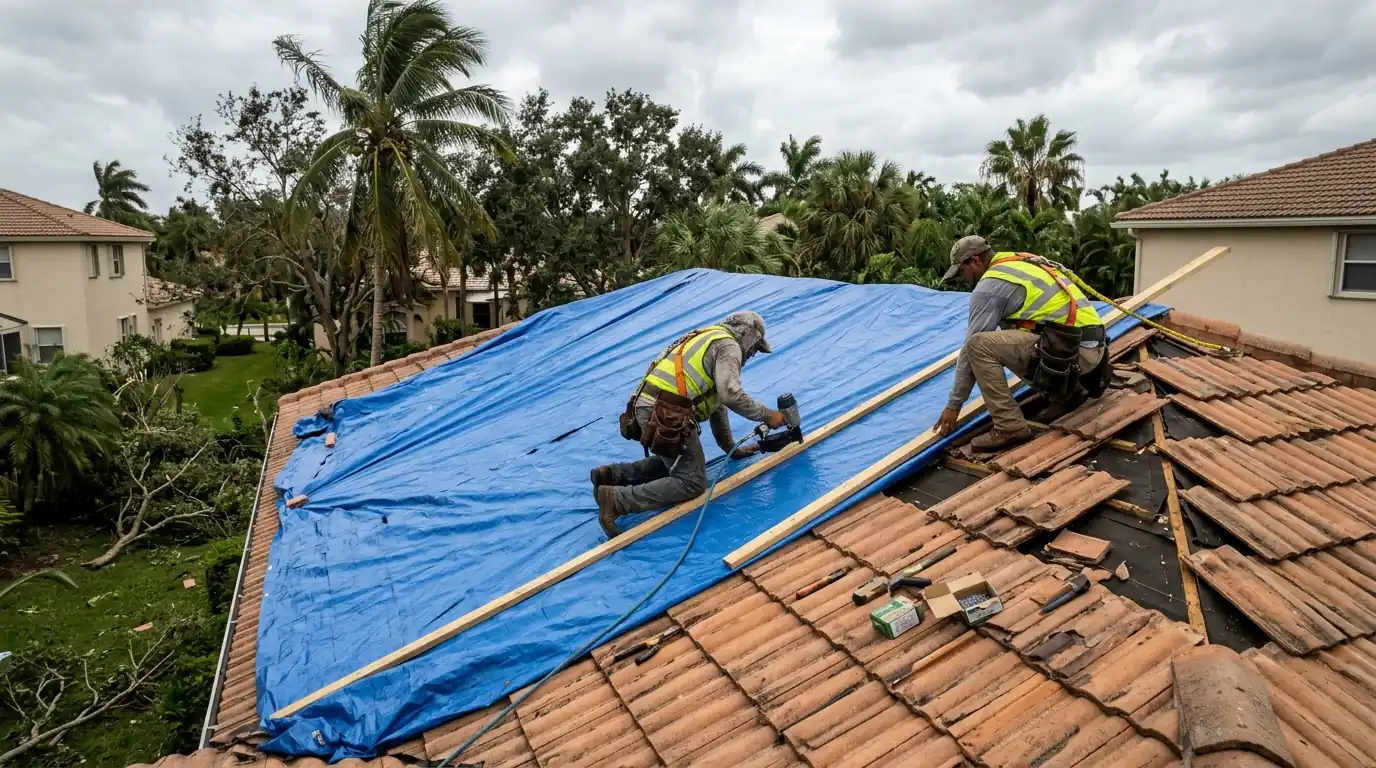
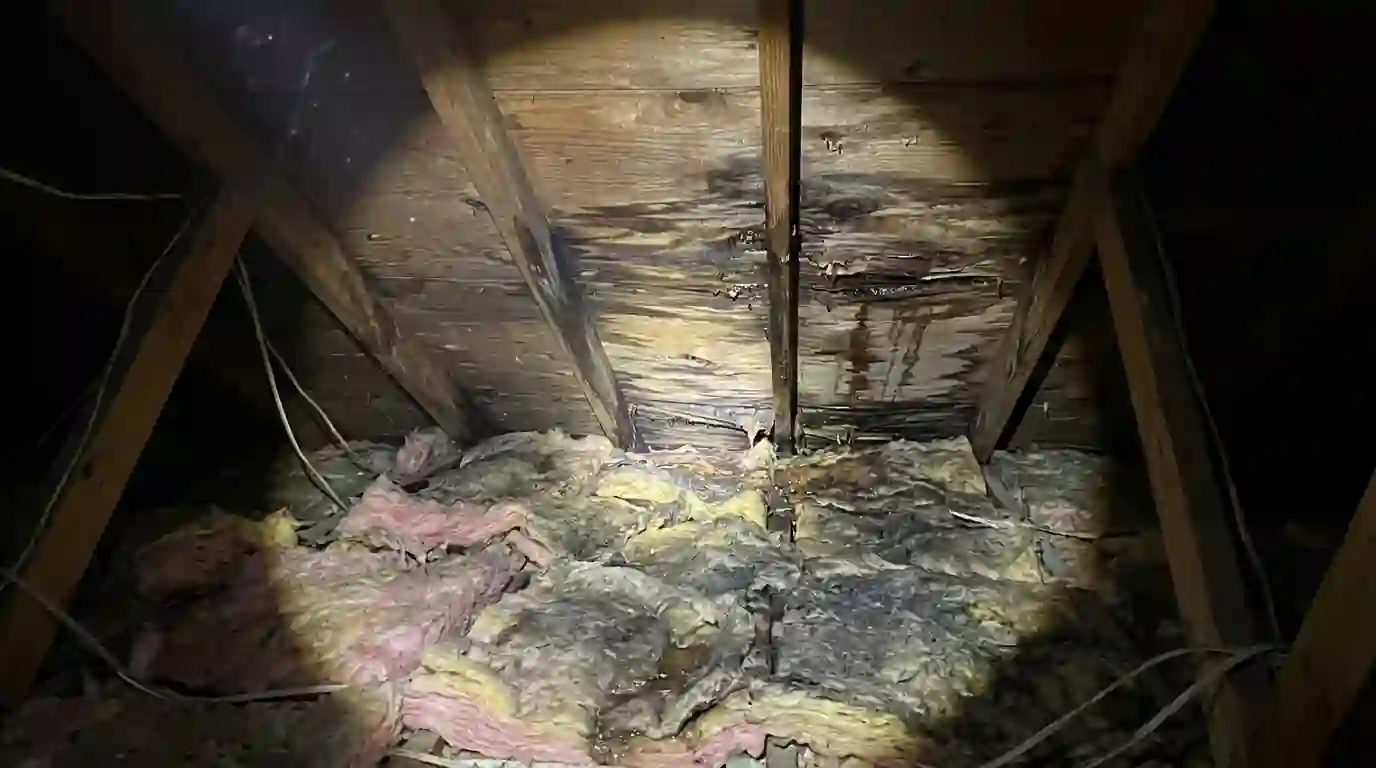
Emergency tarping covers damaged roof areas with heavy tarp held by wood battens fastened through to the decking, run over the ridge where possible, so rain sheds off and wind cannot lift it. It is temporary protection until a roofer makes the permanent repair. The crew also checks the attic and the ceiling below and starts drying anything that already got wet.
A tarp is a temporary cover that keeps rain out until a roofer can repair or replace the roof. Done right, it extends well past the damaged area, runs over the ridge so water sheds off rather than under it, and is fastened so wind cannot get beneath the edges.
We tarp and we repair the inside of the house. New Kingston is not a roofing company and does not replace roofs, but a tight tarp buys the time it takes to line up a roofer, a permit and materials, which after a big storm can take a while.
How a tarp is secured so it holds
A tarp only works if wind cannot get under it. We size it to extend past the damage on every side, run it over the ridge when the damage is on a slope, and fasten it with wood battens so the load spreads along a line instead of a few points.
On tile roofs we work carefully, because loose or cracked tiles slide and walking on them can break more. On low-slope and flat sections, the tarp is laid so water drains off the edge rather than pooling in the middle.
Miami-Dade and Broward sit in the Florida Building Code's High-Velocity Hurricane Zone, and a tarp here has to stand up to strong gusts and sideways rain. If a storm passes before the roof is fixed, call so we can check the edges and re-secure anything loose.
Why you should stay off the roof
A loose tarp catches wind like a sail, and wet tile and damaged decking can give way underfoot. Storm-damaged roofs are no place for a ladder and a box of nails.
If water is coming in, work from inside instead: move furniture, set out buckets and keep people out of rooms where the ceiling is stained or sagging. Then call so a crew can cover the roof.