
- A full set of baseline photos and video is the single most useful thing you can make before a storm.
- Know where your water main, gas shutoff and electrical panel are, and test them.
- Keep policies, IDs and contacts in one waterproof kit plus a copy in the cloud.
- Clear access to the attic hatch, air handler and water heater so a crew can work quickly.
Most hurricane checklists focus on the storm itself: food, water, batteries, shutters. That list matters. This one covers a different job, the one that starts after the wind drops, when you need to show what the house looked like before, shut off utilities fast and give a crew enough information to start drying on the first visit.
The Atlantic hurricane season runs from June 1 through November 30, with the climatological peak around September 10 and most activity between mid-August and mid-October. If you do this work in early summer, you only have to do it once a year.
Shoot a baseline video of the whole house
After a storm, the hardest question to answer is often what was already there. Was that ceiling stain old? Were those cabinets already swollen? A dated walkthrough video settles it. Start outside: each side of the house, the roof from the street, windows, doors, fences, the pool area and any trees close to the structure.
Then walk every room slowly. Open closets and cabinets. Film ceilings, flooring, the inside of the garage and the air handler closet. Say out loud what you are looking at, including brands and rough ages of appliances, electronics and furniture. Take still photos of model and serial number labels on the water heater, AC, washer, dryer and refrigerator.
Upload the files to cloud storage so they survive if your phone does not. Repeat the walkthrough after any renovation or major purchase, and once a year at the start of the season.
Find and test every shutoff
When water is coming through a ceiling at night, nobody wants to be searching for the main valve with a flashlight. Locate it now, along with the gas shutoff if you have one and the main electrical breaker. Turn the water valve off and back on once to make sure it actually moves; old gate valves sometimes seize after years of sitting still.
Label the panel if the breakers are not marked. Keep a valve key or wrench next to the meter box. In a condo, ask management where your unit shutoff is and how to reach the building engineer during a storm, then write that number on the inside of a kitchen cabinet door.
- Water main or unit shutoff, plus individual valves at toilets, sinks and the water heater.
- Main breaker and the circuits for rooms with floor outlets.
- Gas meter shutoff and the tool needed to turn it.
- The AC disconnect near the outdoor unit.
Build a document kit you can grab in one trip
Put copies of your homeowners policy declarations page, any flood policy, your mortgage company's contact details, IDs and a list of important phone numbers in a waterproof bag or small lockbox. Add a printed copy of your baseline photo list and a few blank pages for notes.
Read your declarations page now, not after the storm. Note your hurricane deductible and whether you have separate flood coverage. FEMA says most homeowners and renters policies do not cover flood damage, and NFIP policies typically have a 30-day waiting period, so a flood policy has to be in place well before a storm is forecast. Our guide to flood versus water damage coverage explains the difference in plain terms.
Make the house easy for a crew to work in
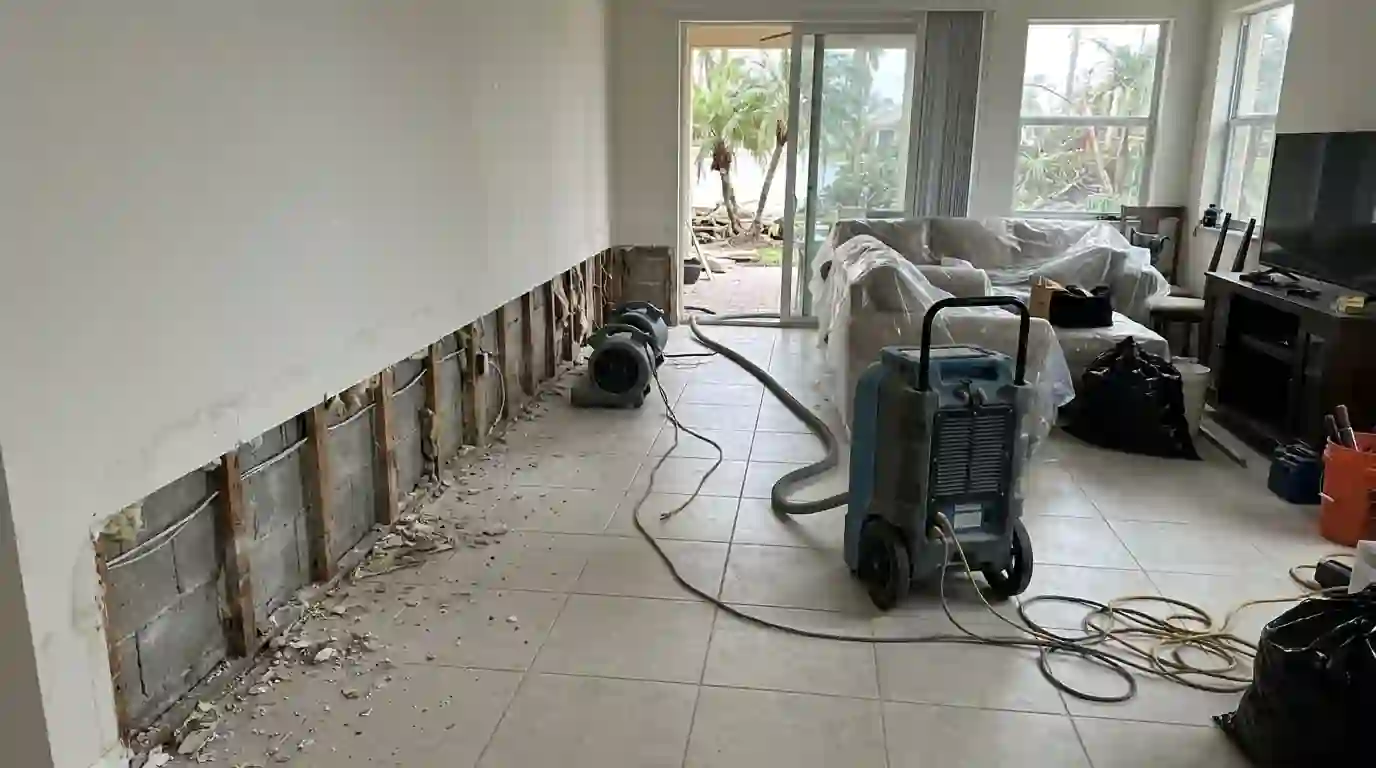
The first visit after a storm goes faster when the crew can reach what they need. Clear boxes away from the attic hatch, the air handler closet and the water heater. Keep a path open along exterior walls in the garage. Move valuables, papers and electronics off the floor and away from windows before the storm, which also limits what can be damaged.
Take a photo of the roof covering and note its age if you know it. Write down the brand of your impact windows or shutters. In Miami-Dade and Broward, which the Florida Building Code treats as the High-Velocity Hurricane Zone, these details help a crew and an adjuster understand how the house was built.
If you have a portable generator, decide in advance where it will sit outdoors, well away from doors and windows, and which appliances it will run. A working fridge and a few fans help, but a dehumidifier on generator power is one of the most useful things you can run while you wait for a crew.
Save the right phone numbers now
Cell service is often patchy for a day or two after a storm. Store the numbers you will need in your phone and on paper: your insurer's claims line, your agent, the building manager if you are in a condo, a plumber, an electrician and a restoration company that answers around the clock. New Kingston's line, (786) 664-2643, is answered 24/7, including storm weeks.
Write your policy number next to the insurer's number. When a storm hits a whole region, claims lines get crowded, and having the details ready shortens the call.
What to do the first hours after the storm passes
Wait for local officials to say it is safe to go out. Then walk the outside first, looking for downed lines, roof damage and broken openings. Photograph everything before you move debris. If the roof is open or windows are broken, emergency roof tarping and board-up keep the next rain band out while you sort out the rest.
Inside, shut off power to any wet room, photograph the water and start removing it. A crew handling hurricane damage restoration will extract standing water, set drying equipment and record moisture readings the adjuster can use. When you are ready to put the claim together, our hurricane claim documentation guide covers the Florida deadlines and what to include.
Common questions
Should I turn off the main water valve before evacuating?
If you are leaving the house for a storm, closing the main is a sensible step, because a pipe or fitting that fails while you are away cannot keep feeding water into the house. Turn off the water heater first, following its manual, so it does not run with no supply. Turn the main back on slowly when you return and check for leaks.
Does a baseline video still help if my house is already a few years old?
Yes. Adjusters expect wear in an older home. What they need is evidence of the condition just before the storm, so a dated video from the start of the season is far more useful than closing documents from years ago.
Should I unplug the air handler and appliances before a storm?
Unplugging electronics and switching off the AC at the breaker before the worst of the storm can protect them from surges when power flickers. Many people also turn the fridge to its coldest setting ahead of time so it holds temperature longer during an outage. Turn the AC back on once power is stable, since it helps control indoor humidity.