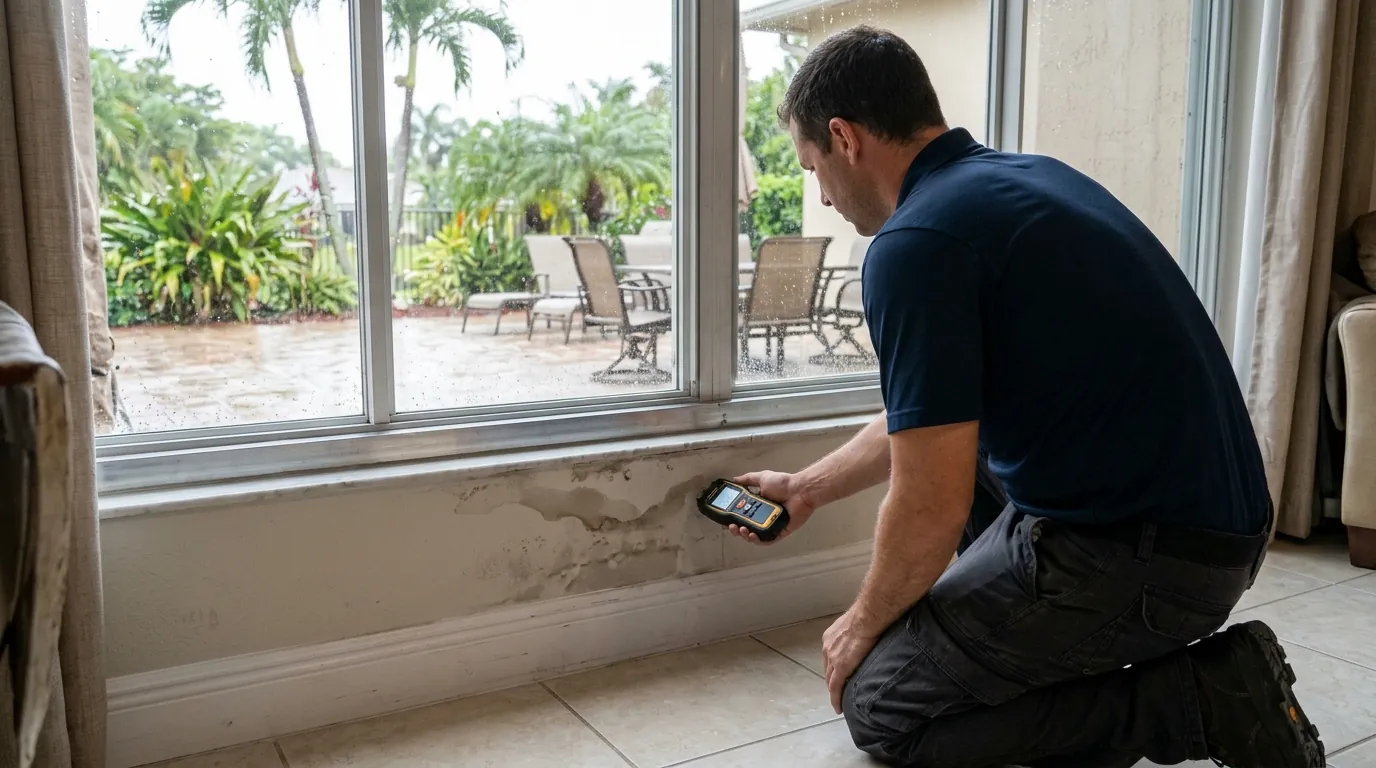
Storm damage repair handles what a non-hurricane storm leaves behind: water that came in through windows, doors, stucco or the roof, plus broken glass, torn screens and soaked drywall. The crew finds where the water entered, dries the wall and floor, removes what cannot be saved and repairs the interior. The outside entry point then needs sealing so the next storm does not repeat it.
Most storm damage in Miami does not come from named storms. It comes from heavy afternoon cells, squall lines and tropical storms that throw sideways rain at the house for an hour. Miami International received 83.43 inches of rain in 2023, about 16 inches above normal, and NWS Miami says about 69% of the year's rain falls in the summer season.
That kind of rain finds the weak spots: old window caulk, sliding door tracks, stucco cracks, roof flashing and clogged gutters. The damage often starts small, a stain or a swollen baseboard, and grows each time the next storm hits the same spot.
Where wind-driven rain gets in
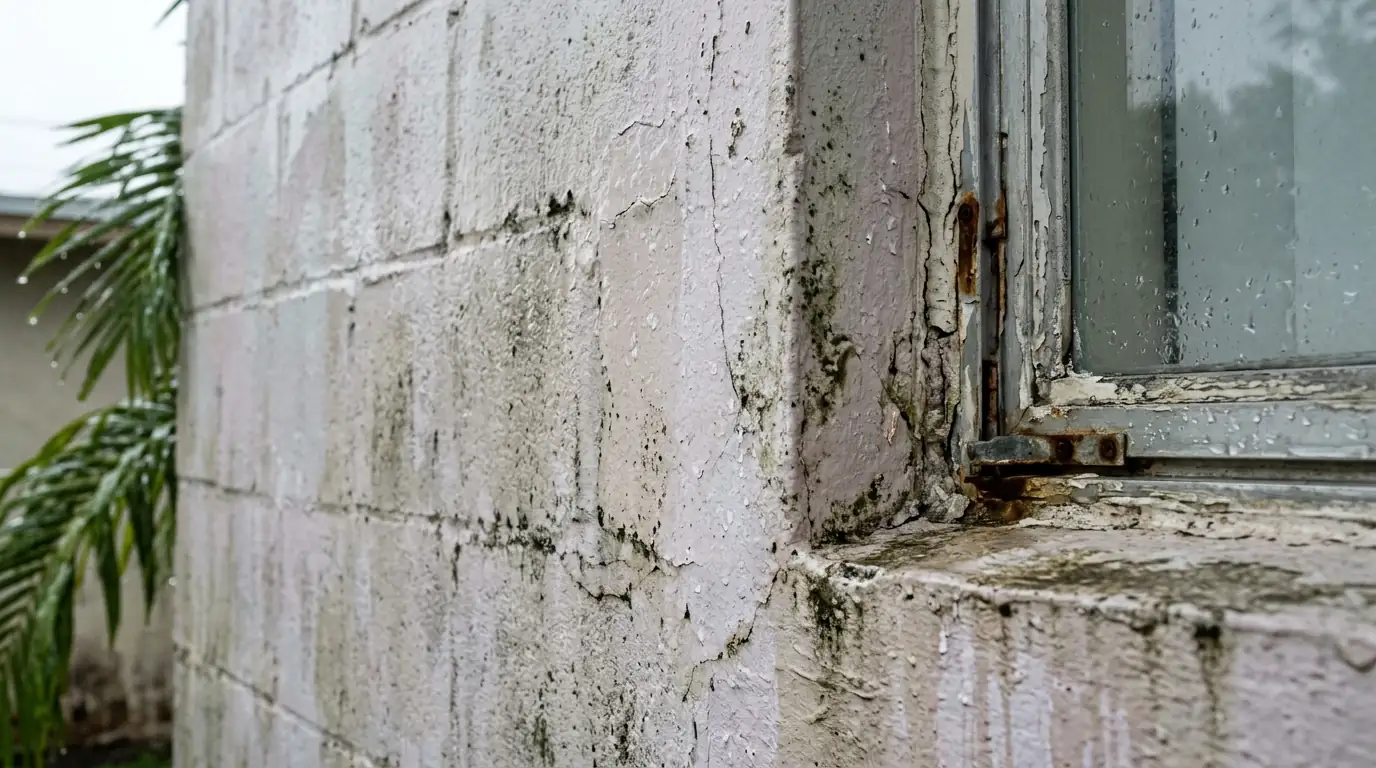
Rain in a strong cell moves nearly sideways, and it pushes into gaps that stay dry in a normal shower. On CBS homes, the usual entry points are the joint between the window frame and the block, the sliding door threshold and cracks in the stucco.
Inside, that water runs down the inside face of the block, behind the drywall furring, and pools on the slab at the base of the wall. By the time you see a stain or a swollen baseboard, the wet area is usually wider than it looks.
- Window and door perimeter caulk that has shrunk or cracked
- Slider tracks and weep holes packed with dirt
- Stucco cracks and worn paint on the weather side
- Roof flashing where it meets walls and vents
- Gutters and downspouts that back up
Repeat leaks and why they get worse
A wall that gets wet every few weeks never fully dries in a Miami summer, when NWS Miami says dew points stay above 70°F from about late May to mid October. The drywall paper softens, baseboards swell and mold can start behind the furniture before anyone notices.
That is why the same corner leaking three storms in a row is worth opening up. We use hidden moisture detection to find the wet edges, then cut out only what is wet instead of guessing.