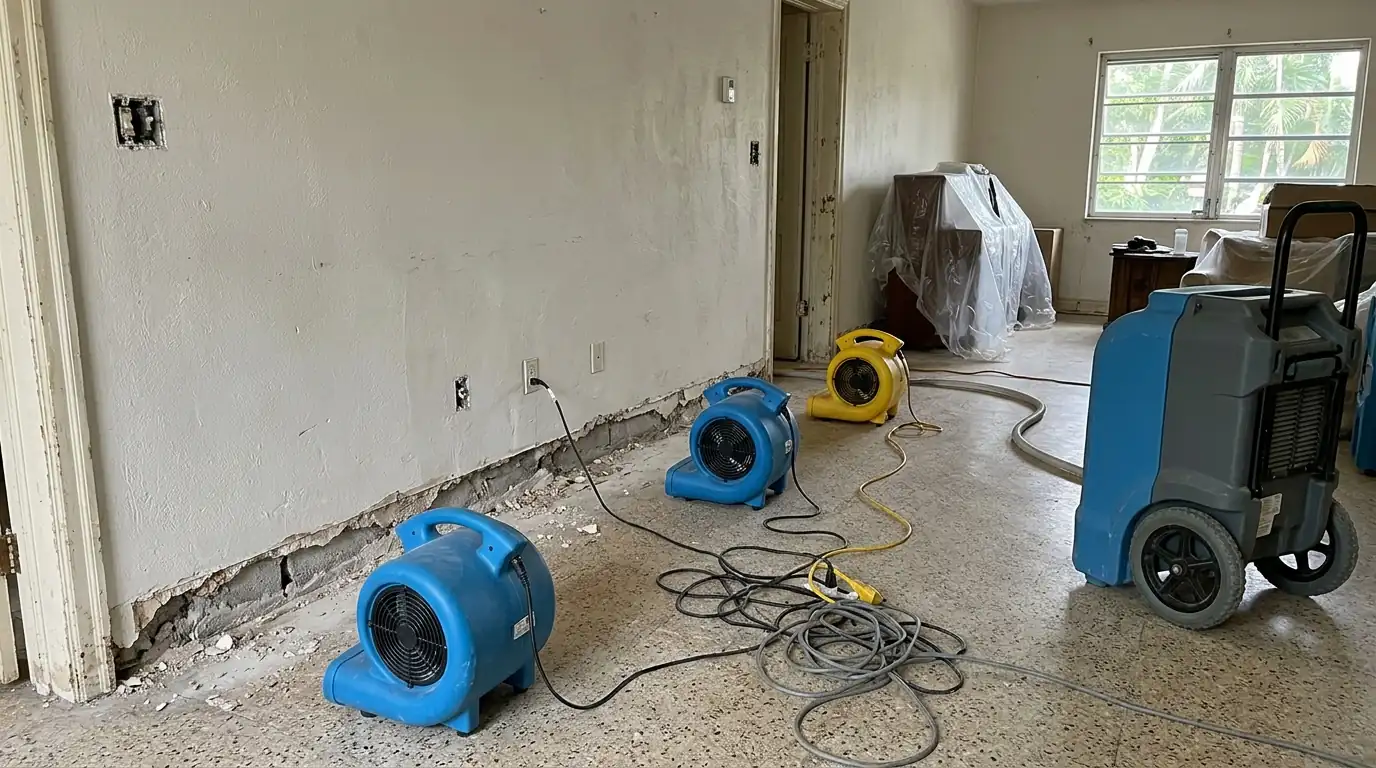
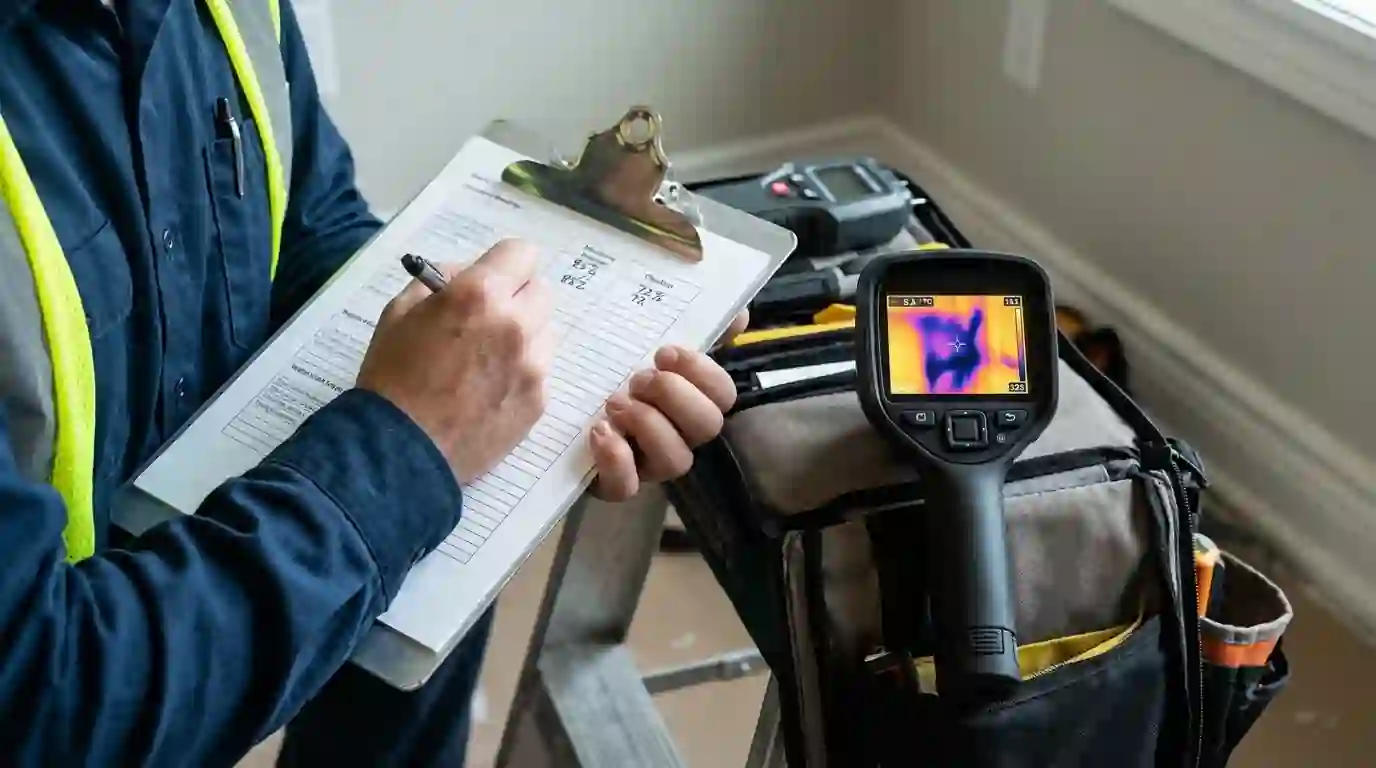
Structural drying uses air movers, dehumidifiers and sometimes heat to pull water out of walls, floors and framing after a leak. Technicians take moisture readings every day and compare them to a dry reference in an unaffected room. Equipment comes out only when the wet materials match that reference, and in Miami's humid climate that takes active dehumidification, not open windows.
Structural drying is the controlled removal of moisture from the building itself: framing, drywall, plaster, CBS block and the concrete slab. It starts after water extraction clears the standing water and runs until each material reaches a set dry goal.
That dry goal comes from reading an unaffected wall or floor in the same house, so the target matches your home rather than a number from a chart. Drying follows the IICRC S500 water damage standard, and every reading is written down.
How air movers, dehumidifiers and heat work together
Drying is a three-part balance. Air movers sweep air across wet surfaces so water evaporates. Dehumidifiers pull that water out of the air and send it down a drain hose. Warmth speeds the whole thing up, because warm materials release moisture faster.
If any part is off, drying stalls. Plenty of air movers with too little dehumidification just make a warm, wet room. Big dehumidifiers with no airflow leave the wall face damp. The crew sizes the setup to the room volume and the amount of water that got in.
For walls, small holes behind a removed baseboard let the crew push dry air straight into the cavity. That cavity drying saves many walls from being cut open.
Why Miami air makes drying harder
Miami's average relative humidity is about 84% in the morning and 62% in the afternoon, and NWS Miami notes dew points stay above 70°F from roughly late May to mid October. Opening windows in that stretch lets more moisture in than it lets out.
So the house stays closed during drying, the AC runs at its normal setting and the dehumidifiers do the heavy work. EPA recommends keeping indoor humidity between 30 and 60%, and the crew watches room readings to keep the drying zone well below the outdoor air.
Winter is a little easier, since average dew points drop into the upper 50s in January. Even then, a sealed and controlled room dries faster than open windows.