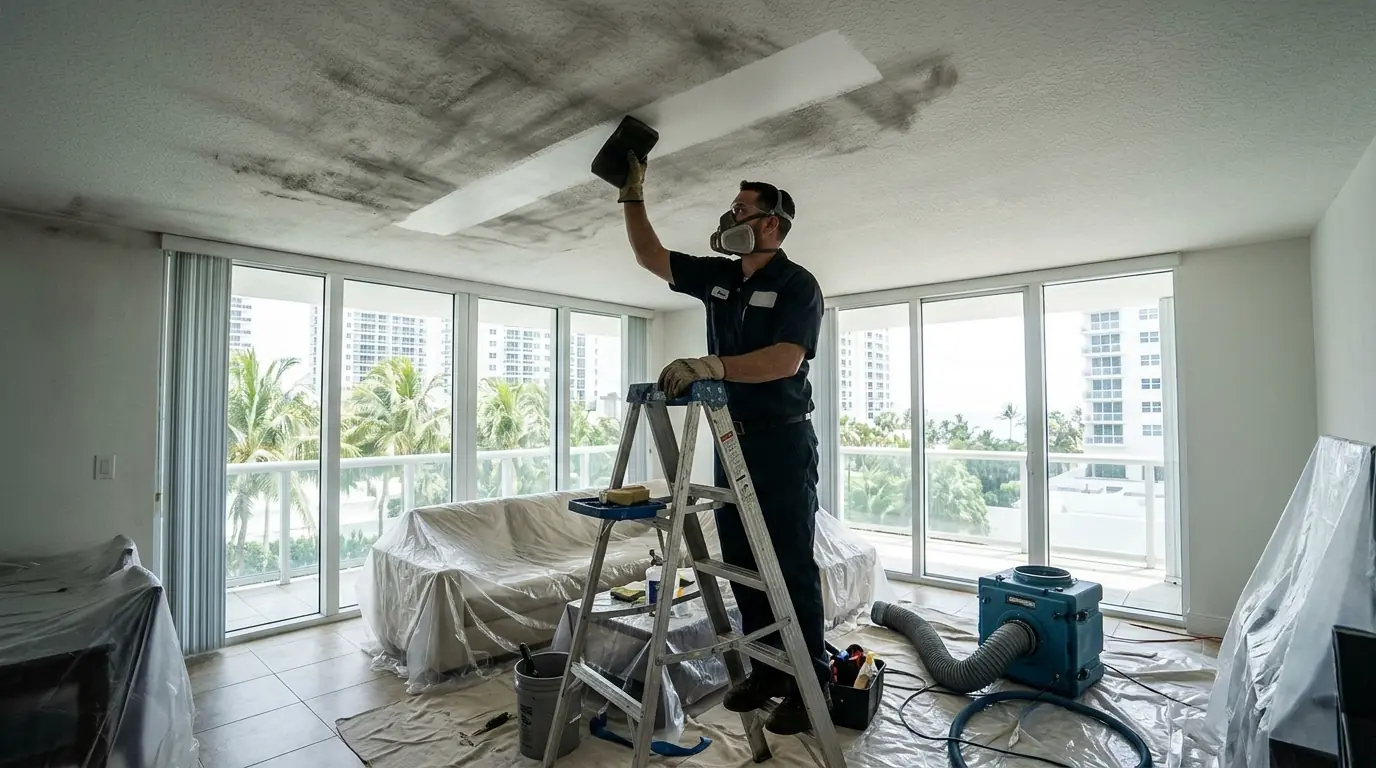
Most smoke damage on walls, ceilings, cabinets and hard furniture can be cleaned rather than replaced, as long as it is handled before the residue bonds to the finish. Porous materials such as insulation and some fabrics may not come back. Cleaning the AC and ducts has to be part of the job, or the smell returns within days.
Smoke is hot gas carrying fine particles, and it keeps moving until it cools. It follows air pressure toward cooler rooms, slips under doors, rides the AC return and settles on the coldest surfaces it meets, which in a Miami house is often the ceiling under the attic and the supply vents.
That is why a small fire in a garage or kitchen can leave bedrooms on the far side of the house coated. Cleaning it properly means testing each surface, using the method that suits that residue, and cleaning the air system so it stops spreading what was left behind.
How smoke moves through a Miami house
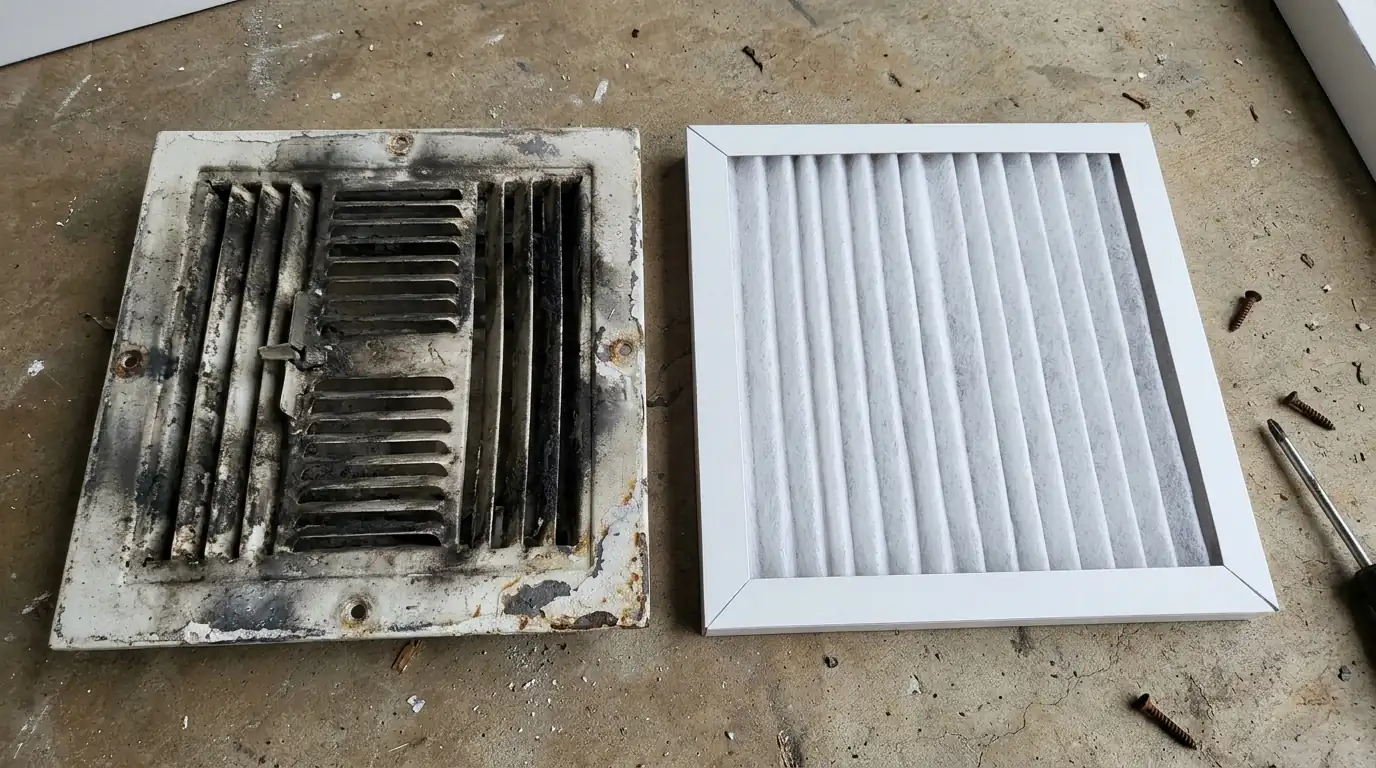
Your central AC is the fastest path. If the system was running when the fire started, the return pulled smoky air into the air handler and the supply ducts pushed it into every room. Even after it is switched off, residue sits on the coil, the filter and the duct lining.
Heat also drives smoke upward and into any gap it finds: attic access panels, recessed lights, plumbing chases and the space above pocket doors. In homes with soffits or dropped ceilings we often find more residue above the ceiling than below it.
Humidity makes it worse. Miami's average morning relative humidity is about 84 percent, and moist air carries smoke odor deep into drywall, wood and fabric, where it releases again on warm afternoons. Keeping the house dry and cool during cleanup is part of getting the smell out.
Testing every surface before it gets cleaned
Each surface gets a small test spot first. A dry chemical sponge lifts loose, powdery residue from flat paint without smearing it, while oily residue from plastics or food needs a degreasing cleaner instead. Using a wet cleaner on the wrong residue drives it into the paint and leaves a permanent stain.
The crew works from the top of the room down: ceilings, then walls, then trim, cabinets and floors.
Some surfaces simply hold the stain. Unsealed wood, popcorn ceilings and older flat paint may need sealing and repainting even after a good cleaning, and we point those out on the first walkthrough.