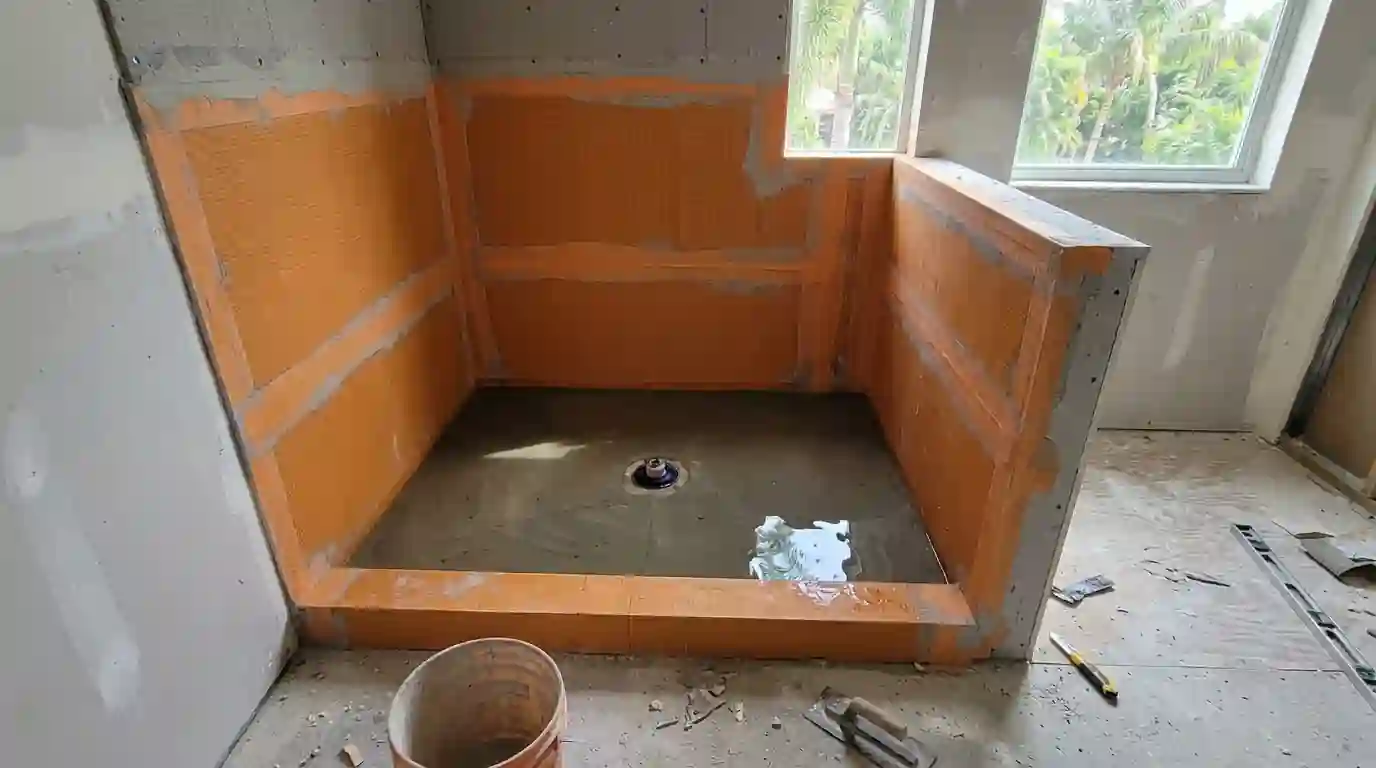
A bathroom rebuild starts with dry framing and slab readings, plus mold clearance from an independent assessor when mold was removed. The shower gets cement board or a foam backer, a continuous waterproof membrane and a properly sloped pan before any tile. Then floor tile, vanity, toilet and accessories go back, matched as closely as possible to what stayed.
Bathroom damage tends to be slow. A failed shower pan, cracked grout, a loose toilet flange or a vanity drain that dripped for months lets water soak the wall and slab without much warning. By the time tile pops or mold shows on the baseboard, the damage usually reaches well past the visible spot.
Rebuilding covers everything that came out during drying or mold removal: backer board, waterproofing, shower and floor tile, the vanity, toilet and trim. The difference from a regular remodel is that the layout stays the same and the waterproofing has to be right, because it is usually what failed. New Kingston crews treat the waterproofing as the most important layer in the room.
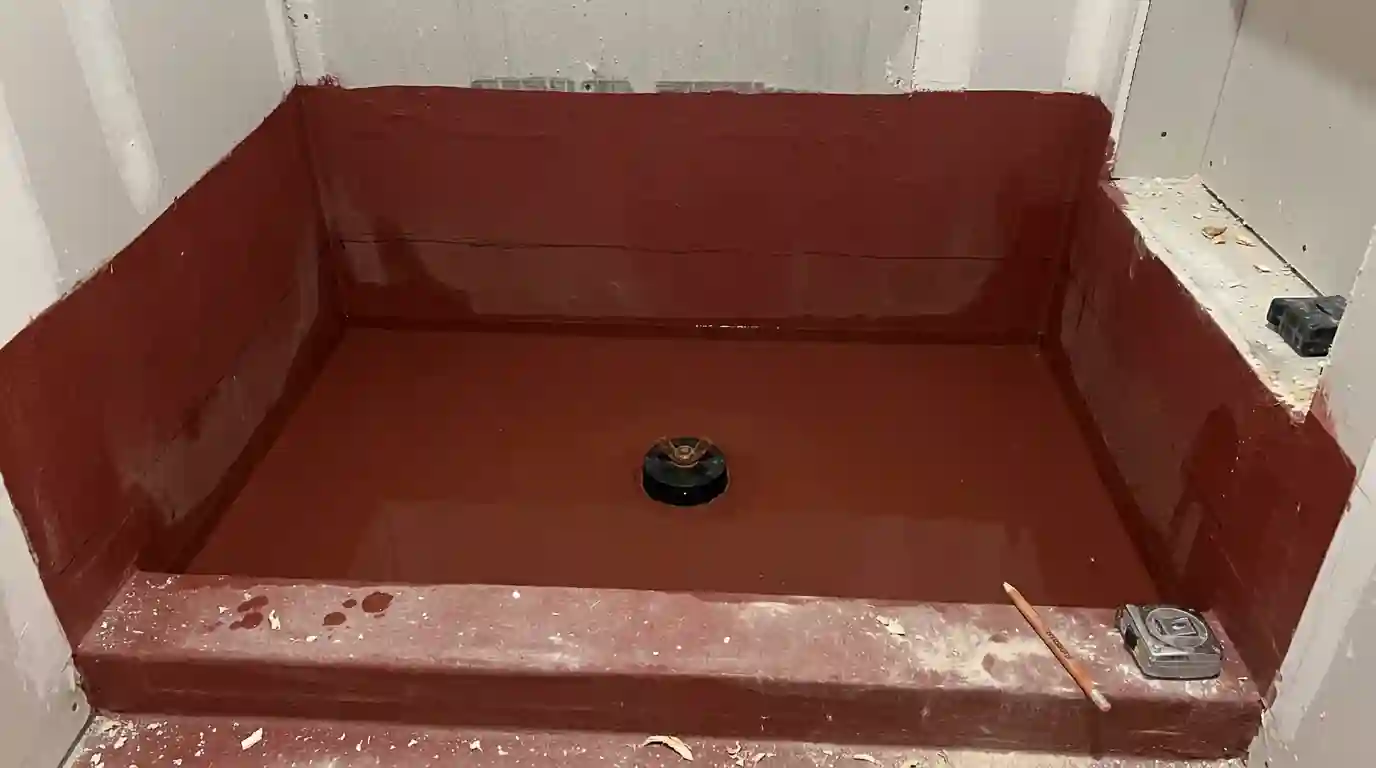
The waterproof layer behind the tile
Tile and grout are not waterproof. Water passes through grout every time the shower runs, and the layer behind the tile is what keeps it out of the wall. In older Miami bathrooms that layer was often a simple liner or nothing at all, which is why so many showers leak into the next room.
The rebuild uses cement board or a foam backer on the walls, sealed at every seam and screw, with a continuous waterproof membrane carried down into the pan. The pan is sloped to the drain so water never sits. Before tile goes on, the pan is flood-tested by filling it and watching the level overnight.
Niches, benches and the valve opening are where leaks usually start. Those corners get pre-formed pieces or extra membrane so the waterproofing has no gaps.
Tile on walls that are concrete block
Many Miami bathrooms sit against an exterior concrete block wall, with furring strips between the block and the board. Block can stay damp behind a leaking shower for a long time, so readings are taken on the block itself, not only on the framing.
Where the shower is on that outside wall, the backer and membrane go over new treated furring. That keeps the waterproofing independent of the block, which can carry moisture inward during the long wet season.