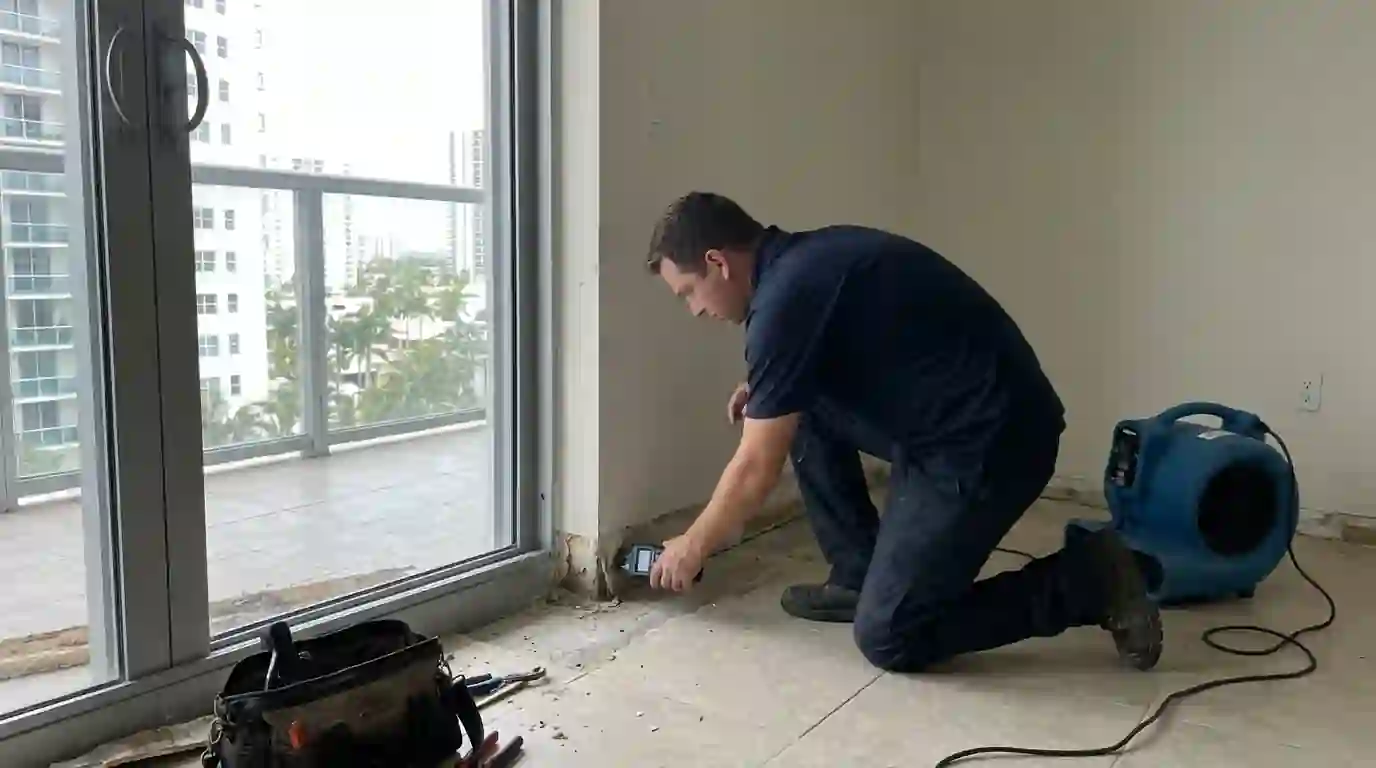
Wipe up what you can see, pull rugs and furniture back from the opening and photograph the sill, track and wall below. Then have the wall and floor checked with a meter, because water often sits behind baseboards and under tile after the surface looks dry. We dry and rebuild the interior; a window contractor repairs the opening.
In Miami the worst of it comes with sideways rain. A squall line or tropical storm presses water against the glass for hours, and any tired seal, clogged weep hole or missing sill pan lets some through, on houses and high-rise balcony doors alike.
The repair splits into two jobs. A window or glazing contractor fixes or replaces the unit itself, and our crew dries the wall, floor and trim around it, then rebuilds whatever had to come out.
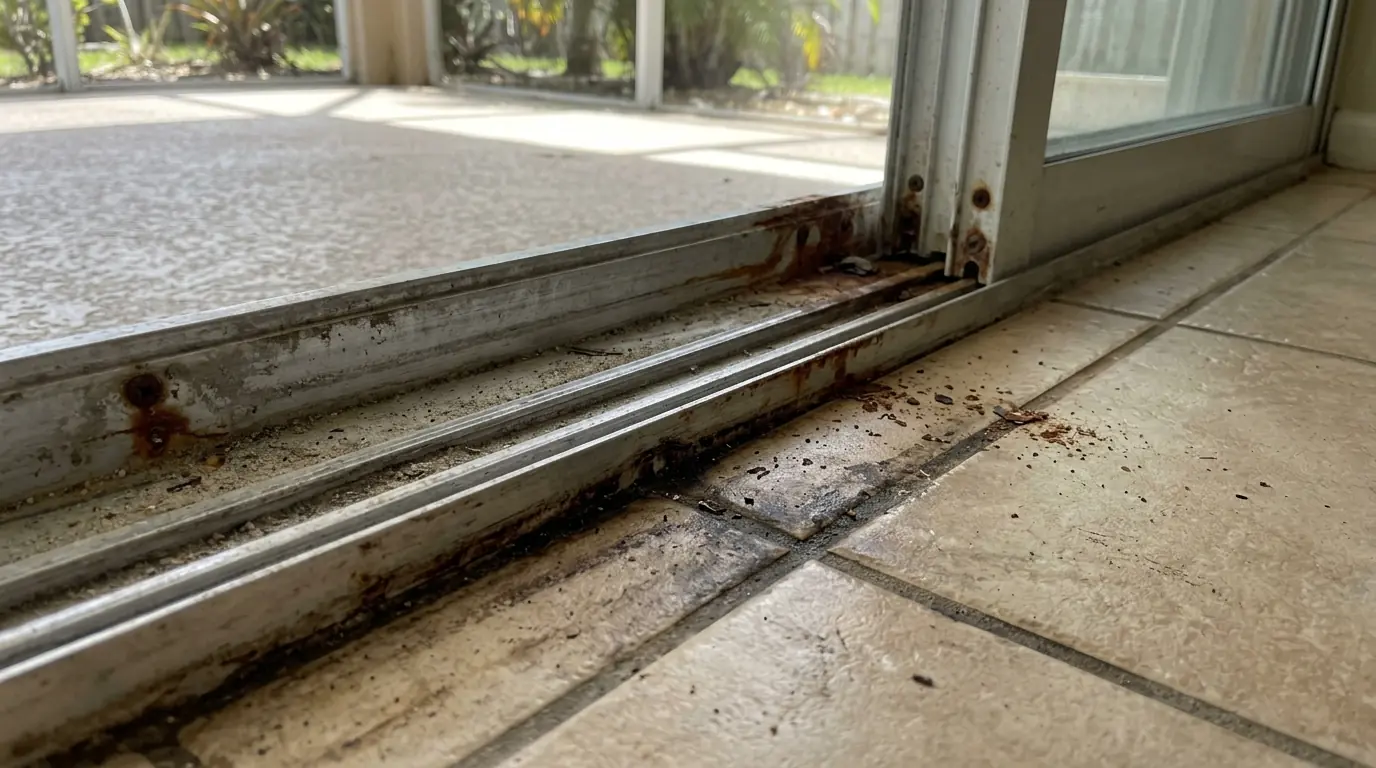
How rain gets past a closed window
Windows and doors are built to shed water, not hold it back forever. Gaskets shrink in the sun, perimeter caulk pulls away from the stucco, and the weep holes at the bottom of the frame fill with sand. When the weeps cannot drain, the sill channel fills and spills inward.
Under the frame, a sill pan is supposed to catch whatever gets past and send it back outside. Many older openings were set without one, so the water lands on the top of the block or the edge of the slab inside your room.
- Cracked caulk at the frame
- Weep holes blocked by sand or paint
- Gaskets pulled back from the glass
- Missing or cut sill pans
- Worn slider weatherstripping
What the water does inside the wall and under the floor
Most Miami houses are concrete block with drywall on furring strips, which leaves a narrow gap behind the board. Water from a leaking window runs down that gap and collects against the baseboard and the cut edge of the drywall.
Under a slider, water moves beneath tile through the grout joints and thinset bed, and under wood it follows the seams, sometimes turning up a room away. Our hidden moisture detection page explains how meters and a thermal camera track it.
South Florida's summer stretch of 70°F-plus dew points, roughly late May into mid October, means a damp wall seldom dries between storms on its own. EPA guidance calls for wet materials to be dried inside 24 to 48 hours, before mold can take hold.