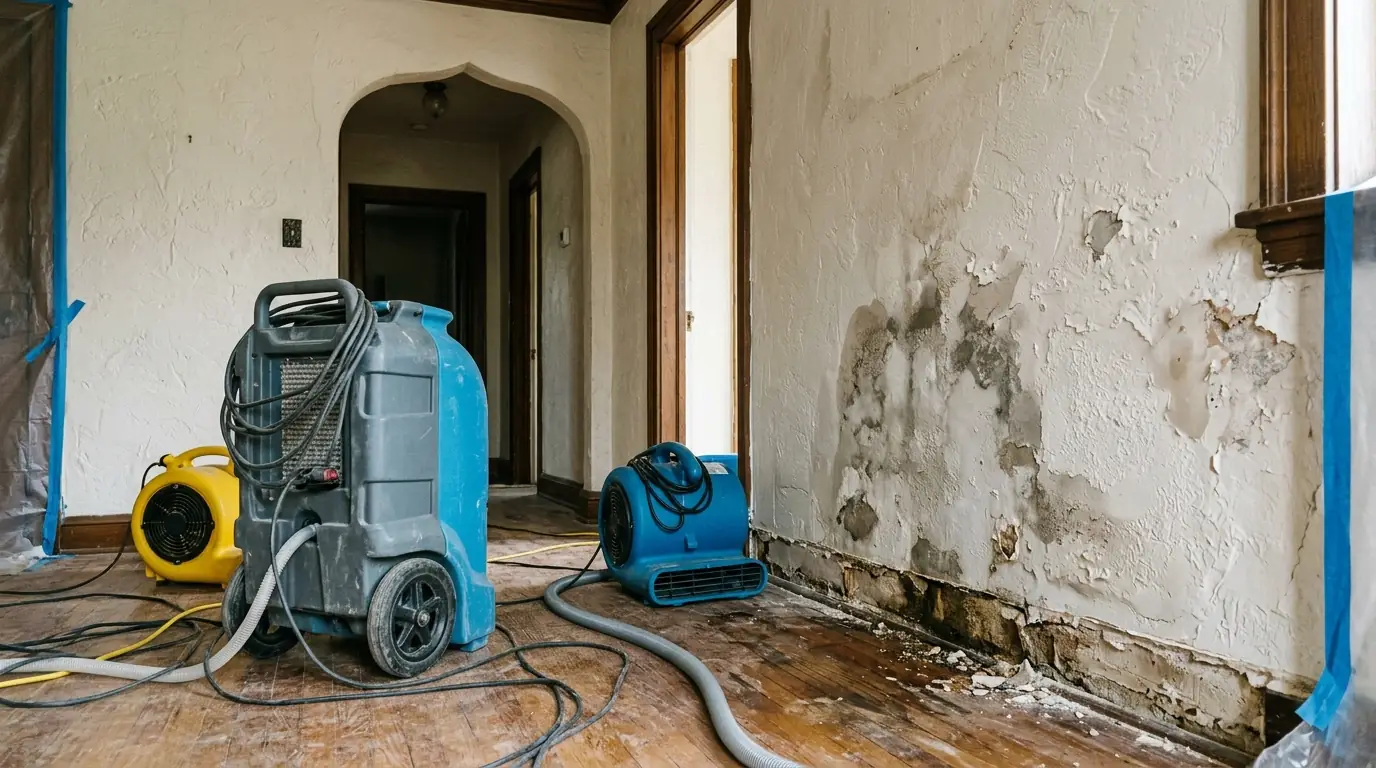
When a pipe bursts in a Miami Springs home, close the main valve at the meter or house shutoff, switch off power to wet rooms, and move rugs and furniture off the floor. The crew extracts the water, maps hidden moisture in walls and floors, dries to a measured goal, and repairs drywall, plaster and flooring once a plumber fixes the pipe.
Glenn Curtiss and James Bright founded the city as Country Club Estates, and it was incorporated in 1926. Pueblo Revival is still the main style, with some Mission-style homes, plus mid-century houses and small apartment buildings. Many of the oldest homes still carry original plumbing and roof framing.
The 2020 flood showed the outside risk. A canal overflowed, streets across the city flooded and cars were submerged in below-ground garages on Swallow Drive. Local press said it was the first time since an October 1991 storm that water had really inundated Miami Springs.
Old pipes in nearly century-old homes
Original galvanized supply lines rust from the inside and let go at threaded joints, often inside a wall or under a bathroom floor. Cast-iron drains thin along the bottom and develop pinholes. In a house with thick walls, the first sign may be a damp patch on an exterior wall or a soft spot in the floor.
Clean water from a broken supply line is Category 1, so drywall and framing can often be dried in place if the crew gets there quickly. After about 48 hours it can turn worse. Burst pipe cleanup explains the timing.
Thick walls, flat roofs and Pueblo Revival details
Pueblo Revival homes often have flat or low-slope roofs behind parapet walls, with stucco over masonry and rounded interior corners. Water that gets in at a parapet or a roof drain can travel along the wall before it shows, and plaster dries slowly.
The crew uses moisture meters and thermal imaging to find the wet path before opening anything, then records finishes so the patch matches. Rounded corners, arched openings and original trim are noted before work starts.