Skip to content
Water, fire, storm and mold calls answered 24/7 across Miami-Dade and Broward(786) 664-2643
New KingstonWater & Restoration · Miami(786) 664-2643Answered 24/7
Carbon residue cleaning

Soot removal in Miami, matched to what burned

Black powder on the walls, a greasy smear that spreads when you touch it, or a sticky brown film you can barely see: each one is soot, and each one comes off a different way.

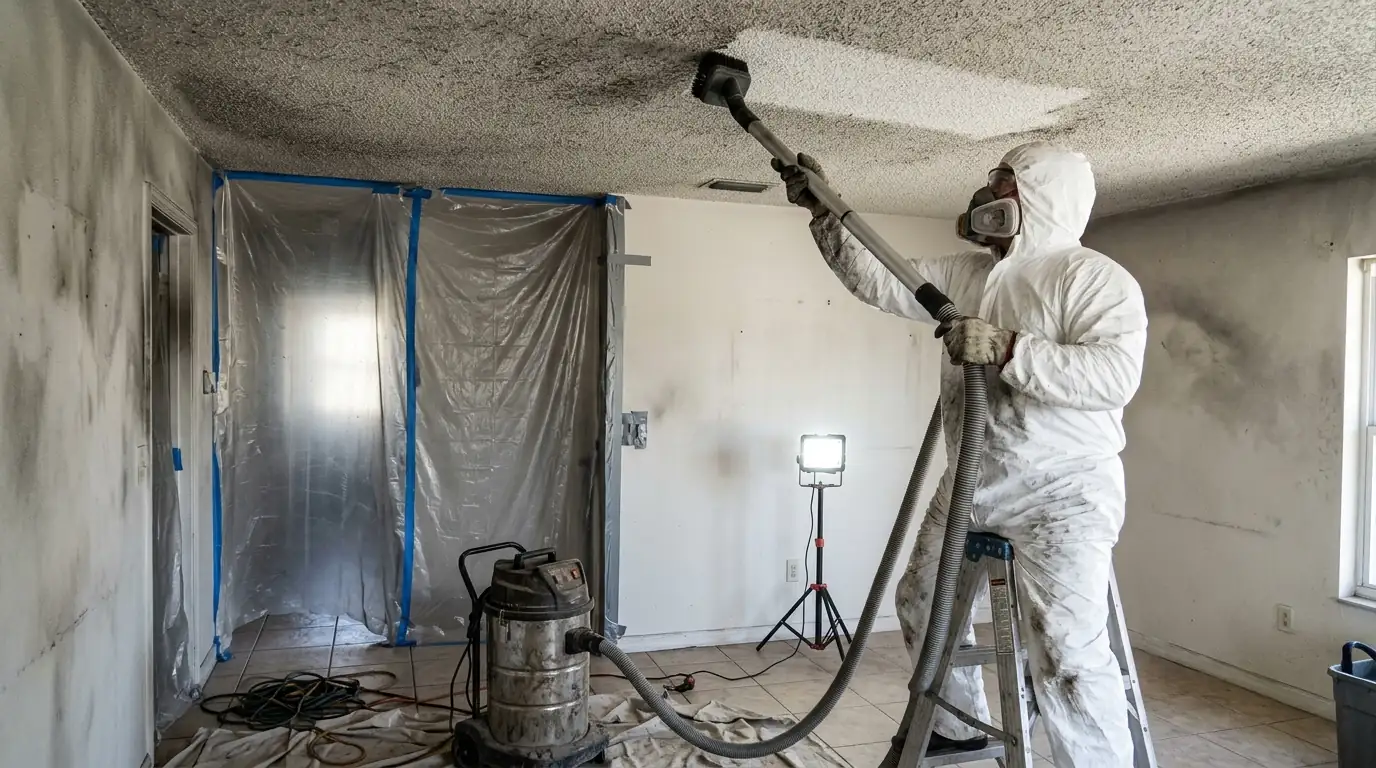
Crew member HEPA-vacuuming black powdery soot from a textured ceiling in a Miami home, plastic sheeting sealing off the hallway
Quick answer

Soot removal means identifying the type of residue (dry, oily, protein or fuel), lifting loose particles with HEPA vacuums and dry chemical sponges, then cleaning what remains with a product suited to that residue and that surface. Done in the right order, most hard surfaces can be saved instead of replaced.

Soot is the unburned carbon and chemical residue a fire leaves behind. What it is made of depends on what was burning and how hot the fire ran, and that decides the cleaning method, the products and how much of a surface can be saved.

Getting it wrong is easy. The cleaner that lifts dry soot from drywall will smear oily soot across it, and scrubbing protein residue with plain soap often leaves the odor behind. Our crews identify the soot type room by room before any cleaning starts.
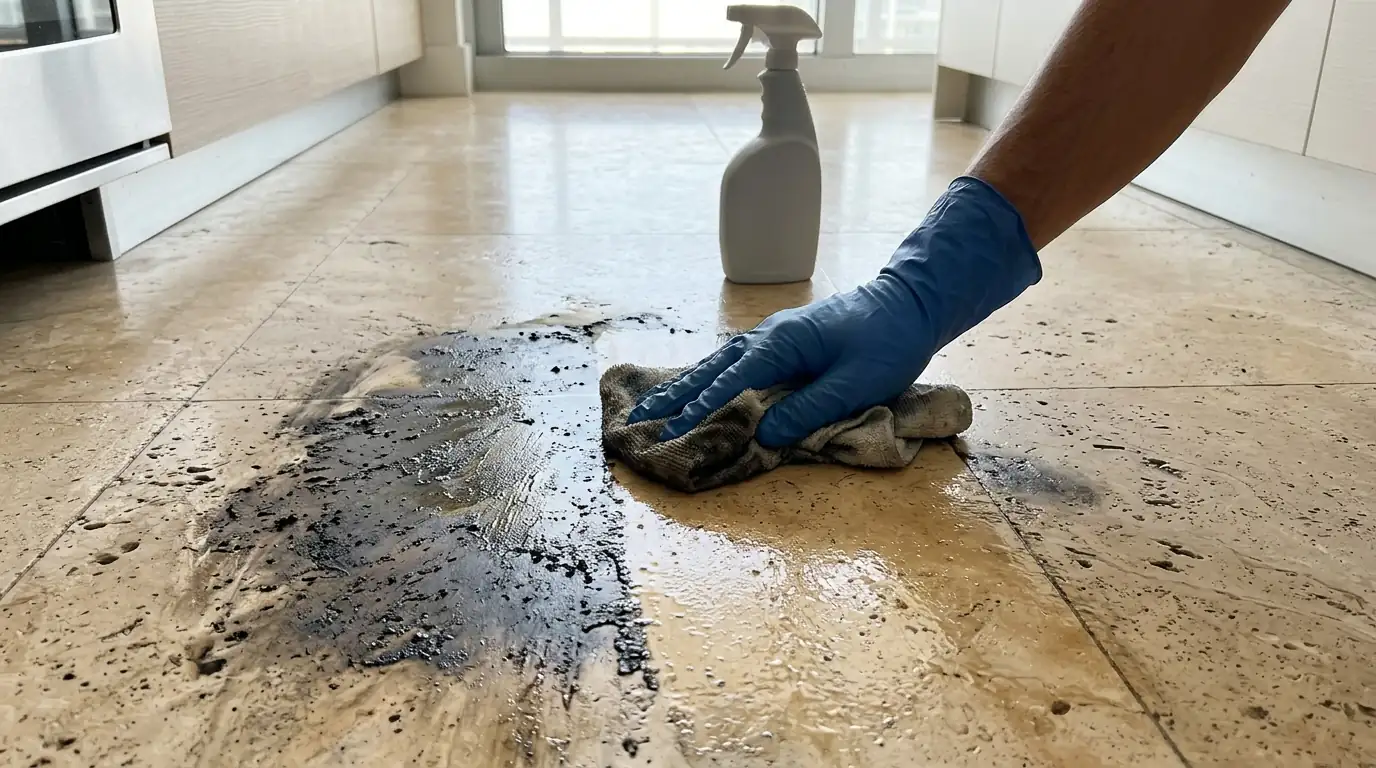
Gloved hand wiping oily soot from cream travertine floor tile with a pH-neutral cleaner in a Miami kitchen

Three kinds of soot, three cleaning approaches

Most house fires leave a mix, but one type usually dominates each room. We sort them this way before choosing a method:

The order matters as much as the method. Loose particles always come off dry first, because adding water or cleaner to a dusty surface turns powder into paste. Protein residue is the signature of a kitchen fire, and it needs odor treatment on top of cleaning.

  • Dry soot: powdery, from wood, paper and natural fabrics. Comes off with HEPA vacuuming and dry chemical sponges before anything wet touches it.
  • Oily soot: dark and smeary, from plastics, foam cushions and synthetic carpet. Needs solvent or degreasing cleaners and a light hand.
  • Protein residue: thin, yellow-brown and strong-smelling, from burned food. Needs alkaline or enzyme cleaners.
  • Fuel soot: heavy and tar-like, from a car, gas grill or generator fire in a garage. Often means removing porous materials nearby.

Surfaces common in Miami homes and how they clean up

Porcelain and ceramic tile clean well, but unsealed grout absorbs soot quickly and may need deep cleaning and resealing. Marble and travertine are softer and react to acidic residue and harsh cleaners, so they get pH-neutral products, and etched areas may need a stone refinisher afterward.

Popcorn and knockdown ceilings trap soot in their texture and rarely clean evenly. On those we clean what we can, then seal and retexture, or replace the drywall if it was also soaked by firefighting water.

Impact window frames, sliding door tracks and aluminum louvers collect soot in their channels and need detail work. Exterior stucco and paint usually respond to low-pressure washing with a soot detergent, though heavy staining may still call for repainting.

Signs to act on

When to call about soot removal

  • Powdery black dustDry soot from paper, wood or cotton that burned fast and hot, which brushes off easily but scatters if disturbed.
  • Smudges that spread when touchedOily soot from burning plastic, foam or rubber clings to surfaces and stains if it is handled the wrong way.
  • Brownish film with a strong smellProtein residue from burned food, often nearly invisible on walls but very hard to deodorize.
  • Dark webs hanging from cornersSoot clings to cobwebs and dust in strands, and they show how much residue was carried through the room.
  • Gray streaks on stucco or screensA car, trash or neighboring fire can coat exterior paint, pool enclosure screens and patio furniture outside.
  • Cloudy glass and dull fixturesAcidic soot left too long can etch glass, chrome and polished stone, so the timing of cleanup matters.

Why soot should come off within days, not weeks

Soot is not just dirt; it is chemically active. Residue from burned plastics and wiring is acidic, and on humid days it reacts faster with what it sits on. Left in place, it yellows paint, tarnishes metal and dulls glass, and some of that damage cannot be reversed later.

Public-health guidance on fire cleanup says smoke and soot damage paint, carpet, upholstery and clothing, and that deposits must be cleaned and neutralized before anyone redecorates. Painting over soot only hides it until it bleeds through.

Soot particles are fine enough to breathe in easily. Keep children, older relatives and pets out of affected rooms, and do not run a household vacuum, which blows the finest particles right back into the air.

Soot on belongings, not just walls

Soft items such as clothing, curtains and bedding usually respond to specialty laundering or dry cleaning if they are handled soon. Upholstered furniture is harder, because soot works down into the foam; some pieces clean well and some do not.

Hard items, from dishes to picture frames to toys, are cleaned by hand or in an ultrasonic tank. When a lot of belongings are involved, New Kingston boxes them and cleans them off-site through contents pack-out, so the crew can work in empty rooms and finish faster.

How the job runs

From your call to a finished room

  1. Identify the residueTest surfaces in each room to confirm whether the soot is dry, oily, protein or fuel-based.
  2. Contain and filter the airClose off clean rooms with plastic sheeting and run HEPA air scrubbers to capture loose particles.
  3. Lift loose soot dryHEPA-vacuum and dry-sponge ceilings, walls and fixtures before any liquid cleaner is used.
  4. Wash with the matched cleanerClean the remaining residue with degreasers, enzyme cleaners or pH-neutral products chosen for that soot and that surface.
  5. Rinse, dry and inspectRinse surfaces, dry them fully and check under bright work lights for streaks or missed spots.
  6. Seal or replace what stainedSeal porous surfaces that kept a shadow, and remove materials the soot has permanently damaged.

Questions

Soot Removal questions

Can I vacuum soot with my regular vacuum?

Please do not. A household vacuum passes the finest soot through its exhaust and spreads it across the room, and the brush roll grinds residue into the carpet. The crew uses a HEPA vacuum with a soft brush attachment and no beater bar.

Why does soot keep showing up after I clean?

It is usually coming from somewhere you cannot see: the AC ducts, the attic, the tops of kitchen cabinets or the inside of light fixtures. Until those sources are cleaned, every air cycle brings more down onto the surfaces you just wiped.

Is soot on my pool enclosure and patio worth cleaning?

Yes, and the sooner the better. Screen mesh and aluminum frames clean up well with the right detergent and low pressure, while soot left on pavers and pool tile can stain. Mention it when you call so the crew brings exterior equipment.

Does soot ruin wallpaper?

Vinyl wallpaper often cleans with a dry sponge and a mild cleaner. Paper and fabric wallcoverings soak up oily soot and usually have to come off. The crew tries a hidden spot before deciding either way.

What should I wear if I go back in to grab a few things?

Wear an N95 mask, long sleeves and gloves, and touch as little as you can. Soot on your hands transfers to every door handle and wall you touch on the way out. Pick up what you need, carry it out in a bag, and leave the rest for the crew.

Water, smoke or storm damage right now?

Call (786) 664-2643. A person answers at any hour, asks what happened, and tells you what to do while the crew gets moving.

Call (786) 664-2643 · 24/7