A pipe leak in Lauderdale Lakes is usually one of three things: a cast-iron drain that has thinned and pinholed, a supply line or valve that has given out, or a slow leak behind a wall that nobody noticed. Turn off the water and call. If mold is visible, do not scrub it or point a fan at it before it is contained.
The city began as a retirement area for snowbirds and grew from 10,577 residents in 1970 to 35,954 in 2020. The median home was built in 1973. You will find midcentury ranch and minimal traditional houses, townhouses on the east side and older condos more common on the west side, and much of that housing still runs on the pipes it was built with.
New Kingston crews drive up from our Miami office along State Road 7 and Oakland Park Boulevard. We stop the water damage, open only what needs opening, dry it properly and deal with any mold the moisture left behind.
Old cast-iron drains under 1960s and 1970s homes
Cast-iron drain pipes in South Florida homes built before about 1974 tend to fail from the bottom up. The lower wall of the pipe thins, small holes open, and scale inside slows the flow until water backs up. In a slab home that can mean a damp floor near a bathroom, a sewer smell in a closet, or a toilet that gurgles when the washer drains.
We find the wet area with moisture meters and thermal imaging, then dry and repair the damage once your plumber has fixed the pipe. If waste water is involved, the job is handled as sewage cleanup, with removal and disinfection before drying starts.
Empty units and leaks that run for days
In 2020 about 18 percent of housing units in Lauderdale Lakes were vacant. Add the owners who are away for part of the year, and there are a lot of units where a dripping valve can run for days with nobody inside to hear it. By the time someone smells it, the cabinet base, the baseboards and the bottom of the drywall may all be wet.
If you own a unit you do not visit often, ask a neighbor to look in after storms, shut the main valve when you leave, and check that the water heater pan drains. When something does go wrong, call and we arrange access with whoever has your key.
How we remove mold after a leak
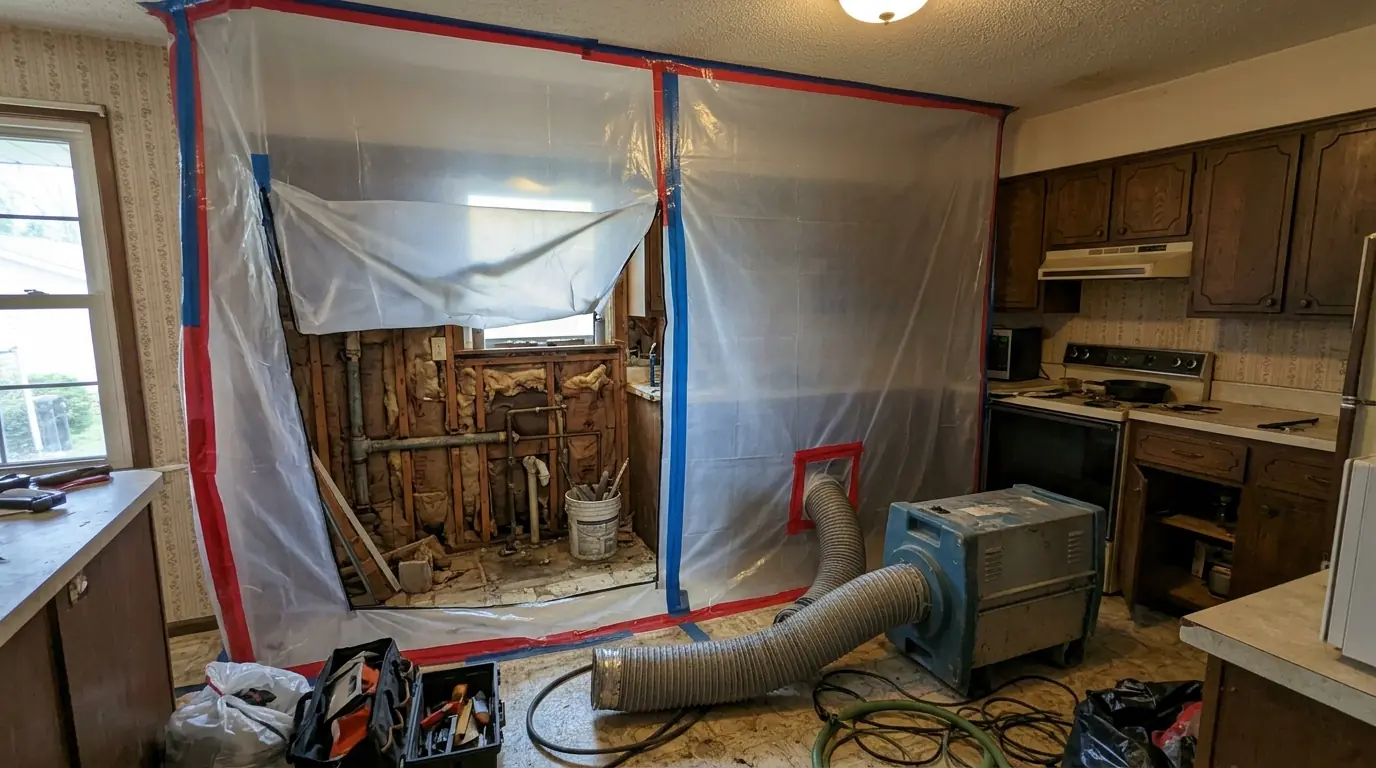
Mold grows quickly in a closed, humid room. EPA advises drying wet materials within 24 to 48 hours to keep it from starting, and in an unoccupied unit that window has often passed. Our mold remediation work sets up containment with plastic sheeting and negative air, removes the growth and the damaged material, cleans what stays, and dries the area.
Florida licenses mold assessment and mold remediation separately, and the same company may not do both on one home. So if you want air or swab testing, or a clearance check after we finish, hire an independent assessor. We work from their report and leave the room ready for their follow-up visit.
- Fix the water source first, or the mold comes back
- Contain the area before anything is disturbed
- Remove and bag damaged drywall, baseboard and insulation
- Clean, dry and log the readings before rebuilding