If flood water or a leak soaks a Grapeland Heights home, call (786) 664-2643 any time. We pump out standing water, remove soaked drywall and flooring, clean and disinfect, and dry with daily readings. If mold has started, we contain and remove it, and an independent licensed mold assessor handles testing.
The neighborhood runs from NW 21st Street south to the Dolphin Expressway, and from LeJeune Road east to the Miami River, just east of Miami International Airport. It had 14,004 residents in 2010 and sits at about 10 feet of elevation. Our Brickell crews reach it in about 5 to 6 miles.
Homes are mostly midcentury: stucco cottages, bungalows, ranch houses and remodeled midcentury homes, plus duplexes, fourplexes and some waterfront houses along the canal. Over half of residents own their homes, and maritime businesses line the river end.
The Tamiami Canal and the river edge
The Tamiami (C-4) Canal runs about seven miles from the Miccosukee reservation to the Miami River. The May 26, 2020 rains, which flooded wide parts of Miami-Dade, tested it hard. When the canal and river run high, storm drains back up and water sits in yards and low streets longer.
Real-estate guides describe the area as a special flood hazard zone where flood insurance is usually required on federally backed mortgages. Standard homeowner policies generally do not cover flood, so check what you carry before the rainy season, which Miami-Dade lists as May 15 through October 15.
Ground-floor flooding in midcentury cottages
A stucco cottage or ranch house on a slab has nowhere for water to go but across the floor. Rising floodwater is Category 3, meaning it is treated as contaminated, so anything porous it touched usually comes out.
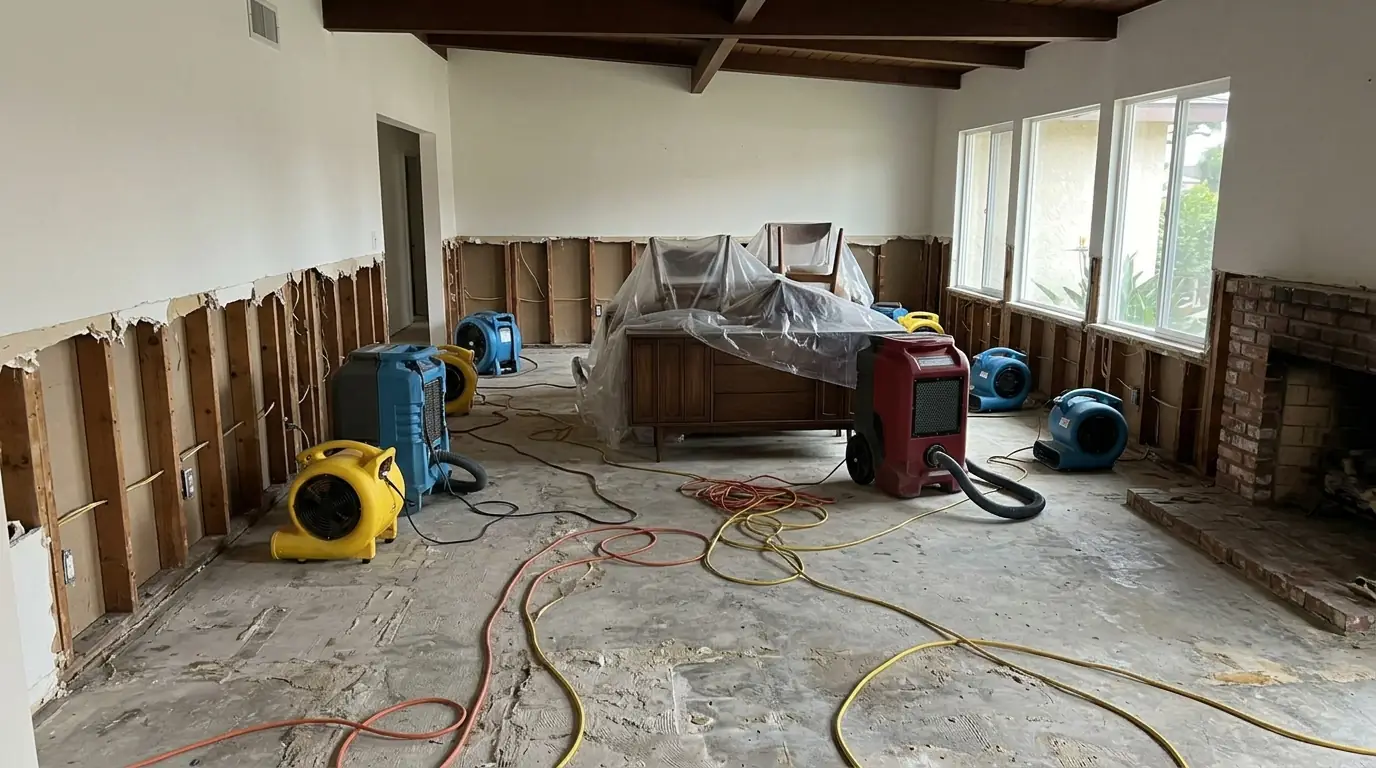
Our flood damage cleanup follows a set order. We extract the water, make flood cuts in drywall a set height above the waterline, pull wet insulation, flooring, pad and the bottoms of base cabinets, then clean and disinfect the slab and framing before drying starts.
- Keep out of standing water that is near outlets or appliances
- Photograph the waterline on walls before anything is removed
- Move dry belongings to a high, dry room
- Throw out food and toiletries that floodwater touched
Stopping mold before it spreads
EPA guidance is to dry wet materials within 24 to 48 hours to prevent mold. In a flooded house in August, with outdoor dew points in the mid-70s, that window closes fast. Opening windows to the humid air outside does little to help.
Once the house is cleaned, post-flood mold prevention steps follow: antimicrobial treatment on framing, dehumidifiers running sealed, and readings until the structure is dry. If growth has already appeared, we contain the area and remove it. An independent licensed assessor you hire does any testing and clearance.