Skip to content
Water, fire, storm and mold calls answered 24/7 across Miami-Dade and Broward(786) 664-2643
New KingstonWater & Restoration · Miami(786) 664-2643Answered 24/7
Category 3 cleanup

Sewage backup cleanup in Miami

Dark water came up through the shower or tub drain, the toilets will not flush, and the smell is spreading across the tile toward the hallway and bedrooms.

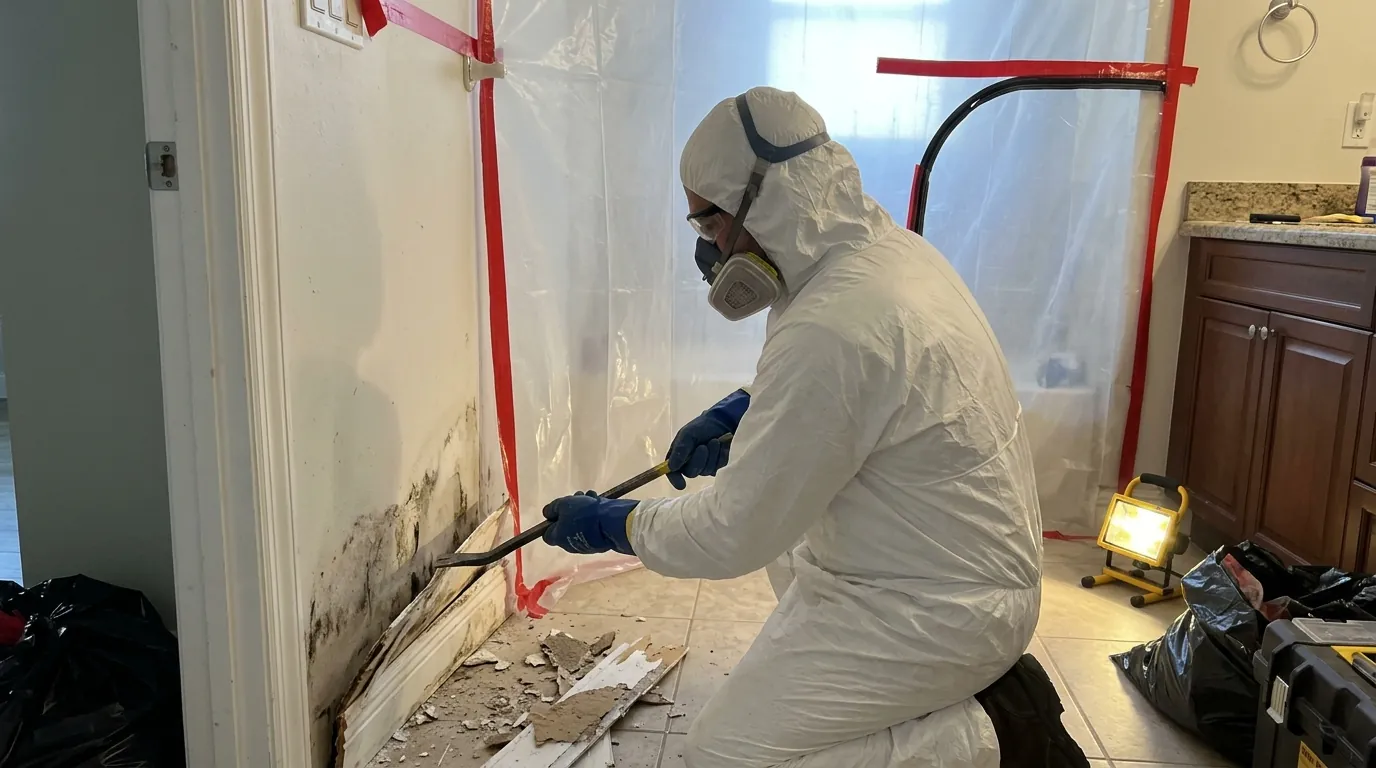
Technician in a protective suit and respirator removing wet baseboards in a Miami bathroom with plastic containment sheeting behind him
Quick answer

Sewage cleanup starts after a plumber stops the backup. The crew sets up containment, extracts the waste water, removes porous materials it touched (carpet, drywall bottoms, baseboards, vanity bases), scrubs and disinfects hard surfaces like tile and the slab, then dries the area to target readings. Until then, do not run water, flush toilets or clean it yourself without protection.

A sewage backup is the dirtiest water a home can take. Under IICRC S500 guidelines it is Category 3, so anything porous it touches is treated as contaminated, and the cleanup calls for protective gear, containment and disinfection rather than a wet vacuum and a mop.

In Miami the cause is often the pipe itself. Cast-iron drain lines in homes built before about 1974 thin out along the bottom, build up scale inside and develop pinholes, so a partial blockage turns into a backup during a heavy rain or a busy morning. A plumber clears or repairs the line; we clean up what came out of it.
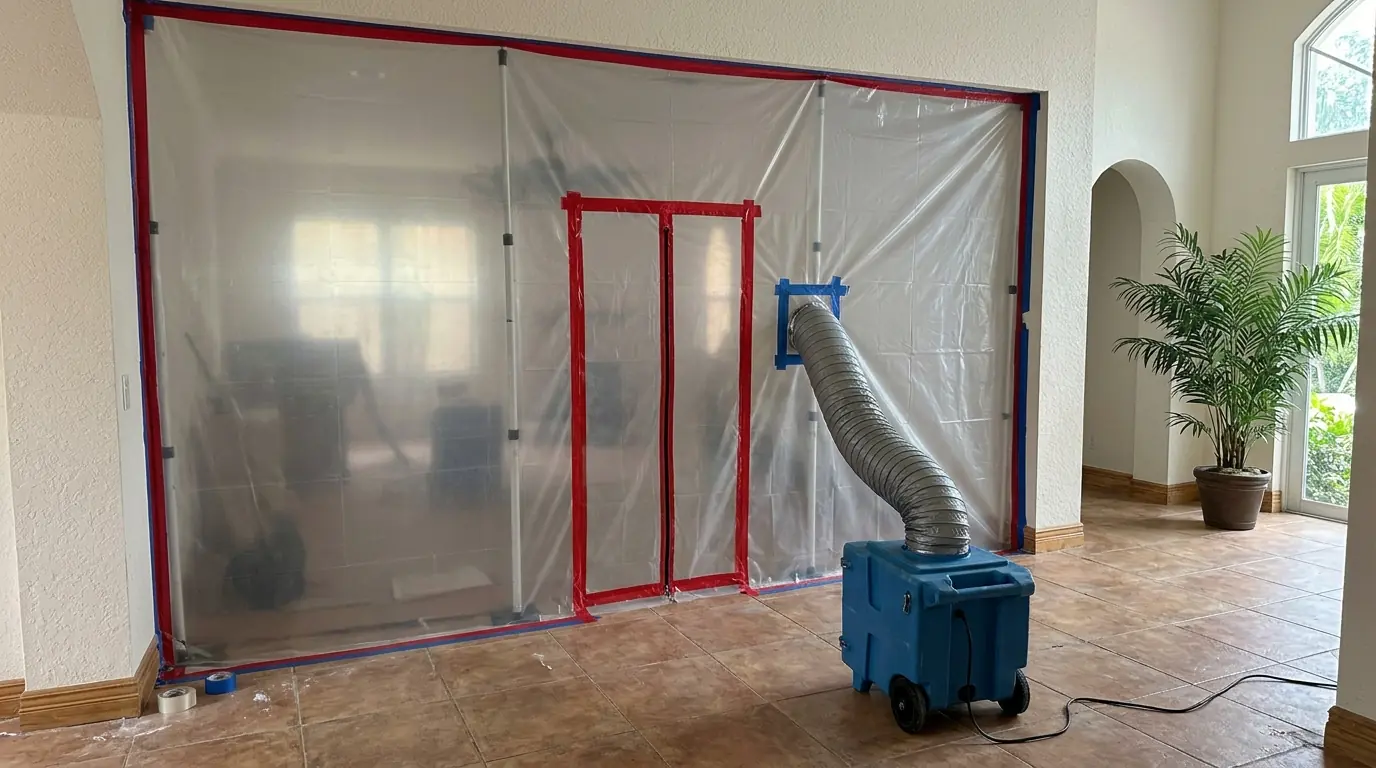
Plastic containment wall with a zipper door and a HEPA air scrubber running in the tiled hallway of a Miami home

Why older Miami drain lines back up

FIU's Metropolitan Center reported in 2018 that about 70% of Miami-Dade's housing was built before 1990, and many of those homes still drain through original cast iron. As that pipe ages, the bottom wears thin, scale narrows the inside, and roots or grease finish the job.

Because most homes here sit on a slab, the drain lines run under the concrete. Leaks from cast iron can wash out the soil that supports the pipe, and a crack under the floor may leak for months before it shows up as an odor or a lifted tile.

If backups keep coming back, ask your plumber about a camera inspection. We see the damage on the surface; the plumber can tell you whether the pipe needs a repair or a replacement.

What to do and what to avoid right now

The first hour is about keeping it contained. Waste water spreads across tile quickly and wicks into baseboards and the bottom of drywall, and every room it reaches adds to the job.

If the water is rising from a city line or from a building stack in a condo, tell the utility or your building manager right away. The source decides who handles the pipe repair, and a record of when you reported it helps.

  • Stop using water: no flushing, showers, laundry or dishwasher
  • Keep children and pets out of the affected rooms
  • Turn off the AC if the air handler closet is near the spill, so odor does not move through the ducts
  • Call a plumber to clear the line, and call us for the cleanup
  • Skip the bleach and mop on carpet and drywall; those materials need to come out

Signs to act on

When to call about sewage backup cleanup

  • Water rising from the lowest drainThe shower or tub drain is usually the lowest point, so backups show up there first.
  • Gurgling toilets and slow sinksSeveral fixtures draining slowly at once points to the main line, not a single clog.
  • Sewer odor with no puddleA smell without visible water can mean a drain leak inside a wall or under the slab.
  • Brown staining at the toilet baseA stained or loose toilet can mean the wax seal or flange is letting waste through.
  • Backups that match heavy rainTrouble that lines up with storms suggests the lateral or the public system is overloaded.
  • Damp grout along a bathroom wallGrout that never dries beside a bathroom wall can mean a drain leak behind the tile.

How the crew handles black water

Crews wear protective suits, gloves and respirators. The work area is sealed with plastic sheeting and kept under negative air with HEPA filtration, so contaminated air does not drift into clean rooms.

After extraction, porous materials the sewage touched are bagged and removed: carpet and pad, drywall above the wet line, baseboards, insulation and particleboard vanity bases. Tile, the slab, porcelain fixtures and solid framing are scrubbed, disinfected and rinsed. The area is then dried to readings, and odor treatment deals with anything left in the air.

Belongings, rugs and the job record

Soft items soaked with sewage, such as rugs, upholstered furniture, mattresses, stuffed toys and clothing, are rarely worth saving. Hard items like metal, glass and sealed plastic can often be cleaned and disinfected. We photograph and list everything thrown out before it leaves the house.

That list, along with moisture readings and photos of the backup, goes into a job file you can hand your adjuster through our insurance claim help. Some policies limit sewer backup unless a specific endorsement was added, so check with your agent; New Kingston documents the loss and leaves coverage questions to them.

How the job runs

From your call to a finished room

  1. Plumber stops the sourceCleanup starts once the line is cleared or capped so waste is not still coming up. Call the plumber while you call us.
  2. Contain and protectPlastic barriers and negative air keep the dirty area sealed off from the rest of the home.
  3. Extract the waste waterPumps and wet vacs remove liquid and solids from the tile and the slab.
  4. Remove what cannot be cleanedContaminated drywall, baseboards, carpet and vanity bases are cut out, bagged and documented.
  5. Disinfect and dryHard surfaces are scrubbed and treated, then drying equipment runs until readings confirm the area is dry.
  6. Put the room backWalls, baseboards and cabinets are rebuilt, often as part of a bathroom rebuild.

Questions

Sewage Backup Cleanup questions

Is a shower drain backup a health hazard if the water looks gray?

Yes, if it came from the sewer side. Water that backs up from the drain system carries bacteria and other pathogens even when it looks thin. Any backup from the main line is handled as Category 3.

Who pays when the city sewer backs up into my house?

That depends on where the blockage was and on your policy, and it is not something we can decide for you. Note the time it happened, report it to the utility if you suspect the public line, and keep our photos and readings for your adjuster.

Can sewage-soaked carpet be cleaned instead of thrown out?

Wall-to-wall carpet and pad that sat in sewage come out, because the backing and pad hold contamination that cleaning does not reach. A valuable area rug can sometimes go to a specialist rug cleaner instead.

How can I tell if the backup is from my line or the building's?

In a single-family home, if every drain is slow, the problem is usually your lateral or main. In a condo, waste rising in your unit from a shared stack is a building issue, and the association should hear about it right away. A plumber with a camera can confirm either way.

Will the sewer smell stay after the cleanup?

It should not, once contaminated materials are out and the area is disinfected and dry. A smell that lingers usually means wet material was missed or a drain leak is still active, so we recheck with a moisture meter before treating the air.

Water, smoke or storm damage right now?

Call (786) 664-2643. A person answers at any hour, asks what happened, and tells you what to do while the crew gets moving.

Call (786) 664-2643 · 24/7