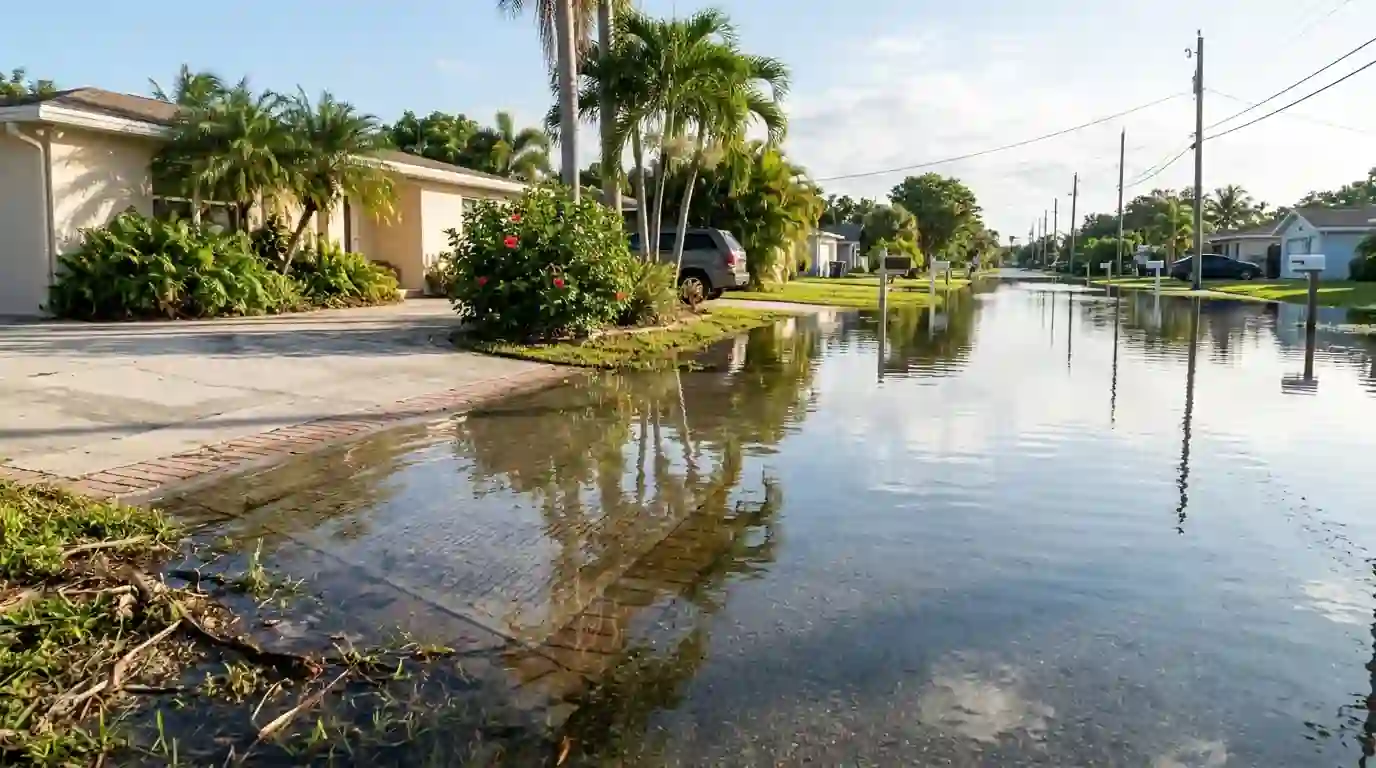
- King tides are predictable, so you can check the dates and prepare ahead of time.
- Tidal water is saltwater, which corrodes metal, damages vehicles and leaves residue behind.
- Water rising from outside is treated as flood in most insurance policies.
- Rinse, dry and document quickly if water gets inside.
King tides are the highest predicted high tides of the year. In southeast Florida, Miami-Dade County notes, the highest usually arrive in the fall, roughly September through November, and they can flood low-lying streets with saltwater even on sunny days. When a king tide lines up with a heavy afternoon storm, the rain has nowhere to drain.
If you live in a single-story home on a low street, or in a ground-floor condo or townhouse near the bay, a canal or a river, these tides are worth planning for every year.
What makes king tide flooding different
Rain flooding comes from above and drains away once the storm system catches up. Tidal flooding comes from below. As the tide rises, water backs up through storm drains and seeps up through the porous limestone under much of South Florida, then pools on the lowest streets and lots. It recedes on the tide's schedule, usually within a few hours, and returns with the next high tide.
Miami-Dade describes the county as uniquely vulnerable to flooding because of low elevation, a high water table, nearby water bodies and limited natural drainage. King tides add a few extra inches at exactly the time of year when the rainy season, which the county lists as May 15 through October 15, is winding down and the ground is already saturated.
The water is also salty. Saltwater corrodes metal, attacks electrical connections and leaves mineral residue on surfaces as it dries. That changes both the damage and the cleanup.
Before the tide: a short preparation list
Because king tides are predicted months ahead, you can look up the dates for your area and plan around them. A few simple steps go a long way:
- Move cars to higher ground or a parking garage before the high tide, and never drive through saltwater on the street.
- Lift anything stored on the garage floor, especially paint, chemicals, tools and boxes.
- Check that door sweeps and thresholds on ground-level doors seal well.
- Keep a few sandbags or water-filled barriers ready for the doors that face the street.
- Clear leaves from the storm drain closest to your driveway if it is safe to reach.
- In a condo, ask management how they protect the lobby, mechanical rooms and parking level.
Ground-floor condos and townhouses
Ground-floor units in coastal buildings face their own risks. Water can come in from the street, from a flooded parking area or through a common hallway before it reaches individual units. Electrical rooms, elevator pits and pump rooms on the lowest level are vulnerable too, and a problem there can affect every resident.
Find out where your unit's electrical panel and water shutoff are, and where the building's flood barriers are stored. If water reaches your unit, take photos and notify management right away. Water that came from outside may raise different insurance and responsibility questions than an internal leak, which our article on condo leak responsibility covers in general terms.
Associations in coastal buildings also deal with long-term saltwater exposure on concrete and steel. Florida's milestone inspection law lets local agencies move a building's first inspection to 25 years based on conditions such as salt-water exposure, and Miami-Dade's recertification program applies the 25-year mark to condo and co-op buildings three or more stories within 3 miles of the coast.
If saltwater gets inside
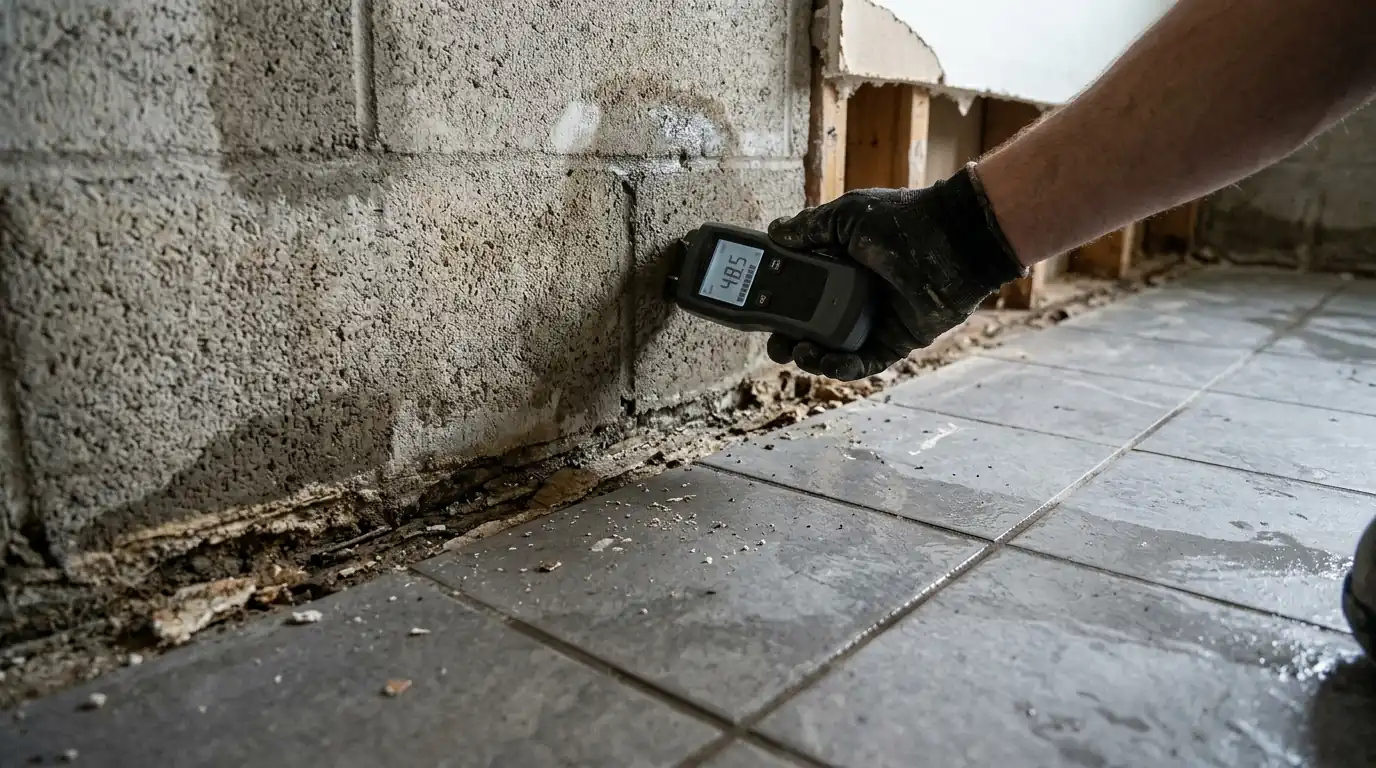
Once the water recedes, switch off power to any room where outlets or cords got wet, and do not turn it back on until an electrician has looked at it. Photograph the water line, the street and every affected room before you start cleaning.
Saltwater left on surfaces keeps doing damage after it dries. Remove wet rugs and fabric items, then rinse hard surfaces such as tile, baseboards and metal door frames with fresh water before drying them. Drywall, insulation and carpet pad that soaked up tidal water usually have to come out, because floodwater from outside is treated as Category 3 water under IICRC S500 guidelines.
A crew handling flood damage cleanup will extract water, remove affected materials, clean and disinfect, then dry the structure with daily moisture readings. For larger events where surge pushes in from the bay, storm surge cleanup covers the heavier debris and salt residue.
Insurance: tidal water is usually flood
Water that rises from outside and comes in across the ground is generally treated as flood. FEMA says most homeowners and renters policies do not cover flood damage, and NFIP flood policies typically have a 30-day waiting period before coverage begins. If you live on a low street, the time to buy a flood policy is before the fall tides, not the week of.
Zone X is not a reason to skip coverage. FEMA reports over 40% of flood claims come from outside high-risk zones. Our article on flood versus water damage explains how policies usually tell the two apart.
Keeping damage from repeating each fall
If tidal water reaches your home more than once, think about longer-term changes. Some homeowners raise thresholds, add flood vents or swap drywall at the bottom of garage walls for materials that tolerate getting wet. Others move the washer, dryer and water heater onto platforms. Your local building department can explain what permits these changes need.
Keep a simple record of each event: the date, how high the water rose on the street and at your door, and what got wet. Over a few seasons, that record tells you which doors need the most protection and helps when you talk with your insurer or association. To see how long cleanup typically takes for a ground-floor flood, try the restoration timeline estimator.
Common questions
Is it safe to walk through king tide water on my street?
It is best to avoid it. Tidal water on streets mixes with runoff and can carry sewage, oil and debris, and it can hide uneven pavement or open drains. If you must cross it, wear closed shoes and wash your skin afterward.
Can king tide water damage my car even if it does not reach the doors?
Yes. Saltwater splashed up underneath a car can corrode brake lines, suspension parts and electrical connections over time. Rinse the underside with fresh water after driving through any salty puddle, and move the car before the tide when you can.
Should I use sandbags for every king tide?
Only if your doors have taken water before or the forecast tide is unusually high. Sandbags slow water but do not seal a door completely, so pair them with plastic sheeting and lift items off the floor behind them. Check with your city or county for sandbag distribution points during the fall tide season.