Skip to content
Water, fire, storm and mold calls answered 24/7 across Miami-Dade and Broward(786) 664-2643
New KingstonWater & Restoration · Miami(786) 664-2643Answered 24/7
Stains sealed for good

Interior painting after water and smoke damage in Miami

A brown ring on the ceiling that shows through two coats of paint, or gray smoke shadows above every outlet and vent, needs the right primer underneath, not another coat of wall paint.

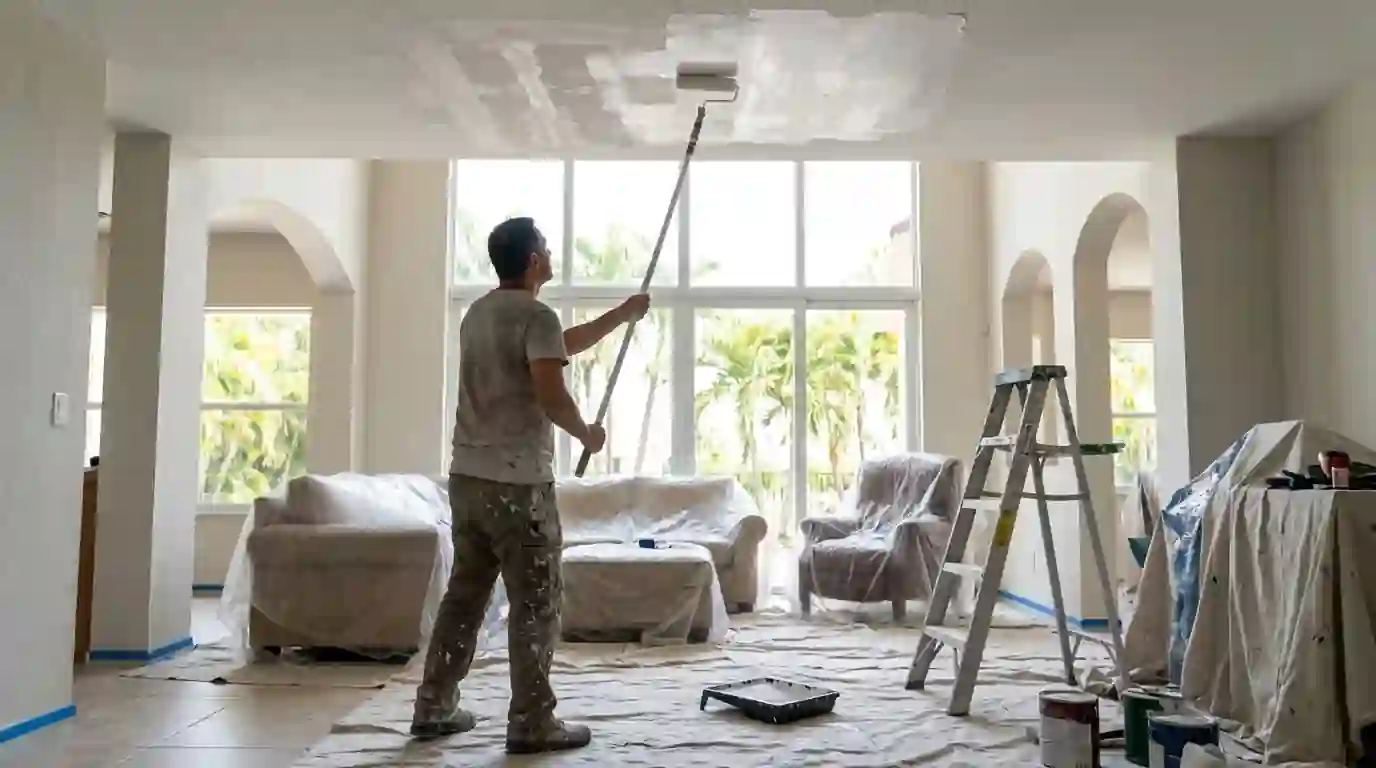
Painter rolling stain-blocking primer over a repaired ceiling patch in a Miami living room, furniture covered and floor protected
Quick answer

Water and smoke stains need a stain-blocking primer before paint, usually a shellac-based or oil-based primer for heavy stains and smoke, and a water-based blocker for lighter marks. Smoke-damaged rooms are cleaned first, then sealed to lock in remaining odor. Painting a full wall or ceiling, corner to corner, is what keeps the repaired area from looking different.

Water stains and smoke residue are chemical problems as much as cosmetic ones. Tannins and minerals carried by a leak, and the oily film left by smoke, travel up through ordinary latex paint and reappear within days. Painting over them without a stain-blocking primer just restarts the cycle.

Painting is the last step of a restoration job and the one you notice most. New Kingston crews prime and paint after drywall repair, smoke cleaning or mold work, using primers chosen for the specific stain, then paint full walls and ceilings so the new finish matches the rest of the room.
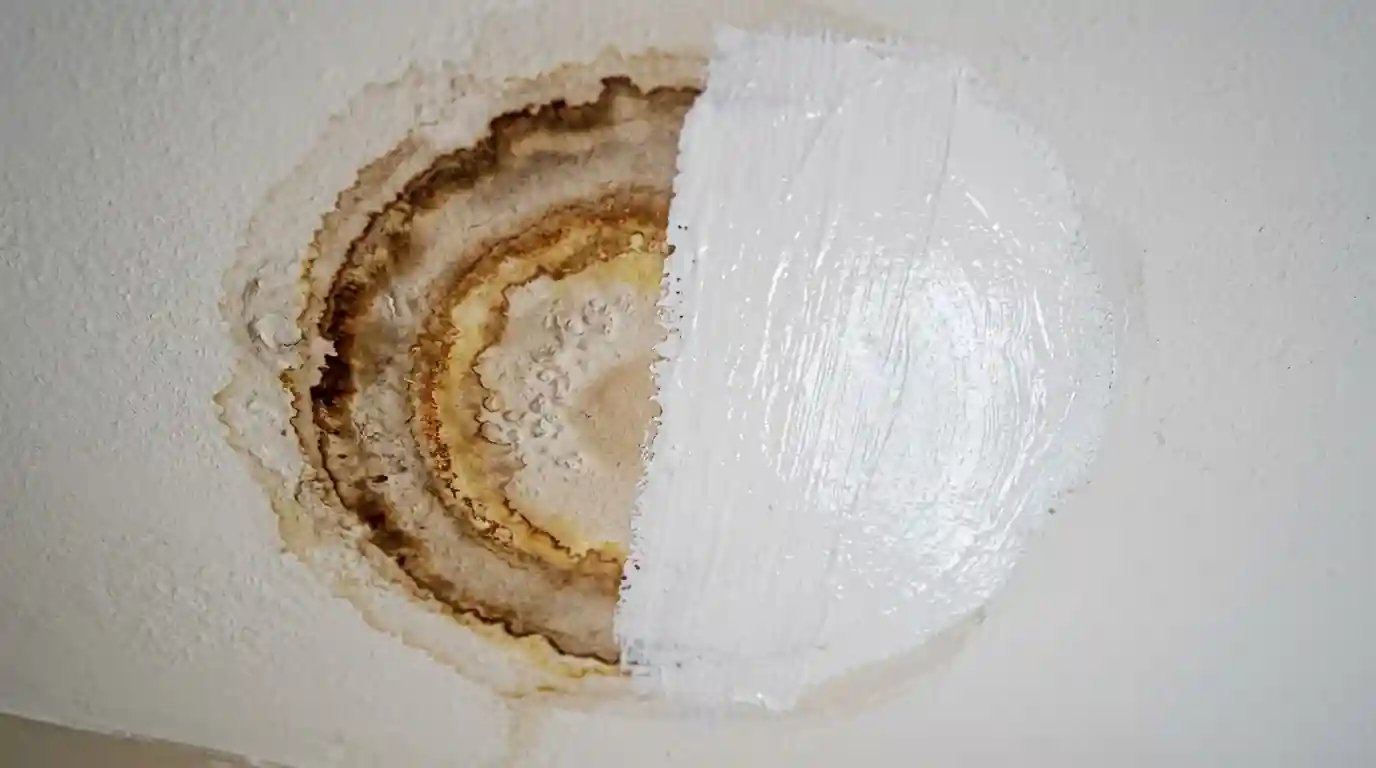
Close-up of a brown water ring on a white ceiling half covered by a fresh band of shellac primer

Primer is the part that does the work

Wall paint is made to cover color, not to stop stains. A water stain carries minerals and wood tannins that dissolve into new latex paint and bleed back to the surface. Smoke residue has an oily film that keeps paint from bonding and pushes odor through it.

Primers are matched to the problem. Shellac-based primer seals heavy water stains, smoke and soot shadows and odor in one coat. Oil-based primer works well on stains and bare patches. Water-based stain blockers handle light marks and new drywall, with lower odor for occupied homes.

Smoke-damaged rooms get cleaned before they get painted

Public-health guidance says smoke and soot deposits and odors must be cleaned and neutralized before redecorating. Painting over soot traps it, and the smell returns. Walls and ceilings are cleaned with methods matched to the residue, covered on the smoke damage cleanup page.

After cleaning, a sealing primer coats every affected surface, including closet interiors and the backs of doors that people forget. That layer locks in what cleaning cannot reach, so the finish coat stays clean and the room smells neutral.

Signs to act on

When to call about interior painting after damage

  • Rings that come back through paintA yellow or brown ring reappears on the ceiling after you painted over it, sometimes within a day.
  • Gray shadows above vents and outletsSoot outlines show where air moved through gaps, a pattern common after a fire elsewhere in the house.
  • Patched drywall with a dull spotA repaired area looks flatter or shinier than the wall around it, especially in side light.
  • Smoke smell on humid daysOdor returns when the air gets heavy, a sign residue is still in the wall surface or ceiling.
  • Paint peeling near the showerPaint bubbles or peels on a bathroom ceiling or wall that stays damp for hours after use.
  • Mildew dots across a closet wallSmall dark dots appear on painted walls in closets and corners where air barely moves.

Getting paint to dry and stick in Miami humidity

Miami's average morning relative humidity runs about 84%, and paint dries slowly in damp air. Primer applied over a surface that is still damp from a leak can blister or peel weeks later, even if the wall looked dry when it was painted.

Walls and ceilings are checked with a moisture meter before primer goes on, and the AC runs to keep indoor air in a steady range while coats dry. In bathrooms and laundry rooms, a mildew-resistant finish in a satin or semi-gloss sheen holds up better to steam and wiping.

If mold was removed from a room, painting waits until the independent assessor's clearance comes through. Paint is never used to cover mold.

Matching color and sheen across the room

Touch-up spots almost always show, even with the original can of paint, because paint fades and sheen changes as it ages. The reliable fix is painting from corner to corner and ceiling to floor on any wall that was repaired.

Color is matched from a chip cut from an undamaged area of the wall and scanned for a formula. Ceilings are usually painted in full. After a drywall replacement or a fire restoration, whole rooms are often painted for a uniform finish.

How the job runs

From your call to a finished room

  1. Check moisture and residueWalls are metered for dampness, and smoke-affected areas are tested with a dry sponge to see how much residue is left.
  2. Clean and protectSmoke residue is cleaned off, floors and furniture are covered, and outlets and trim are masked.
  3. Sand and patchRepaired drywall is sanded smooth, nail pops are reset and small dents are filled so the primer goes on a flat surface.
  4. Apply stain-blocking primerThe primer matched to the stain goes on every affected area, with extra coverage at the darkest spots.
  5. Paint full walls and ceilingsTwo finish coats go on corner to corner in the matched color and sheen.
  6. Final look in daylightYou check the finished walls in natural light, and any thin spots are touched up before the job closes.

Questions

Interior Painting After Damage questions

Why does a water stain show through new paint?

Water leaves behind minerals and tannins that dissolve into latex paint and wick back to the surface as it dries. A stain-blocking primer creates a barrier those materials cannot pass through.

Is shellac primer safe to use in an occupied home?

It has a strong smell while wet, so windows are opened, fans run and people and pets stay out of the room until it dries. The smell fades quickly once the primer cures.

Do I have to repaint the whole room or just the stained wall?

Usually only the walls and ceiling that were stained or repaired, painted corner to corner. If adjacent walls have faded noticeably, painting the full room gives a more even look. Your adjuster decides what the claim covers.

Can I paint over mildew spots myself?

Small surface mildew on a painted wall can be cleaned with a mild detergent, dried and then primed. Growth that keeps returning or covers a large area points to a moisture problem behind the wall. That needs hidden moisture detection before any paint.

How soon can I hang pictures and push furniture back?

Most latex finishes are dry to the touch in a few hours but need several days to harden. Furniture can come back the next day if it does not press against the wall. Wait about a week to hang heavy frames.

Water, smoke or storm damage right now?

Call (786) 664-2643. A person answers at any hour, asks what happened, and tells you what to do while the crew gets moving.

Call (786) 664-2643 · 24/7