Skip to content
Water, fire, storm and mold calls answered 24/7 across Miami-Dade and Broward(786) 664-2643
New KingstonWater & Restoration · Miami(786) 664-2643Answered 24/7
Shower and tub mold

Bathroom mold removal in Miami, behind the tile and vanity

When the grout keeps going dark no matter how often you scrub, or the wall next to the shower feels soft, the mold is usually not on the tile at all but in the wall behind it.

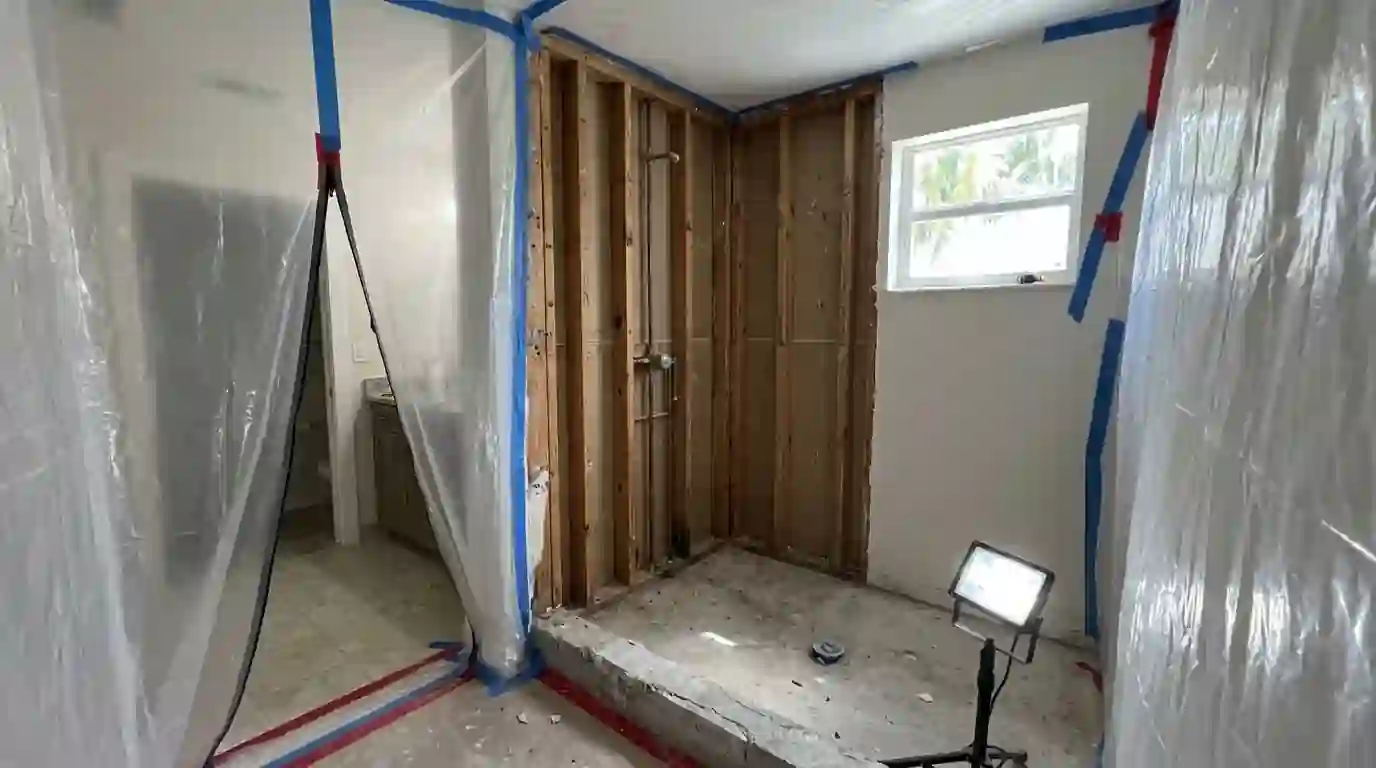
Bathroom in a Miami home with shower tile and backer board removed inside plastic containment, exposing cleaned studs and a concrete slab edge
Quick answer

Grout mildew can be cleaned, but mold behind shower tile or inside a vanity wall means water got through. Removal involves taking out the affected tile and backer board, cleaning the studs or block, drying the cavity and slab edge, and finding the leak path before anything is rebuilt. An independent licensed assessor can check the area before the new wall goes up.

Surface mildew on caulk and grout is normal in a Miami bathroom and a good cleaner handles it. What we get called for is the next stage: water that has been slipping past cracked grout, a worn tub seal or a leaking valve for months and soaking the board behind the tile.

That kind of growth will not come off with a brush. The wet material has to come out, the cavity has to dry, and the leak path has to be closed so the new shower does not repeat the old one.
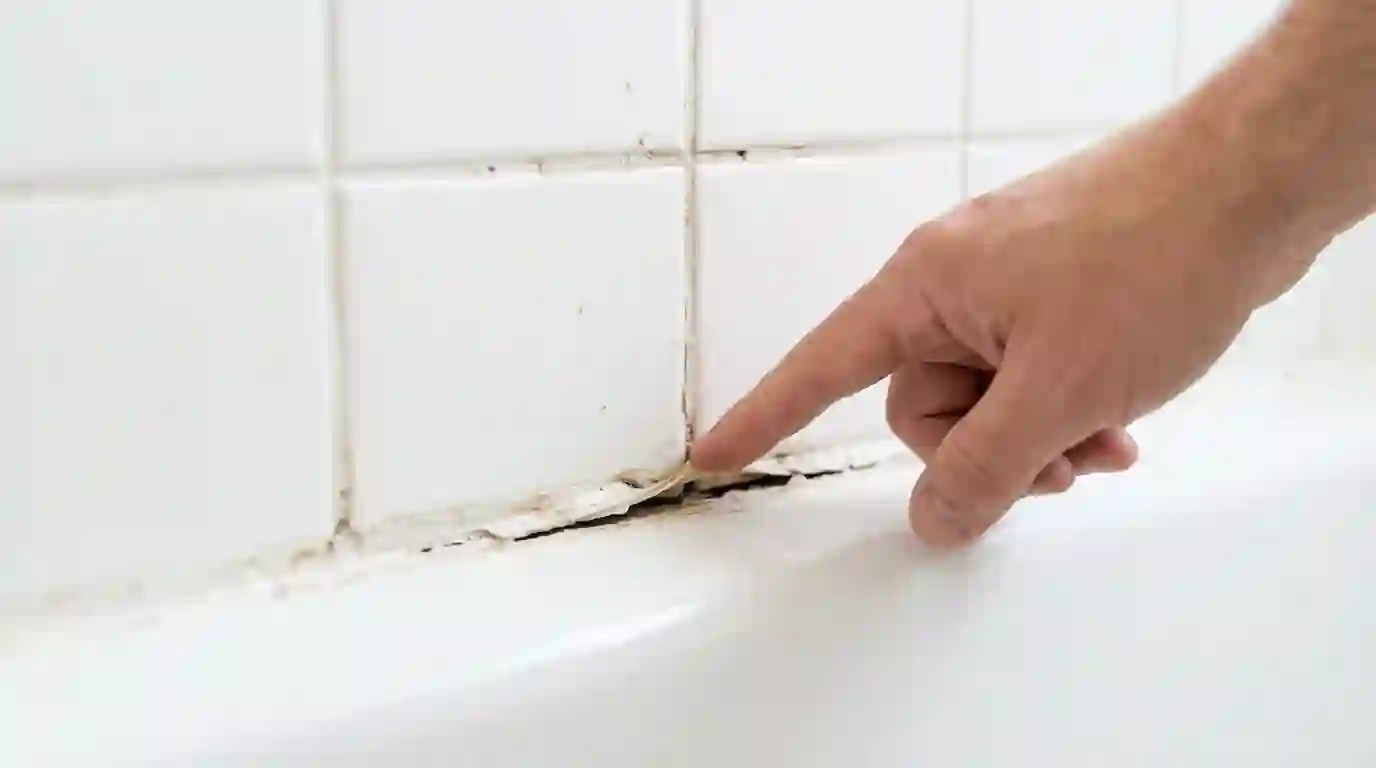
Hand tapping a cracked grout line on a white shower tile wall beside lifted caulk at the edge of a bathtub

Mildew on the grout versus mold in the wall

Every shower in a humid climate grows some surface mildew on caulk and grout. It wipes off with a bathroom cleaner and comes back slowly. That is a cleaning habit, not a restoration job.

Mold inside the wall behaves differently. It comes back fast, it shows up in the same corners, and it often brings loose tiles, cracked grout lines or stains on the other side of the wall. That pattern tells us water is getting through the tile layer, and the board behind it is holding that water.

How water reaches the wall behind a shower over slab

Most Miami bathrooms sit on a concrete slab, and many older ones have tile set over drywall or plain cement board without a waterproof membrane. Grout is not waterproof on its own. Over years, small cracks let shower water soak into the backing, and on a slab that water has nowhere to drain except sideways into the bottom plate and the next room.

Other common paths are a leaking shower valve inside the wall, a failed tub drain gasket and a vanity supply line that drips only when the faucet runs. A slab leak under the floor can do the same from below.

  • Cracked grout and failed caulk lines
  • Tile over drywall with no membrane
  • Valve, drain or supply leaks inside the wall
  • Rain through an exterior block wall

Taking out tile, backer board and vanity cabinets

New Kingston crews set up containment at the bathroom door and run negative air through a HEPA scrubber, since tile demolition throws dust and spores. The toilet and vanity come out if growth runs behind them.

Tile and backer board are removed until we reach clean, dry material on every side. Studs, furring strips or block get HEPA vacuumed and cleaned. Then we measure the slab edge and bottom plate, because a bathroom that has leaked for a long time often leaves moisture in the concrete that needs focused drying.

Before anything is rebuilt, the leak source has to be closed. If a plumber needs to replace a valve or drain, the open wall gives clear access, and we time it so the cavity is not open longer than needed.

Signs to act on

When to call about bathroom mold removal

  • Grout that darkens within daysIf clean grout turns gray again within a week, water is likely sitting behind it instead of just on its surface.
  • Tiles that sound hollowTapping a tile and hearing a dull, hollow note can mean the adhesive behind it has let go because the backing is wet.
  • Soft wall outside the showerDrywall on the bedroom or hallway side of the shower wall that dents under your thumb has been taking on water.
  • Swollen vanity baseA cabinet floor that bulges, delaminates or smells sour usually sits under a slow drain or supply leak.
  • Caulk lifting at the tubGaps where the tub meets the wall let shower water run straight down into the wall and onto the slab.
  • Musty smell with the fan onAn odor that hangs on even when the exhaust fan runs points to growth inside the wall, not in the room air.

Condo bathrooms and the unit below

In a high-rise, a leaking shower pan rarely stays in one unit. Water travels down along pipe chases and slab penetrations and appears as a stain in the ceiling below. That makes the job part mold removal, part condo leak restoration.

We document both units with photos and moisture readings, which helps the owners and the association sort out where the water came from, and we follow the building's rules on work hours and elevator use.

Rebuilding the shower so it stays dry

Once the cavity is dry and, if you choose, an independent licensed mold assessor has checked it, the shower can be rebuilt. Our bathroom rebuild crews install cement board with a waterproof membrane, set new tile and seal the joints.

Afterward, run the exhaust fan during and after showers and recaulk the tub line when it starts to lift.

How the job runs

From your call to a finished room

  1. Check both sides of the wallWe read the shower wall from the bathroom and from the room behind it to see how far the moisture has moved.
  2. Protect the rest of the homeContainment goes up at the door, floors in the hallway get covered, and a HEPA scrubber pulls air out of the bathroom.
  3. Remove tile and wet backingTile, board and any damaged vanity or baseboard come out until every edge reaches clean, dry material.
  4. Clean framing and dry the slab edgeStuds and block are HEPA vacuumed and cleaned, and drying equipment targets the bottom plate and concrete.
  5. Close the leak pathThe plumber or our crew fixes the valve, drain or seal so the rebuilt shower does not take on water again.
  6. Rebuild with a membraneNew backer board, waterproofing and tile go in once the readings say the wall is dry.

Questions

Bathroom Mold Removal questions

Can I just regrout instead of tearing out the shower?

Regrouting works when the backing behind the tile is sound and dry. If tiles sound hollow, the wall is soft or growth keeps returning fast, new grout traps the problem behind it. A moisture reading tells you which case you have.

Why is there mold in my bedroom closet next to the bathroom?

Water leaking through the shower wall or along the slab often surfaces on the other side, at the baseboard of the next room. The closet stays still and dark, so growth shows up there first.

Do you remove the bathtub during mold removal?

Only when the growth or the leak runs under or behind it. Many jobs leave the tub in place and open the wall above and around it. If the tub drain is the source, removal may be the cleanest way to reach it.

How long will my bathroom be out of use?

Removal and drying often take several days, and rebuilding the shower adds more time for board, waterproofing and tile. If it is your only bathroom, we plan the work to shorten the gap.

Does a bathroom exhaust fan prevent shower mold?

A working fan lowers humidity on the surfaces and slows mildew on grout and caulk. It cannot stop water that is leaking through the tile or from a valve inside the wall.

Water, smoke or storm damage right now?

Call (786) 664-2643. A person answers at any hour, asks what happened, and tells you what to do while the crew gets moving.

Call (786) 664-2643 · 24/7