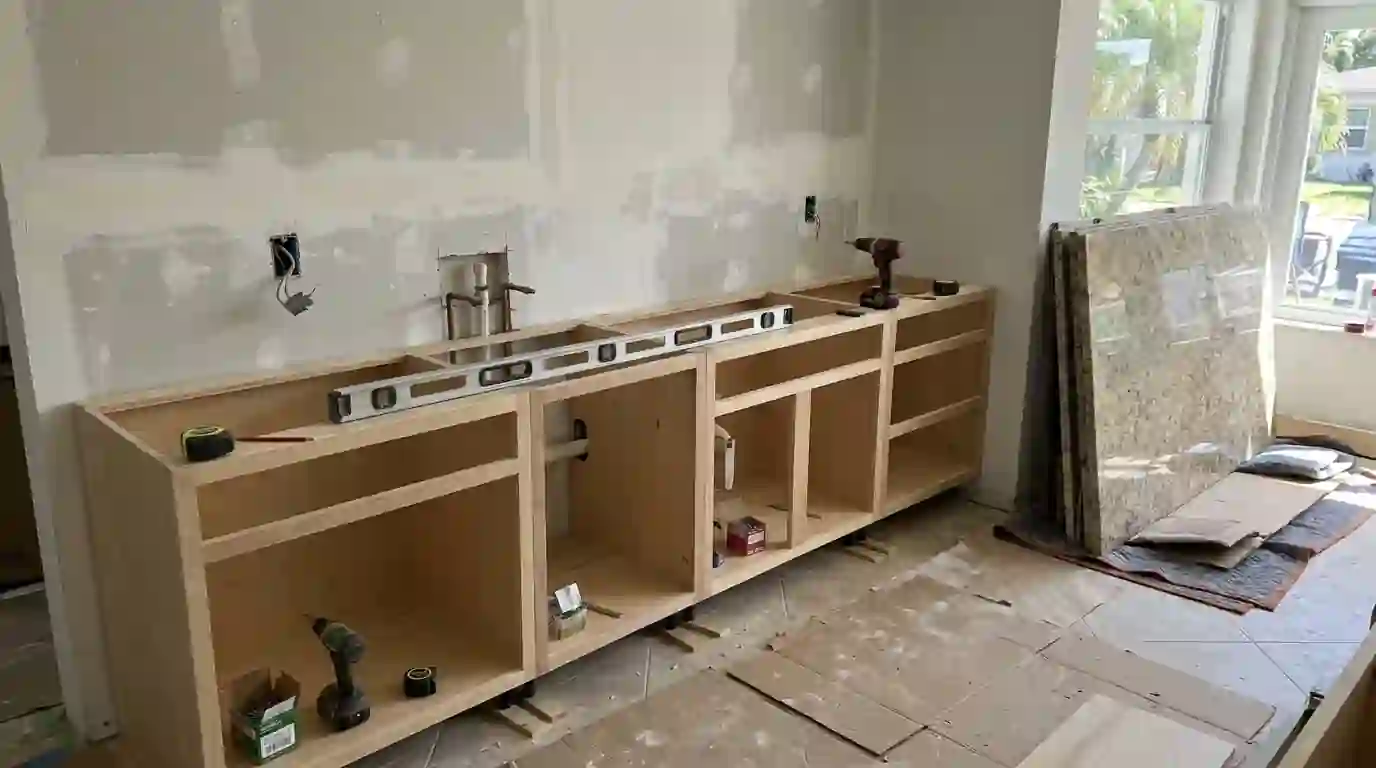
Most base cabinets made of particleboard cannot be saved once they soak up water, because the material swells and loses strength. Countertops can often be lifted and reused if they come off intact. A typical rebuild replaces the damaged boxes, re-tiles the backsplash, repairs drywall and then reconnects the sink and appliances. Matching your existing cabinet doors is the step that decides the schedule.
Kitchens take more damage than their size suggests. Water from the sink, dishwasher, fridge line or ice maker runs straight under the base cabinets, where nobody sees it until the toe kick swells or the floor goes soft. Cooking fires leave grease-laden smoke on every cabinet face, inside the range hood and on the ceiling.
Rebuilding means putting back what had to be removed: cabinet boxes, countertops, backsplash, the wall behind them and the plumbing and appliance connections, so the kitchen works the way it did before the loss. New Kingston handles the cabinet, counter and wall work, and coordinates the plumber and electrician for their parts.
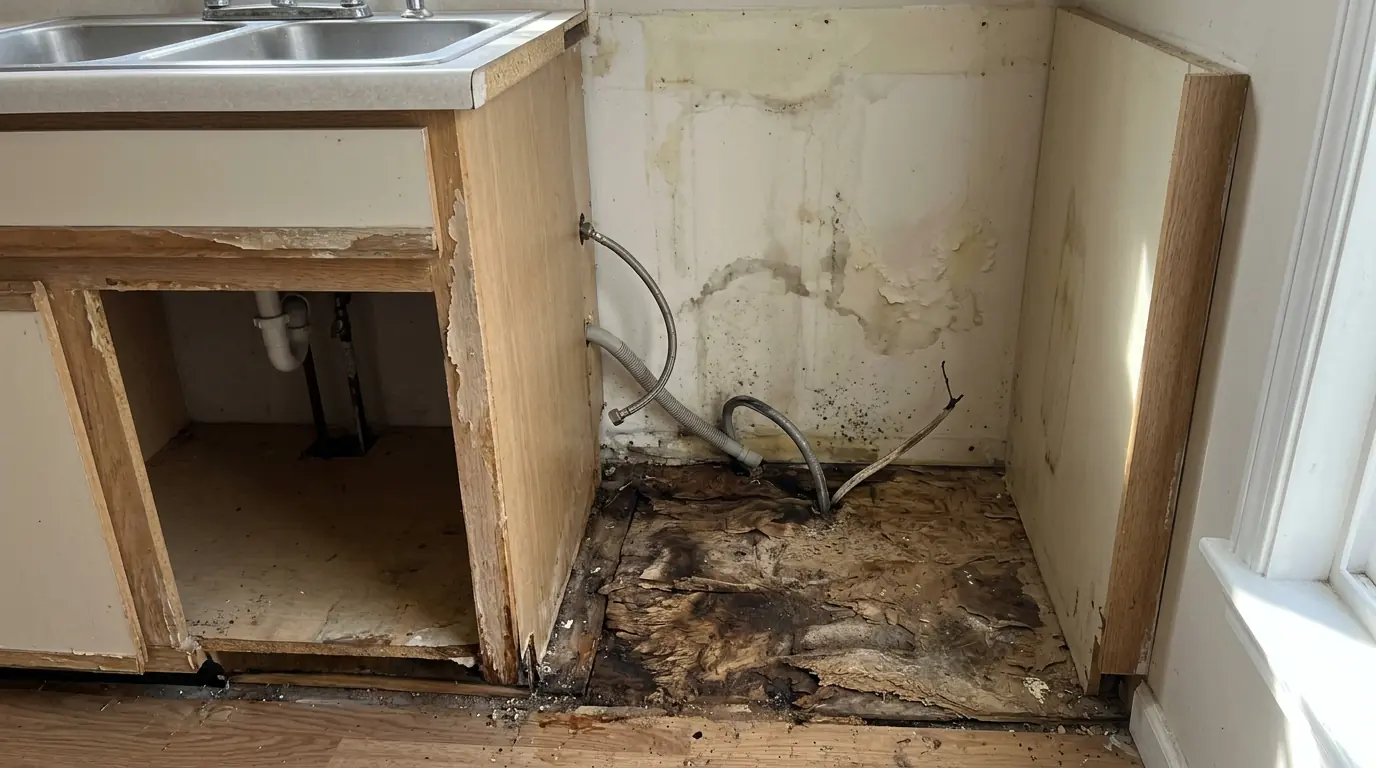
Which kitchen parts can be saved and which cannot
Most stock and semi-custom cabinets use particleboard or MDF boxes. Once those absorb water they swell, the finish lifts, and fasteners lose grip, so drying them does not bring back their strength. Solid plywood boxes sometimes survive a clean-water leak if they dried quickly and stayed square.
Countertops are a different story. Granite and quartz are lifted off carefully during tear-out, stored on edge and reset on the new cabinets if they came off without cracking. Laminate tops glued to a particleboard core usually swell with the cabinets and are replaced.
Appliances are judged one at a time. A dishwasher that caused the leak is usually replaced by the homeowner or the plumber. A range or fridge that sat in clean water may be fine once it is checked by an appliance technician.
Matching the cabinets you still have
Often only the sink base and one or two neighbors are ruined, while the uppers and the far run are fine. In that case the new boxes have to match the existing doors in style, color and finish. Stock lines change over time, so the cabinet maker may build boxes to fit and refinish the doors as a set.
If a match is not realistic, you choose between refacing the doors across the whole kitchen so they look uniform, or replacing the full run. Your adjuster decides what the claim pays for; anything beyond pre-loss condition is written as a separate line you handle directly.