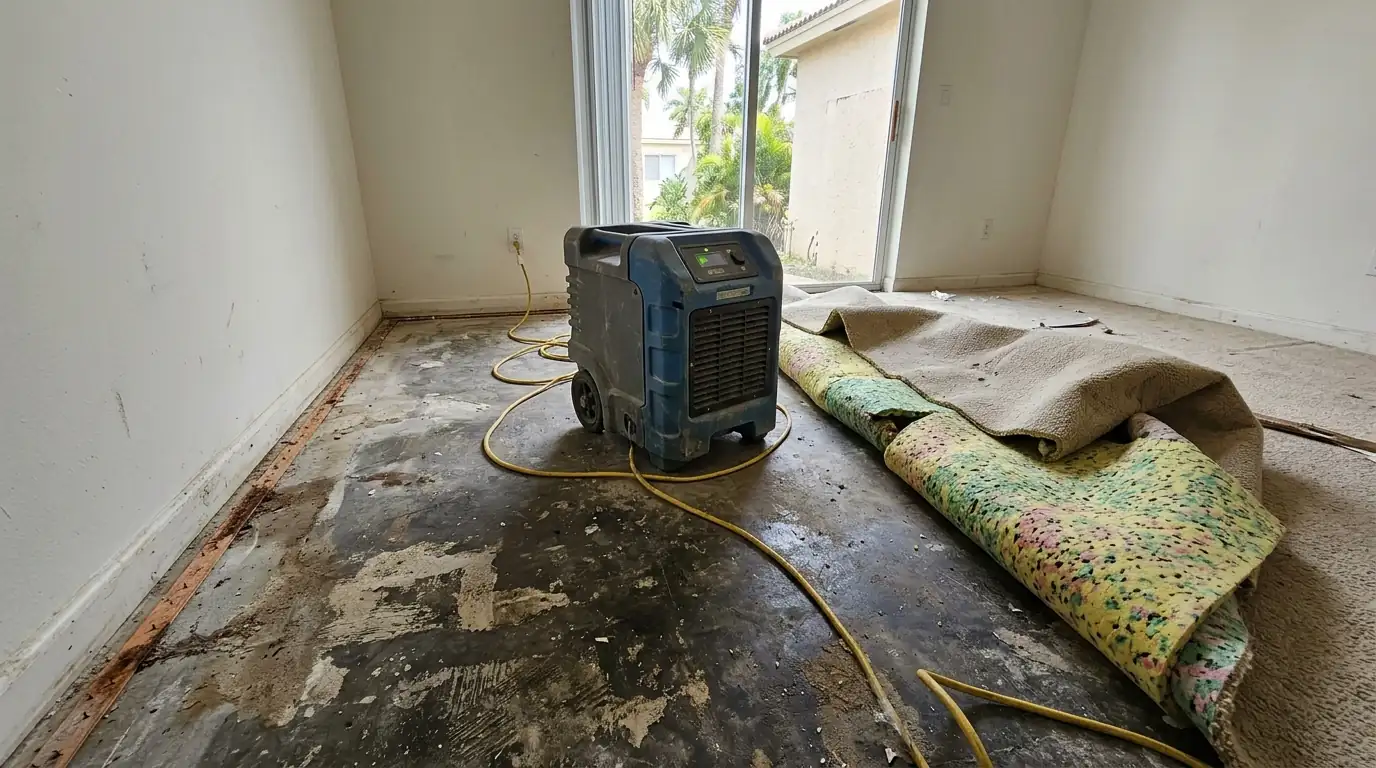
Lasting odor removal takes three stages: find and remove the source, clean the surfaces the odor has soaked into, then treat what is left with hydroxyl generators, thermal fogging or sealing primers. Sprays and ozone alone rarely solve it. Most homes need several days of work, not one visit.
Odors that last are made of particles and gases that have soaked into porous materials: drywall, subfloor, carpet pad, insulation, duct liner and wood framing. Surface cleaning takes care of what is on top, but those materials keep releasing the smell, especially when the house warms up.
New Kingston uses the same approach whatever the smell: find where it starts, remove or clean that source, and only then treat what remains in the air and the structure. Air fresheners and fragranced cleaners skip the first two steps, which is why the smell always comes back.
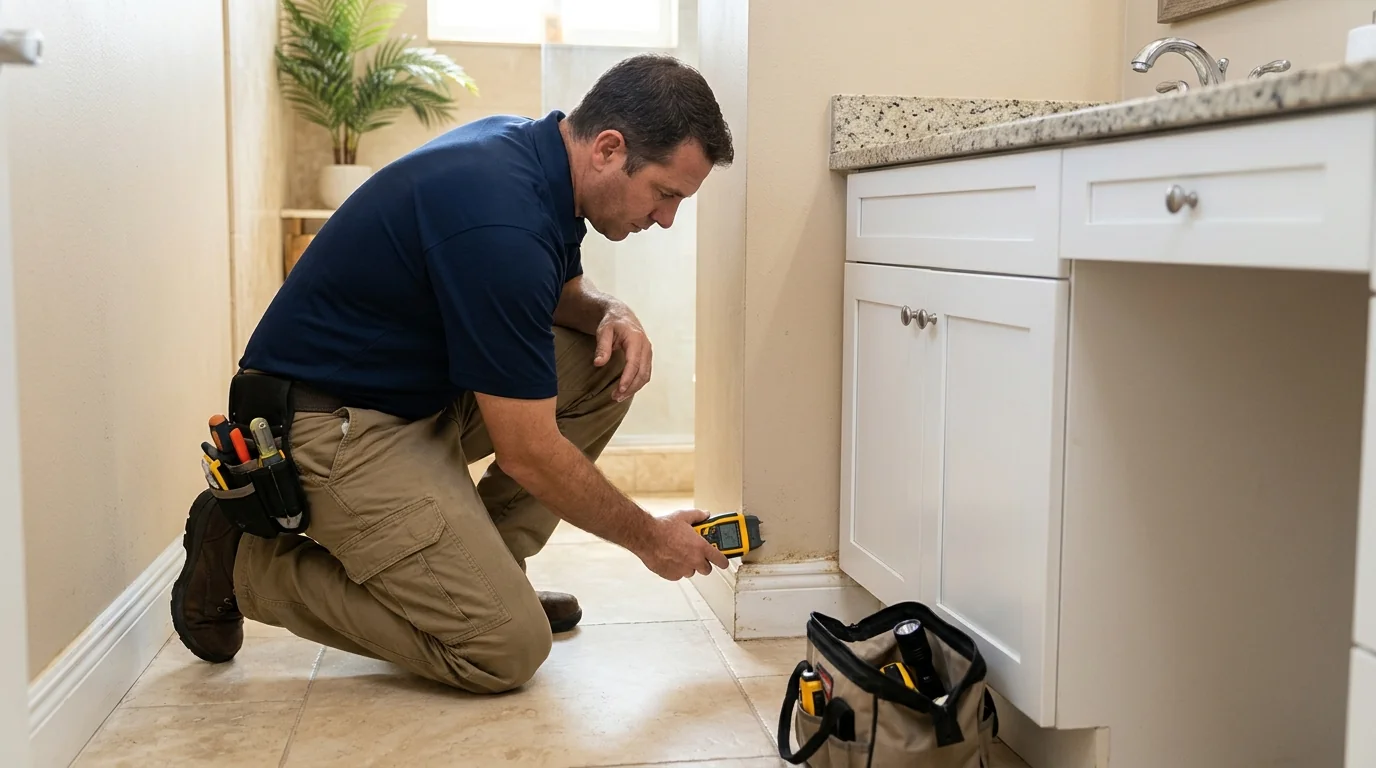
Tracking down where the smell starts
Noses get used to a smell within minutes, so the crew lead works with fresh-air breaks and a plan: rooms checked one at a time with doors closed, cabinets and closets opened, the AC run and stopped, and floors checked with moisture meters.
Moisture is the most common hidden driver. A slow leak under a vanity, wet carpet pad behind a bed or a damp wall cavity keeps bacteria and mold active, and they produce the smell. Our hidden moisture detection tools find wet areas without opening every wall.
We also look at the age of the house. Many older South Florida homes, commonly those built before about 1974, still have cast-iron drain pipes, and those pipes thin along the bottom and develop pinholes that let sewer gas and wastewater escape under the slab.
Smoke, sewage, pet and musty odors each need a different fix
Most odor jobs fall into one of four groups, and the source work looks very different in each:
Homes with more than one source need each handled in order before the final deodorizing. For the residue side of a fire, see smoke damage cleanup.
- Smoke: every surface and the air system cleaned first, then thermal fogging or hydroxyl treatment for cavities, and sealing of framing before walls close.
- Sewage: contaminated porous materials removed, the area disinfected and dried under Category 3 practices, and the line repaired by a plumber.
- Pet urine: carpet and pad pulled, subfloor cleaned or sealed, and enzyme treatment for grout, baseboards and wall bottoms.
- Musty: the moisture source found and dried, any mold growth removed, and the air handler and ducts cleaned.