- Smoke odor comes from residue deposited on surfaces, so the residue has to be removed.
- Fragranced sprays and candles only mask smoke odor, according to public-health guidance.
- Grease fires leave a sticky film that spreads through cabinets, ducts and fabrics.
- Clean first, then seal or deodorize, then paint; doing it out of order traps the smell.
Kitchen fires are common. U.S. Fire Administration data show cooking caused 51% of residential building fires in its 2017 to 2019 averages, by far the leading cause, with unattended equipment the top factor in larger cooking fires. Most of them are small: a pan of oil, a forgotten pot, a toaster oven. The fire department may never be called. The smell, though, can outlast the scorch marks by months.
This article explains why smoke odor hangs on, which popular fixes only cover it up, and what actually removes it.
Why the smell sticks around
Smoke is not just a smell. It is a cloud of tiny particles and oily vapor that settles on every surface it touches and works into anything porous. Public-health guidance notes that smoke and soot can damage paint, carpet, upholstery and clothing, and that deposits and odors must be cleaned and neutralized before redecorating.
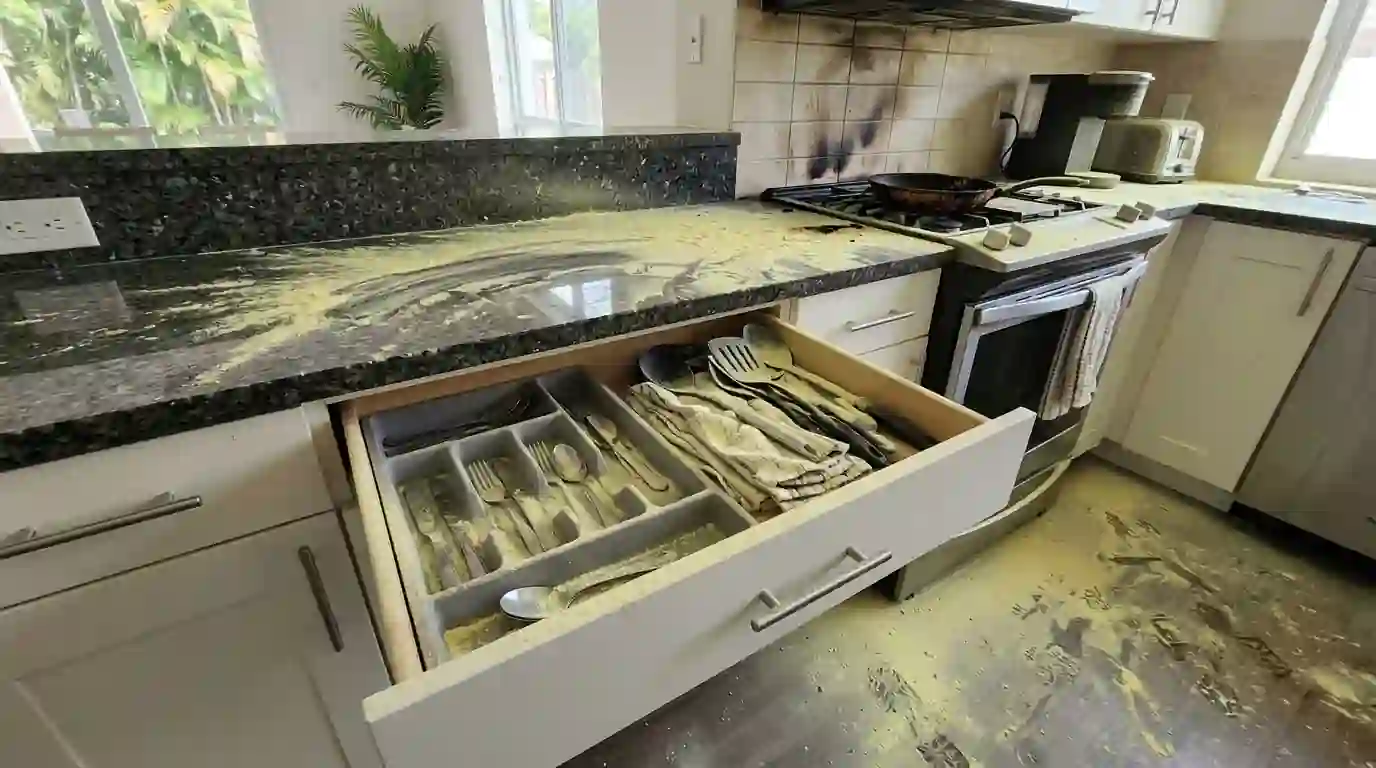
Kitchen fires are especially stubborn because they usually involve grease or food. Protein and oil smoke leaves a thin, sticky residue that can be nearly invisible on light-colored walls yet smell strongly. It clings to cabinet interiors, the range hood, ceiling paint, window blinds and the filter in your air handler.
Miami homes add one more factor. With the AC running most of the year, smoke gets pulled into the return and spread through the ducts to rooms that were nowhere near the stove. That is why a bedroom closet can smell like burnt oil after a fire in the kitchen.
What does not remove smoke odor
These approaches are popular because they work for a few hours. Then the odor returns, often when the house warms up or the humidity rises.
- Air fresheners, scented candles and plug-ins. Fragranced products only mask smoke odor; they add a second smell on top of the first.
- Painting over stained walls without cleaning and sealing first. Odor and residue bleed back through ordinary paint.
- Opening windows for a weekend. Fresh air helps while it moves, but the residue stays on surfaces.
- Washing curtains and clothes in a normal cycle with extra detergent. Heavily affected fabrics often need specialized cleaning.
- Bowls of vinegar, coffee grounds or baking soda. They may absorb a little odor from the air but do nothing about residue on walls and inside cabinets.
What actually removes it
Removing smoke odor follows a simple order: remove the source, clean the residue, treat what remains, then seal and refinish. The ANSI/IICRC S700 standard for fire and smoke damage restoration, published in January 2025, frames the work the same way, covering residue and odor assessment, source removal, HVAC systems, odor management and contents restoration.
Source removal comes first. Anything charred, such as a melted range hood filter, a burned cabinet door or a scorched section of countertop, gets taken out, because it will keep releasing odor no matter how well the rest is cleaned. On a bigger fire, kitchen fire cleanup may include replacing cabinets and drywall near the stove.
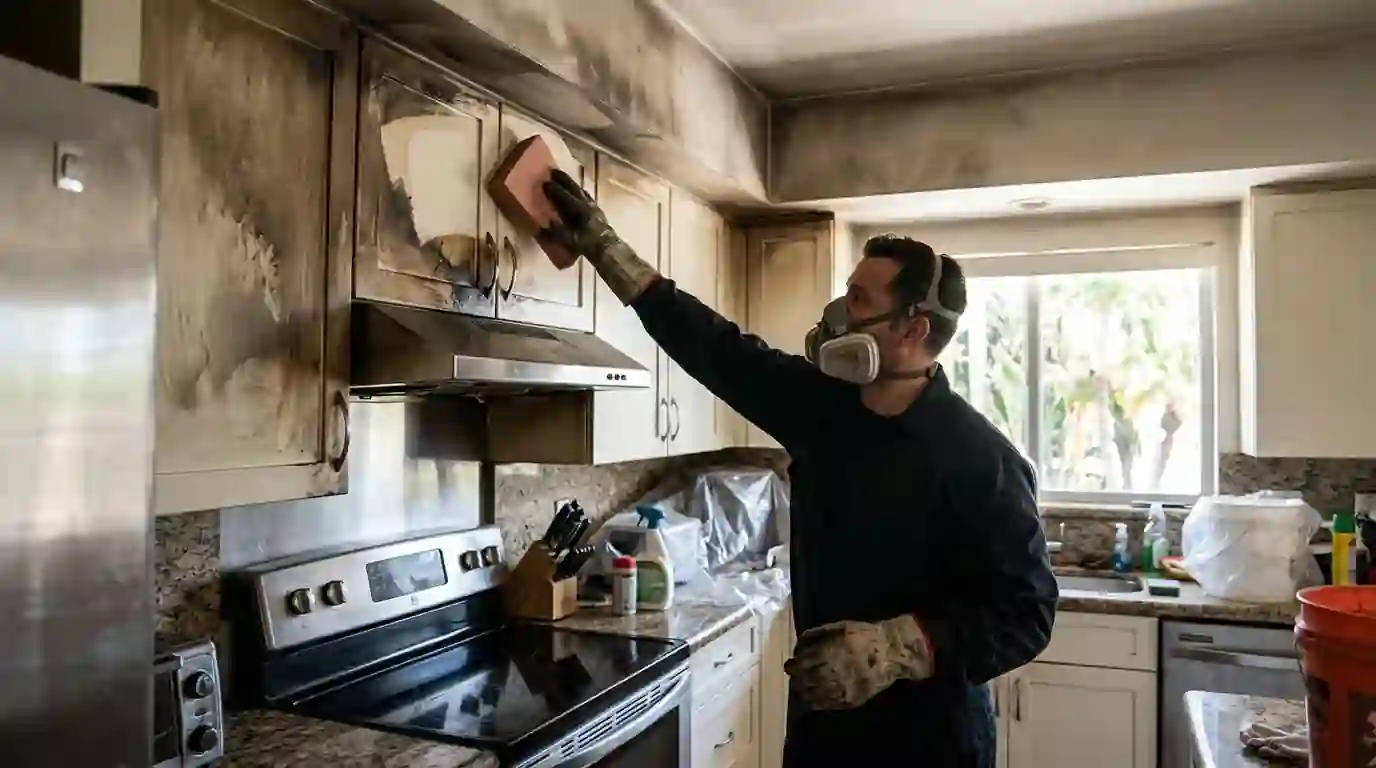
Next is cleaning. Crews use dry soot sponges first on loose residue, then degreasing cleaners matched to protein or oily smoke on walls, ceilings, cabinet faces and interiors, appliances, light fixtures and blinds. Each surface is wiped, not just sprayed. Smoke damage cleanup covers rooms well beyond the kitchen when the AC carried residue through the house.
Treating the odor that cleaning leaves behind
After cleaning, some odor usually remains in porous materials and hard-to-reach cavities. This is where deodorizing methods come in. Depending on the job, crews may use thermal fogging, which carries deodorizer into the same small gaps smoke reached, or hydroxyl or ozone treatment in an empty home. Ozone requires the home to be unoccupied by people and pets during treatment.
The air handler and ducts matter as much as the walls. Changing the filter is a start, but if smoke was pulled through the system during the fire, the coil, blower and duct interiors may need cleaning too. Otherwise every AC cycle brings the smell back. Odor removal treats those sources rather than covering them.
Finally, walls and ceilings that were stained get a coat of stain-blocking, odor-sealing primer before paint. Skipping the primer is the most common reason a freshly painted kitchen starts smelling like smoke again within a month.
Clothing, fabrics and belongings
Soft goods soak up smoke fast. Separate lightly affected items from heavily affected ones. Lightly affected clothing can often be washed a few times in cool water and dried outdoors. Heavily affected items, along with upholstered furniture, mattresses, rugs and drapes, usually need specialized cleaning, and some may not be worth restoring.
If the fire was larger, contents pack-out removes belongings from the house, documents them and cleans them off-site while the structure is worked on. Photograph items before cleaning if you plan to file a claim.
What you can do today
If the fire was small, start by ventilating the kitchen while the weather is dry, turning the AC fan to auto and replacing the filter. Wipe a test spot on a wall with a dry sponge: if it comes away gray or yellow, the residue is spread wider than it looks.
Keep children and pets out of rooms with heavy residue, and wear gloves when handling sooty items. Avoid scrubbing walls with a wet rag first, which can smear soot deeper into the paint. If the odor is strong in rooms away from the kitchen, the AC system probably carried it there, and a full cleaning plan will save you from repainting twice. To compare a cleaning-only job with one that needs cabinet replacement, our restoration costs page has typical ranges.
Common questions
How long does smoke odor last if I do nothing?
Odor from a small cooking fire may fade over weeks in a well-ventilated room, but residue on cabinets, ducts and fabrics can keep releasing smell for months, especially when humidity rises. Heat and moisture tend to bring it back. Cleaning the residue is the only way to end it.
Is it safe to cook in the kitchen again right after a small fire?
If the fire was small, nothing structural or electrical was damaged and the range works normally, you can usually cook once the stove and counters are cleaned. Replace a scorched range hood filter and check the hood fan works. If any wiring, outlets or the appliance itself were damaged, have them checked first.
Can I clean smoke residue off kitchen cabinets myself?
Light residue on sealed cabinet faces often comes off with a degreaser and soft cloths, working from top to bottom. Clean the inside of the boxes and the backs of doors too, since smoke gets in there. Heavy, dark or sticky residue, or residue on unsealed wood, is easier to damage and may need professional cleaning or refinishing.