Skip to content
Water, fire, storm and mold calls answered 24/7 across Miami-Dade and Broward(786) 664-2643
New KingstonWater & Restoration · Miami(786) 664-2643Answered 24/7
Condensate line leaks

AC leak water damage repair in Miami

When the air handler drain clogs, the water your AC pulls out of Miami's humid air has nowhere to go, so it overflows the pan and soaks the closet floor, the wall behind it or the ceiling below.

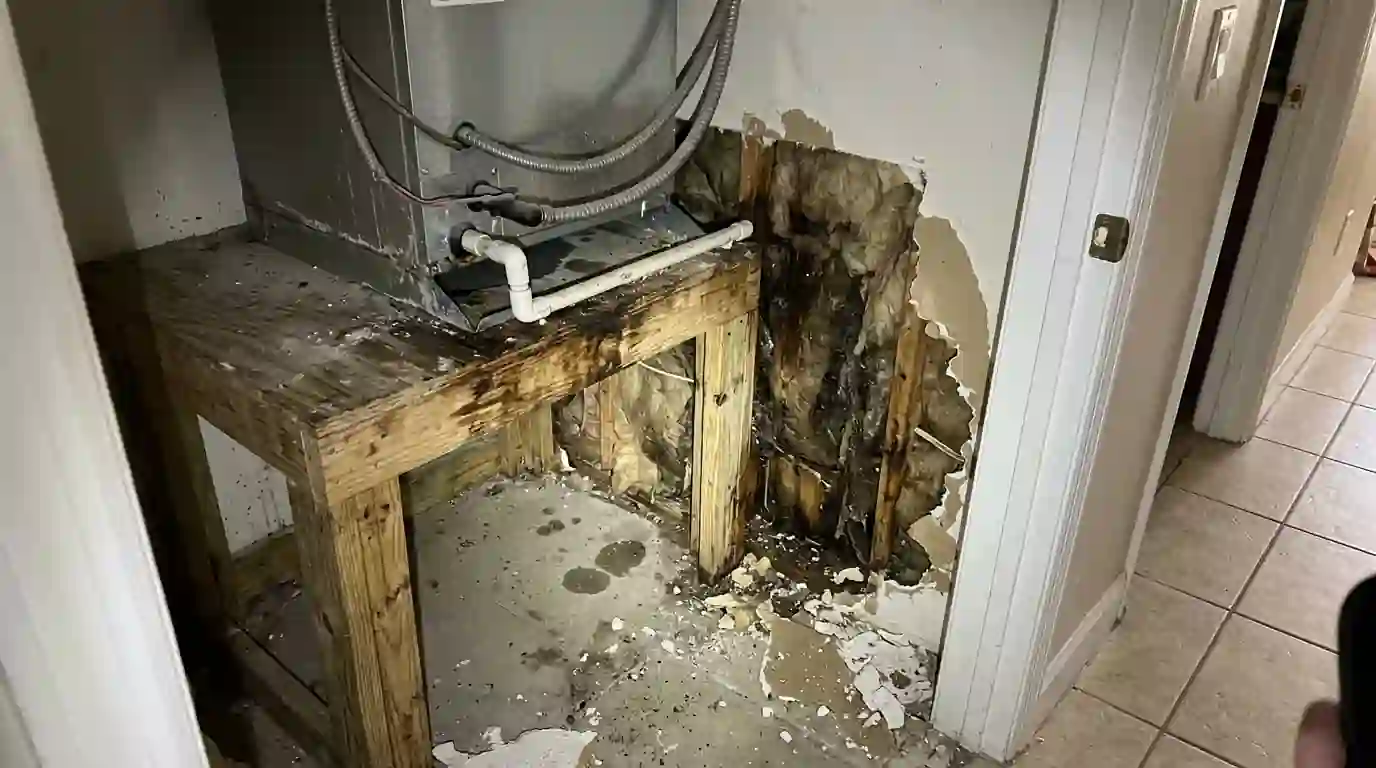
Hall closet with an air handler on a water-stained wood platform and wet drywall cut away in a Miami home
Quick answer

Turn the AC off at the thermostat to stop more condensate, then have an HVAC technician clear the drain line and check the pan and float switch. A restoration crew dries the closet, the wall and any ceiling below, and removes swollen materials. Condensate counts as gray water, so drywall and wood that stayed damp may need to come out.

An air conditioner in Miami runs most of the year, and every hour it runs it strips moisture from the air and sends it down a condensate line. That steady trickle feeds algae and slime, which grow in the pan and trap until the line backs up.

The leak is usually slow, so it hides. A closet floor stays damp for weeks, drywall wicks water up from the bottom, or a stain spreads across the ceiling under an attic unit. By the time you see it, the damage often reaches further than the stain.
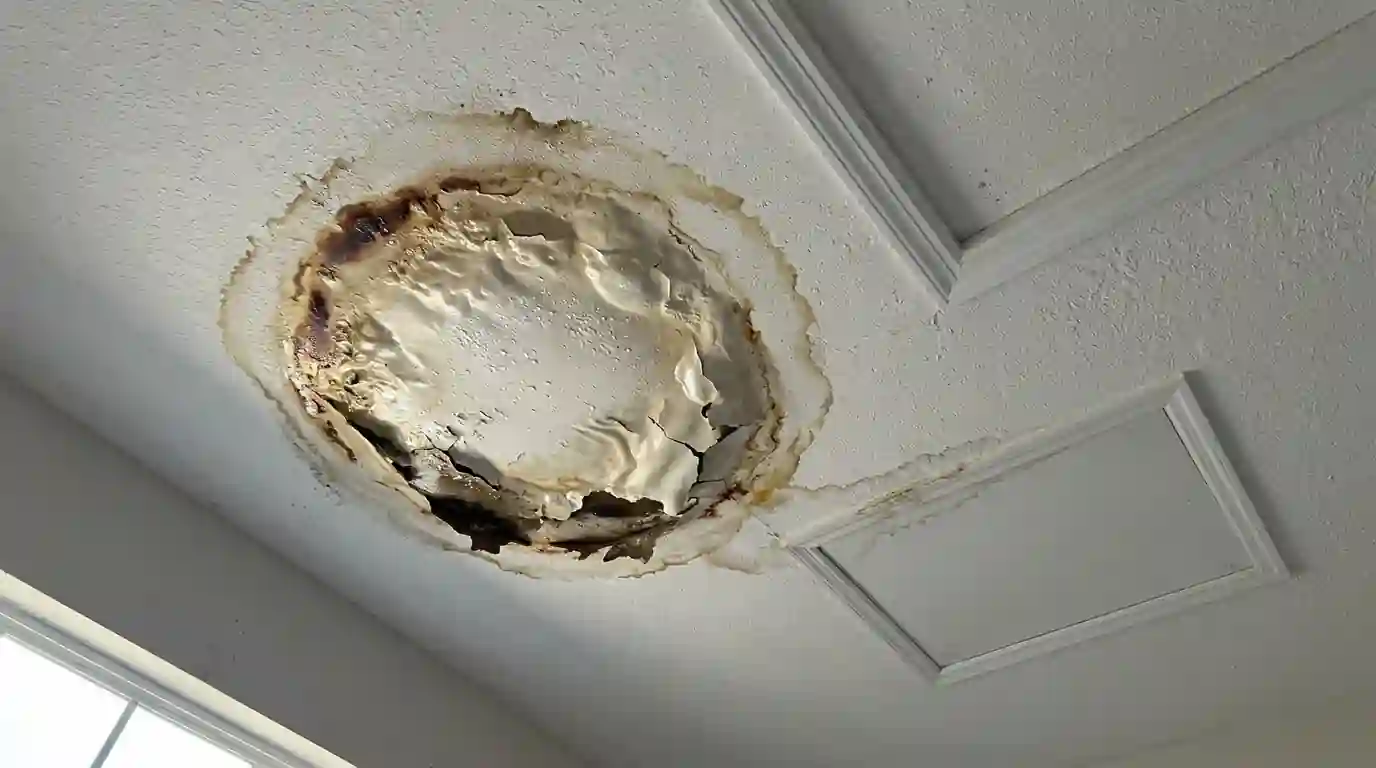
Brown water ring and bubbling paint on a white ceiling below an attic air handler in a South Florida house

How a condensate drain backs up

As warm, humid air crosses the cold coil, water condenses and drips into a pan, then flows out through a drain line. Algae and slime grow in that pan and in the trap, and over time they clog the line so water spills over the primary pan.

A secondary pan under the unit or a water-level float switch is the backup. Forensic investigators have traced water damage claims to these clogs when that backup was missing or not working. EPA also recommends keeping AC drip pans clean and drain lines clear as part of mold prevention.

Miami-Dade adds a local wrinkle: under county ordinance, AC condensate may not drain into plumbing fixtures, because unmetered AC water is not allowed into the sewer. That affects where your HVAC technician can route the line, so ask about it when the drain is repaired.

Closets, attics and the ceiling below

In many Miami homes the air handler sits in a hall closet on a wood or block platform, with the return grille in the closet door or wall. Overflow soaks the platform, runs to the slab and wicks into the drywall on each side.

When the air handler lives in the attic, overflow lands on the ceiling drywall and insulation below, which may stain, sag or drip through a light fixture; ceiling leak damage repair covers that side. In condos, an AC leak can reach the unit below, which is handled on our condo leak page.

Because the system runs nearly year round, these leaks often go on for weeks. The closet may end up with both wet materials and some growth, which ties into air handler closet mold cleanup.

Signs to act on

When to call about ac leak water damage

  • Water in the air handler closetA wet floor or puddle around the base of the unit is the most direct sign the drain is backing up.
  • Ceiling stain under an attic unitA brown ring or bubbling paint below where the air handler sits points to an overflowing pan.
  • AC shuts itself offA tripped float switch cuts the system to prevent overflow, which means the drain is already blocked.
  • Drips from a supply registerDrops from a vent can come from a sweating duct or water traveling along the ductwork.
  • Swollen drywall beside the closetThe wall next to the air handler closet soaking up water at the base shows as swelling or peeling paint.
  • Musty smell at AC startupAn odor when the system kicks on can mean water and growth inside the closet, the platform or the return.

Gray water rules for condensate

Condensate is not sewage, but restoration guidelines based on IICRC S500 classify it as Category 2, gray water. It picks up dust, algae and whatever is growing in the pan, and untreated gray water can turn into Category 3 after about 48 hours.

So wet carpet in an AC closet is usually pulled, swollen platform wood is replaced, and drywall that wicked water is cut out above the wet line. Surfaces are cleaned and treated with an antimicrobial before structural drying and the rebuild.

Keeping it from happening again

None of these steps replace a working drain, but together they catch a clog before it turns into a ceiling repair. Your HVAC technician is the right person for the system itself; the crew handles the building around it.

Leave the closet clear, too. Boxes and cleaning supplies stored around the air handler hide early water and block the return.

  • Have the drain line cleared at every HVAC service visit
  • Ask about a float switch on the primary pan or drain line
  • Check that the secondary pan under an attic unit drains and is not rusted through
  • Look inside the AC closet once a month for water or rust stains

How the job runs

From your call to a finished room

  1. Shut off the ACThe system is turned off at the thermostat so no more condensate reaches the overflow.
  2. Read the closet and platformThe crew checks moisture in the platform, closet walls, slab and any ceiling below the unit.
  3. Remove gray-water materialsWet carpet, swollen platform wood and wicked drywall are cut out and bagged.
  4. Clean and treatRemaining surfaces in the closet and wall cavity are cleaned and treated with an antimicrobial.
  5. Dry the closet and wallsDehumidifiers and air movers run with daily readings until the closet and nearby walls reach dry goal.
  6. Rebuild around the unitPlatform, drywall, baseboard and paint are rebuilt so the HVAC technician has a clean, sound closet to work in.

Questions

AC Leak Water Damage questions

Can I clear the condensate drain line myself?

Many homeowners pour a little vinegar into the drain access or use a wet vac on the outside end of the line, and that can clear a light clog. If the pan is full, the float switch has tripped or the line keeps backing up, have an HVAC technician clear and check it properly.

Is it safe to run the AC while the closet is drying?

Only after the drain is cleared and the pan is empty. Running a system with a blocked drain just adds more water. Once the line is clear, running the AC keeps the house comfortable while the dehumidifiers dry the closet.

Why does the platform under my air handler need replacing?

Many platforms are built of wood or particleboard that swells and loses strength once wet. A weak platform can shift under a heavy unit. If it stayed wet for weeks, it may also hold growth that cleaning cannot remove.

My AC leaked through a ceiling light. What should I do first?

Switch off that light circuit at the breaker and keep away from the fixture. Turn off the AC and put a bucket under the drip. The crew will check the drywall and insulation above, and an electrician should inspect the fixture before it is used again.

Does a float switch stop every AC overflow?

A float switch shuts the system off when water rises in the pan or line, which stops most overflow damage. It does not prevent the clog itself, and a switch that is stuck or wired wrong will not help. Have it tested at each HVAC visit.

Water, smoke or storm damage right now?

Call (786) 664-2643. A person answers at any hour, asks what happened, and tells you what to do while the crew gets moving.

Call (786) 664-2643 · 24/7