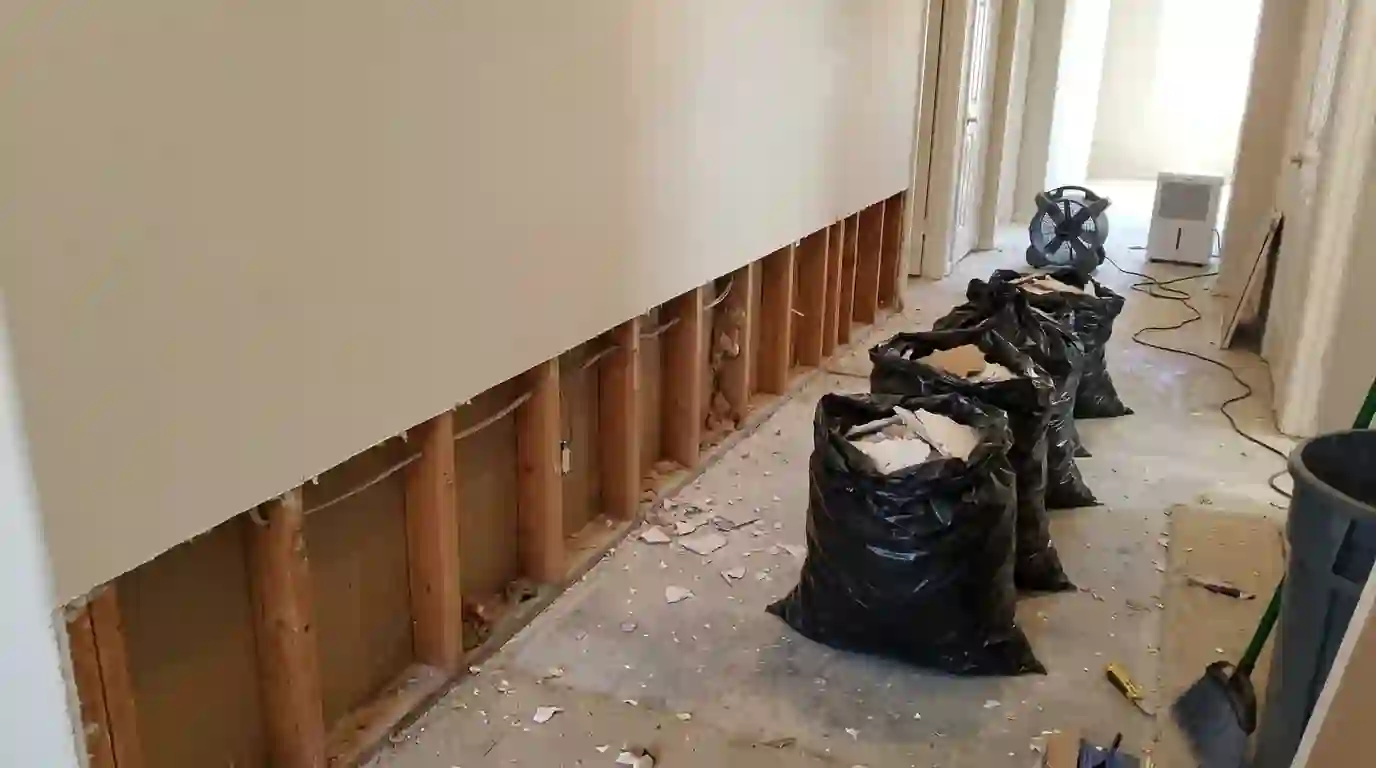
- Algae and sludge in the pan, trap or drain line are the usual cause of the clog.
- A secondary pan or a float shutoff switch can stop an overflow before it reaches the ceiling.
- Condensate is gray water, so a soaked closet or ceiling needs more than a quick wipe.
- Flushing the line on a schedule costs far less than drying a ceiling.
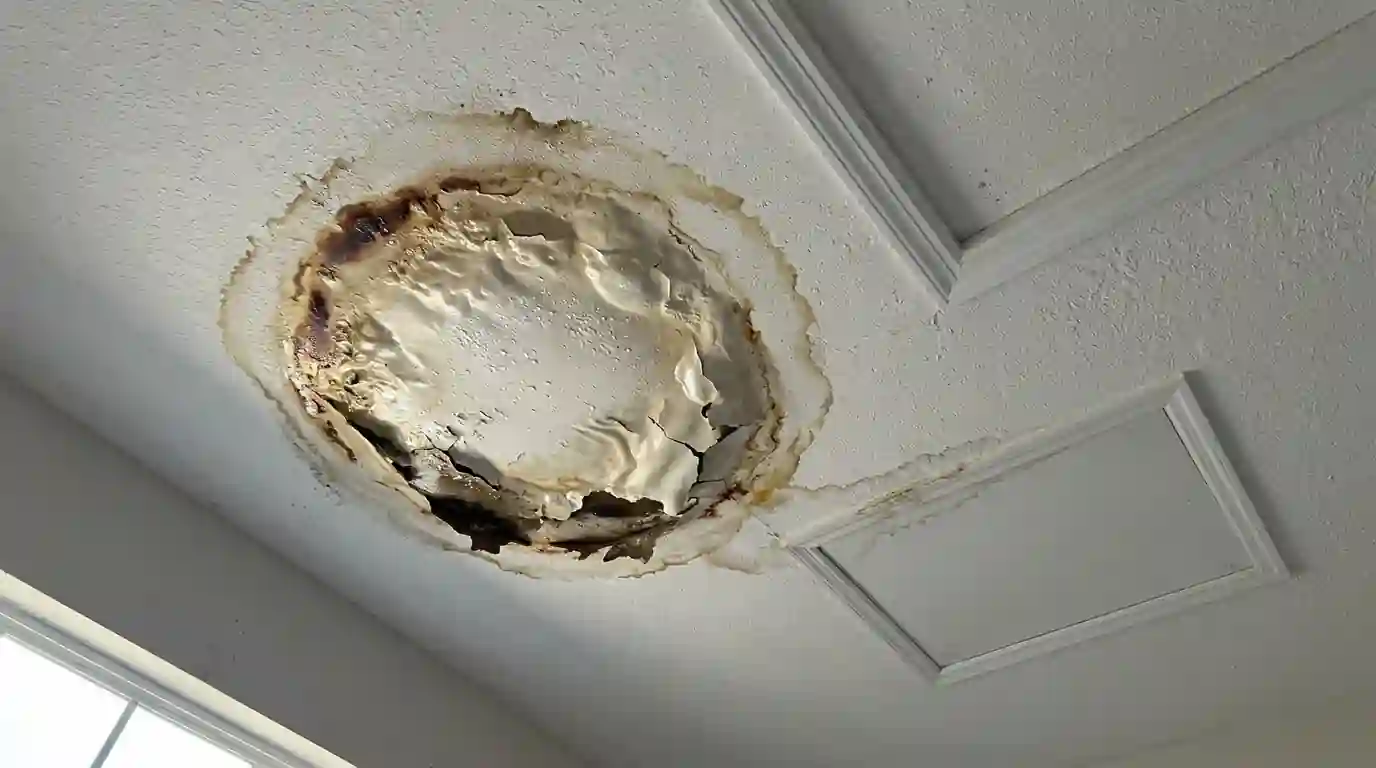
Ask a restoration crew in South Florida what they get called for most in summer and the AC drain will be near the top of the list. The leak is rarely dramatic. It is a brown ring on the hallway ceiling, a damp carpet edge outside the air handler closet, or a musty smell that will not go away after the closet door has been shut for a week.
The good news is that condensate leaks are among the most preventable kinds of water damage. Once you understand how the system is supposed to drain, the weak points are easy to spot and cheap to keep clear.
How the condensate system works
As warm, damp air passes over the cold evaporator coil inside your air handler, moisture condenses on the coil the way water beads on a cold glass. That water drips into a primary drain pan under the coil, flows through a trap and then down a small PVC drain line to the outside or to an approved drain point.
In Miami-Dade, that drain point has a rule attached. The county's summary of the 2023 Florida Building Code changes notes that AC condensate may not discharge to plumbing fixtures here, because county ordinance bars unmetered AC water from entering the sewer. That is one reason so many local lines run long distances to an exterior wall or a dedicated drain, and every extra foot is another place for sludge to settle.
Why South Florida drains clog faster
The answer is mostly the climate. NWS Miami defines the local summer season as the stretch when dew points stay above 70°F, roughly late May to mid October, and average dew points at Miami International climb to about 74°F in August. Higher dew points mean more water on the coil, and the system runs long hours, so the drain carries water almost all day for months at a time.
Warm, slow-moving water in a dark pan is a good home for algae and bacterial slime. Forensic investigators who trace water damage claims back to their cause have documented the same pattern again and again: growth builds up in the pan and trap, narrows the drain line, and the condensate spills from the primary pan into the building. Dust from a dirty filter, attic debris and even insects add to the sludge.
Air handlers in Miami homes and condos also tend to sit in places where a spill does real harm: a hallway closet with drywall on three sides, a platform over a bedroom ceiling, or an attic space above living areas. When the pan overflows there is nothing to catch the water but the structure.
Warning signs before the ceiling stains
Condensate leaks usually give some notice. Check the air handler closet once a month in summer and watch for these:
- Standing water in the primary pan that does not drain away within a few minutes of the system cycling off.
- A float switch that keeps shutting the system off, so the house will not cool even though the thermostat is calling.
- Water dripping from the outdoor end of the drain line only in slow drips, or not at all, on a humid afternoon.
- Rust, dark staining or bubbling paint on the closet floor, platform or the wall behind the unit.
- A musty smell when the AC first starts.
- Damp carpet or swollen baseboard just outside the closet door.
Prevention that actually works
EPA's moisture guidance includes a simple line that fits South Florida well: keep AC drip pans clean and drain lines clear. In practice that means a few habits and, ideally, a couple of inexpensive safety devices.
Most indoor drain lines have a capped cleanout tee near the air handler. Pouring a cup of plain white vinegar into it every month or two during the cooling season slows algae growth. Some homeowners also use a wet vac on the outdoor end of the line a few times a year to pull out sludge. Change your filter on schedule, because dust that gets past a dirty filter ends up on the coil and then in the pan.
The two devices worth having are a secondary drain pan under the air handler, with its own outlet, and a float or water-level shutoff switch that turns the system off before the pan overflows. Investigators point to the absence of one or the other as the reason a clog turns into a damaged ceiling. If your unit has neither, ask your HVAC contractor about adding them at the next service visit.
What to do when the pan has already overflowed
Turn the system off at the thermostat so it stops making water, then soak up what you can see in the pan and on the closet floor. If the ceiling below is bulging, keep people out from under it and put a bucket in place. Our guide to the first day after a leak covers the photos and notes worth taking before cleanup starts.
Condensate counts as Category 2, or gray, water under IICRC S500 guidelines, and untreated gray water can become Category 3 after about 48 hours. That is why a crew handling AC leak water damage treats a soaked closet floor, platform and ceiling as more than a spill. Wet drywall often has to be opened so the cavity can dry, and insulation over a ceiling that held water usually comes out.
Because the closet stays dark and warm, mold often starts on the back of drywall and the underside of the platform before anyone sees it. If you notice spotting or a strong musty odor around the unit, air handler closet mold cleanup removes the growth and dries the area while your HVAC contractor clears the drain.
How long the repair takes
A small overflow caught the same day can be dried in a few days with air movers and a dehumidifier. A ceiling that held water for a weekend may need to be cut out, dried, then rebuilt with new drywall, texture and paint, and the ceiling leak damage repair adds time for each of those steps. For a rough sense of how your situation compares, the restoration timeline estimator walks through the common variables.
Common questions
Can I just run my AC with the float switch bypassed until the plumber comes?
No. The switch is shutting the system off because the pan is full, and bypassing it lets condensate spill into the closet and ceiling below. Clear the line first, or leave the system off and use fans and open windows on a dry day until the drain is fixed.
Does bleach work better than vinegar in the condensate line?
Many HVAC contractors prefer vinegar because it is gentler on the pan, coil and PVC fittings and still slows algae growth. Some manufacturers warn against harsh chemicals near the coil, so check your unit's manual or ask the technician who services it before switching.
Why does my ceiling stain keep coming back after I paint it?
A returning stain usually means the drywall or insulation above it never fully dried, or the drain is still overflowing a little each day. Paint seals the surface while moisture keeps feeding the stain from above. A moisture meter reading on the ceiling, and a look into the pan, will tell you which it is.