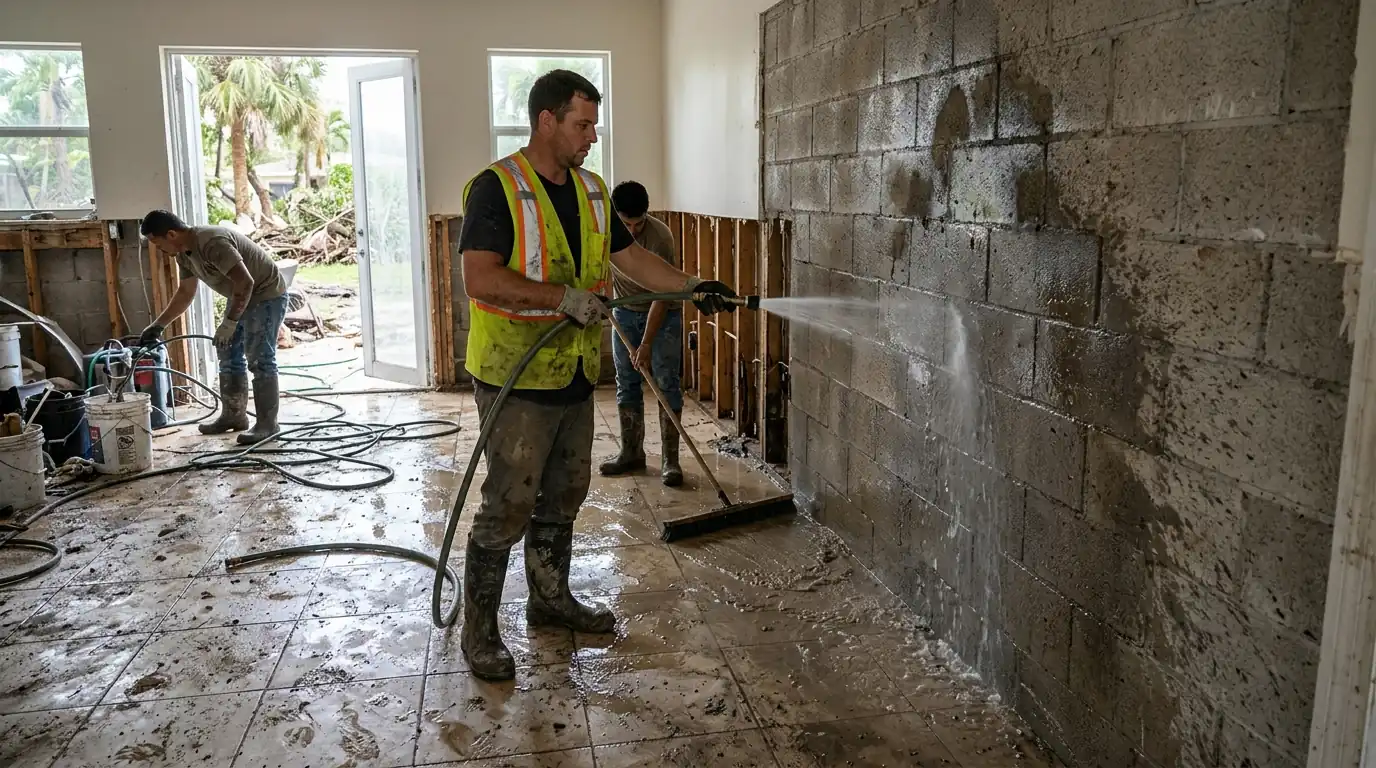
Surge cleanup removes standing salt water, sand and debris, cuts out soaked drywall and insulation, rinses salt from block, framing and the slab with fresh water, disinfects, and dries everything to target readings. Electrical parts and appliances that sat in sea water need an electrician or technician before use. Skipping the freshwater rinse leaves salt in the walls that keeps pulling in moisture.
Surge is different from rain flooding. It arrives fast, it carries sea water, and it leaves salt behind in every material it touched. During Irma in 2017, Biscayne Bay pushed roughly 3 to 5 feet of surge ashore from Homestead to downtown Miami and Brickell, with isolated spots in Coconut Grove and Brickell above 6 feet.
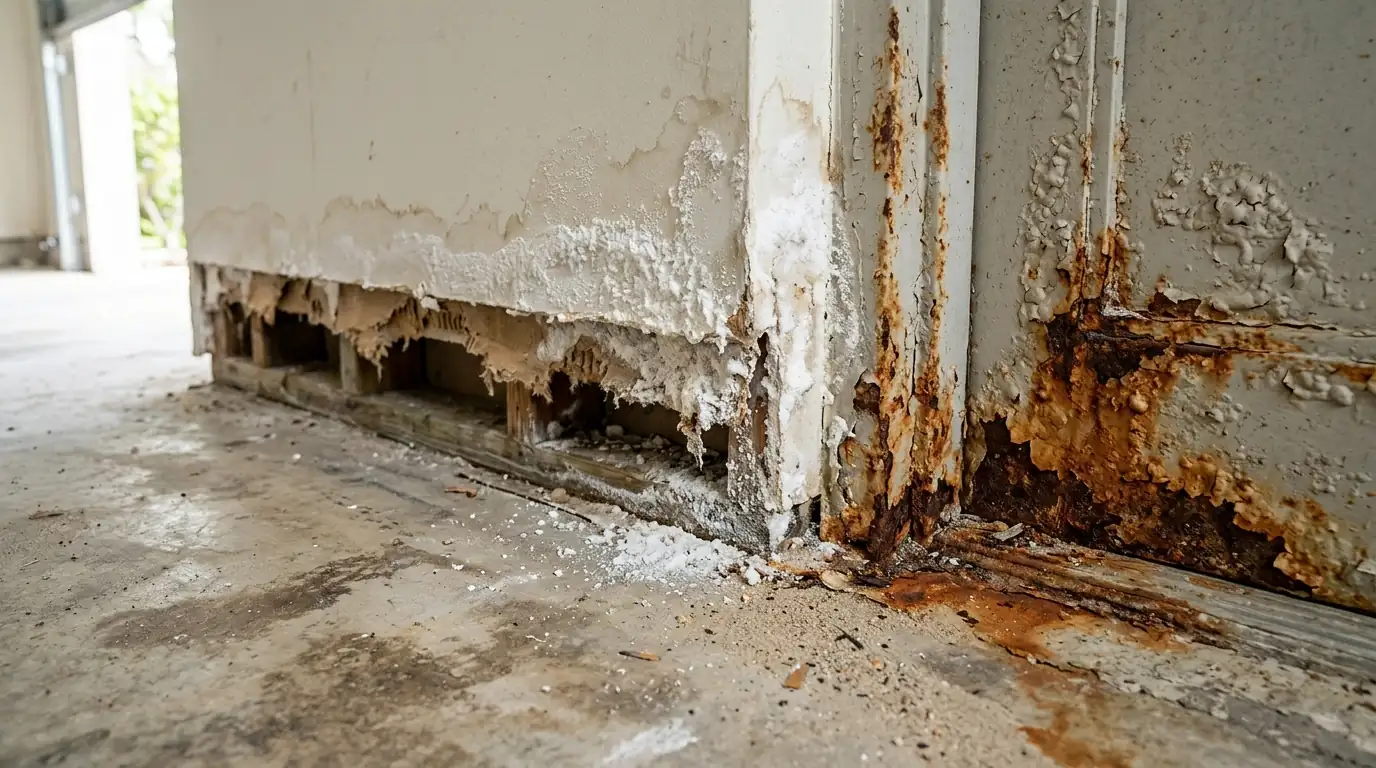
Salt changes the cleanup. Dried salt keeps drawing moisture out of the air, so a wall that seems dry in October can turn damp again in a humid week, and it corrodes fasteners, outlet boxes and appliance parts. A surge job is not finished until the salt is out, not just the water.
Where surge reaches in Miami-Dade
Surge follows the coastline and the low ground behind it. Irma's surge came ashore along Biscayne Bay from Homestead north to Brickell, and Wilma in 2005 caused minor surge flooding in Coconut Grove and downtown Miami. Bayfront neighborhoods like Morningside and Brickell Key sit beside that same water.
King tides bring a smaller version of the problem. Miami-Dade notes that the year's highest tides usually arrive in the fall and can push salt water into low streets on sunny days, so some homes see salt water at the garage door with no storm at all.
In condo towers the damage usually sits low: parking levels, lobbies, mechanical rooms and ground-floor units. Common areas fall under our commercial restoration work for the association, and each unit gets its own notes for its owner.
Getting the salt out, not just the water
Once the water is pumped out and the debris is shoveled, we cut out drywall, insulation and baseboards that soaked in sea water. Then comes the step quick cleanups miss: a freshwater rinse of the exposed block, the bottom plates, the slab and the tile, followed by a wet vacuum that pulls the rinse water back out.
After the rinse, surfaces are cleaned with a disinfectant, because surge water also carries sewage from overwhelmed lines and whatever washed off the streets. Only then do the dehumidifiers go in. Drying salty materials without rinsing just locks the salt in place.
- Sand, silt and debris shoveled and bagged
- Soaked porous materials cut out and photographed
- Freshwater rinse of block, framing, slab and tile
- Disinfection, then drying to readings