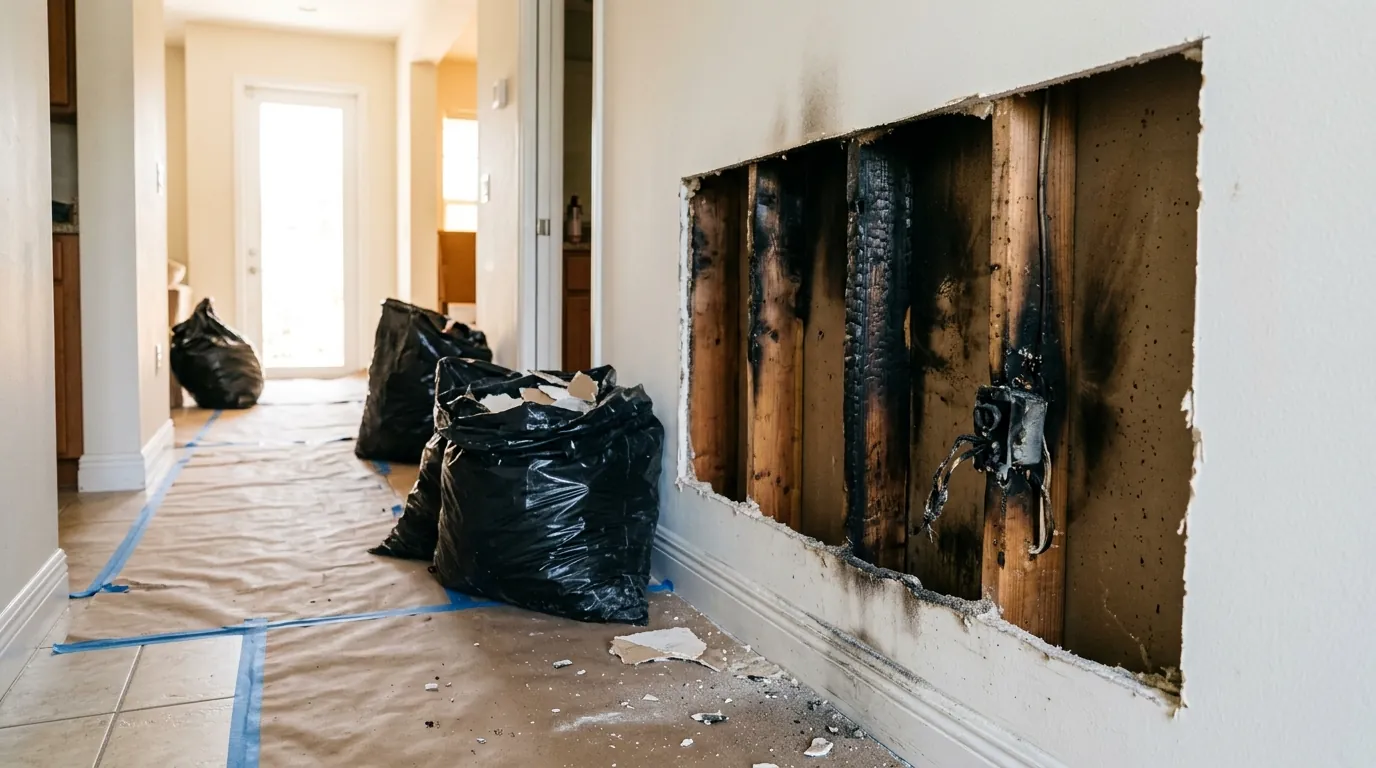
After an electrical fire, keep the affected circuits off and have a licensed electrician find and fix the cause before any walls are closed. A restoration crew opens the damaged area, removes charred framing and debris, cleans the acidic soot from burned plastic, deodorizes, and rebuilds once the electrical work passes inspection.
Electrical fires often start and spread inside walls, ceilings or the panel, out of sight. By the time smoke shows, wire insulation has melted, framing has charred, and residue from burned plastic has settled through the cavity and sometimes into the attic.
Here is how the work splits. A licensed electrician finds the cause, makes the electrical repairs and handles the permit and inspection for that work. New Kingston does everything around it: opening walls so the electrician can reach the damage, removing charred materials, cleaning soot and odor, drying any water used to put the fire out, and rebuilding walls and finishes afterward.
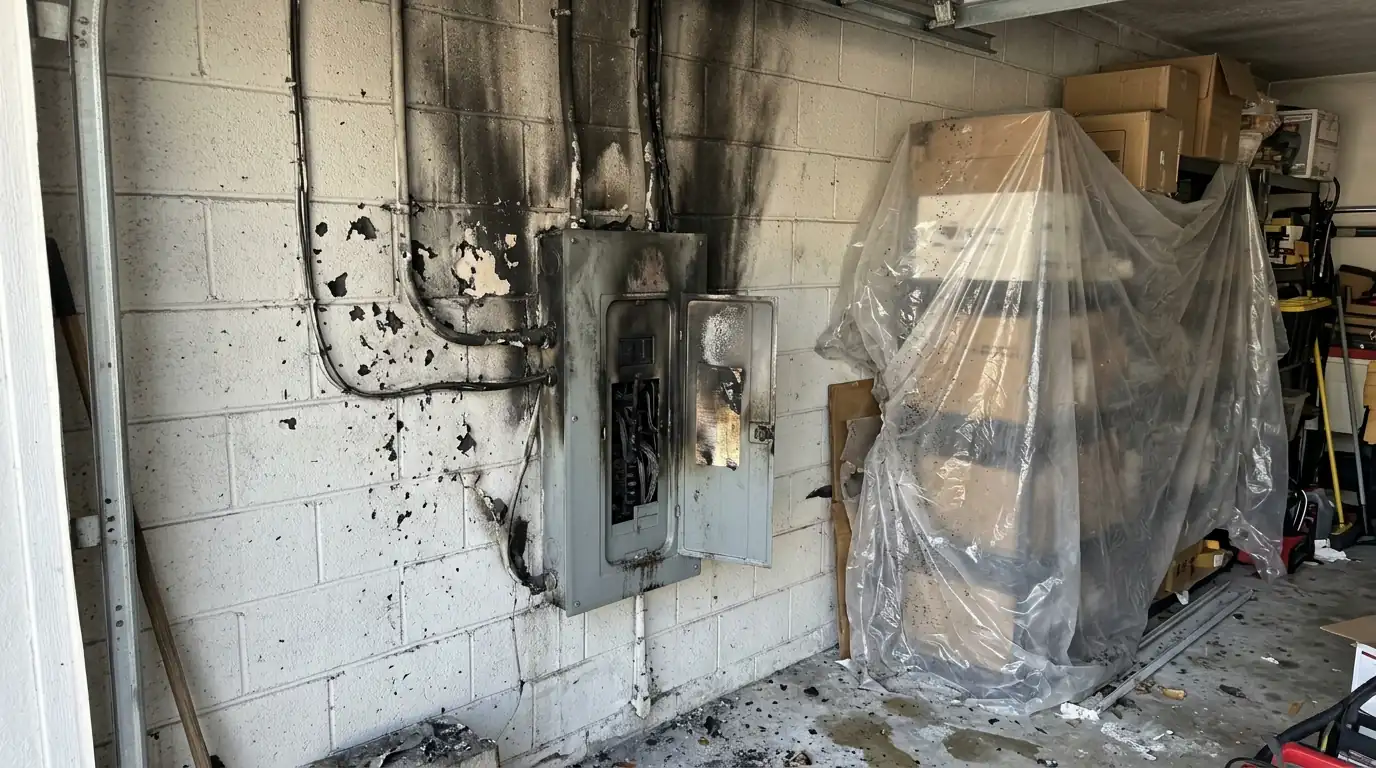
Safety first: what happens before anyone opens a wall
If you smell burning plastic or see scorching, turn off the breaker for that circuit, or the main if you are not sure which one, and call the fire department if there is any heat or smoke.
Once the fire is out, the electrician's inspection comes before cleaning. Our crew does not reconnect power or work near live circuits; we wait until the electrician has made the area safe and confirmed which circuits are dead before cutting into walls.
If a large part of the house loses power, plan for the heat. With no AC, indoor humidity in Miami rises fast and anything wet from firefighting stays wet, so tell us about the power situation when you call and the crew will plan how to start drying.
Why burned wiring residue needs special handling
Wire insulation, outlet boxes and device housings are plastic. When they burn they leave a dark, oily soot that is acidic and clings to everything in the cavity: studs, the back of the drywall, insulation and nearby pipes.
That residue keeps smelling and can corrode metal over time, so it cannot simply be covered up. The crew removes charred and heavily soiled materials, cleans the remaining framing, and seals it with an odor-blocking primer before new drywall goes up. For heavier residue elsewhere in the house, see soot removal.