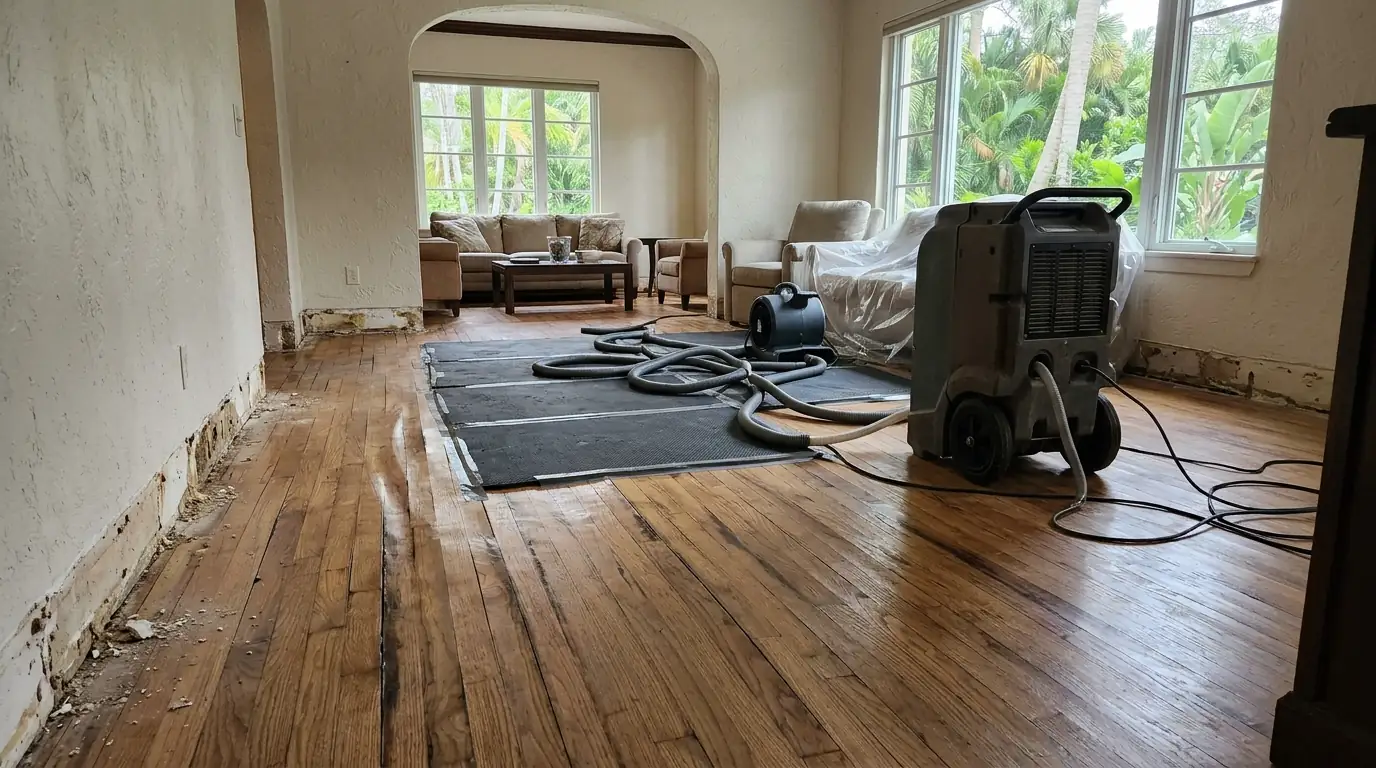
Most cupped boards can be saved if the water is removed fast and the floor is dried slowly with drying mats and dehumidifiers until it matches the moisture level of a dry room. Buckled boards that pulled off the subfloor, delaminated engineered planks and wood soaked by sewage or floodwater usually need replacing. Sanding waits until drying is finished.
Tile is what most Miami homes walk on, but plenty of older houses in Coral Gables and in neighborhoods like Morningside and Silver Bluff still have oak or pine, and newer remodels often use engineered wood. Wood takes on water from below and from the side, and in a humid climate it gives that water back slowly.
A wet wood floor is not automatically a lost floor. Caught early and dried slowly, many boards flatten enough to sand and refinish, and the skill is telling which ones will.
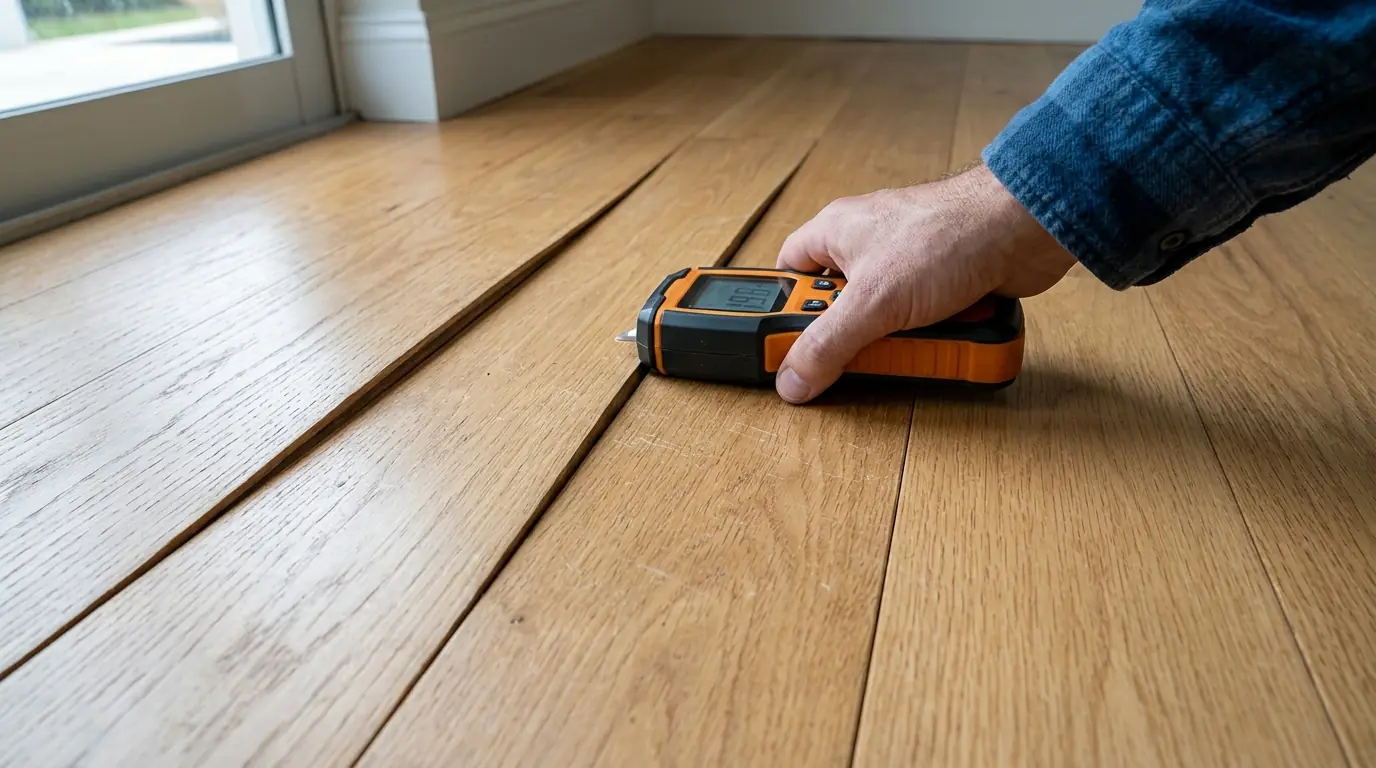
Reading the shape of the floor
Wood swells across its width when it takes on water. When the bottom of a board gets wetter than the top, the bottom swells more and the edges curl up, which tells you the moisture is below, in the subfloor, the slab or a crawlspace.
Crowning is the reverse, a board higher in the middle. It often appears when a cupped floor was sanded flat before it dried and the board then shrank back. Buckling is the last stage, where swelling had nowhere to go and boards broke loose from their nails or adhesive.
Solid boards and engineered planks behave differently
Solid hardwood is one piece of wood top to bottom and can take several sandings, so a floor that flattens back can be refinished as if nothing happened.
Engineered wood has a thin hardwood wear layer glued over plywood or a fiber core. The core can swell, the layers can separate, and a thin wear layer may not survive sanding. Glue-down engineered floors on a slab usually dry better than floating ones, since water trapped under floating underlayment has nowhere to escape.
Wood-look laminate with a fiberboard core does not shrink back once swollen, and that material is handled under flooring replacement.
Drying wood without cracking it
Under IICRC S500-based guidelines, hardwood falls into Class 4, the specialty drying class it shares with plaster and concrete, because dense materials release water slowly. Rushing with heat can split boards, so wood is dried under steady conditions over days, not hours.
The crew lays drying mats, flat panels on a vacuum system, over the wettest areas to pull moisture up through the boards, while dehumidifiers keep the room air dry. A few boards near the wall may come out so the subfloor or slab can be dried directly.
Progress is measured against an unaffected room in your own house. With Miami mornings averaging around 84 percent relative humidity, local wood settles at its own level, and the target is to match the rest of your floor. The structural drying page shows how readings are logged.