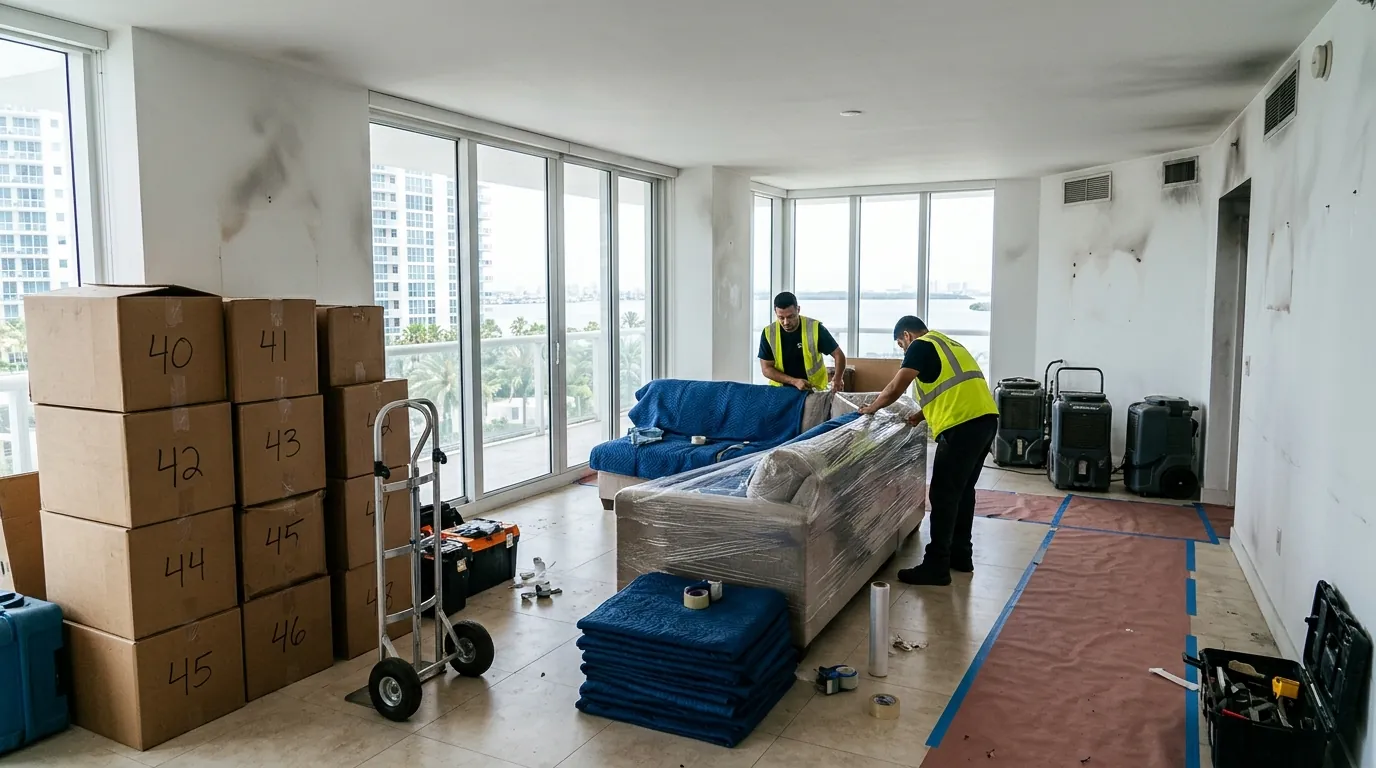
A contents pack-out means the crew photographs and lists your belongings room by room, packs them in numbered boxes, cleans what can be restored, stores everything until the house is ready, and brings it back. Items that cannot be saved are documented before disposal, so you and your adjuster have a complete record.
A pack-out moves your belongings out of the way so the crew can clean, dry or rebuild empty rooms, and it protects those belongings from dust, demolition and further smoke or water damage. It also turns a house full of things into an organized inventory, which is often the slowest part of a claim.
Pack-outs are most common after fires, but they are just as useful after a large water loss, a sewage backup or mold remediation, when rooms must be emptied before work starts. Clean items, damaged items and items that cannot be saved are sorted on site and handled differently.
How the inventory gets built
Before anything is packed, each room is photographed as it stands. Then every item or group of items is listed with a short description, the room it came from and its condition, and each box gets a number that ties it to that list.
Items that are clearly destroyed are listed and photographed separately, with model numbers or labels where they survive, before they go to disposal. Please do not throw anything out on your own before it is documented; a missing item is hard to account for later.
You get a copy of the inventory. It becomes the working document for what comes back, what was cleaned and what was lost, and it fits into the larger claim file described on our insurance documentation page.
What gets cleaned, and how
Each kind of item has its own method, and using the wrong one, such as washing smoke-damaged silk or powering up a wet TV, causes damage that was not there before:
Belongings are cleaned only after the source of the damage has been handled in the house, so clean items never go back into rooms that still smell of smoke or are still drying. New Kingston returns priority items first if you need them sooner.
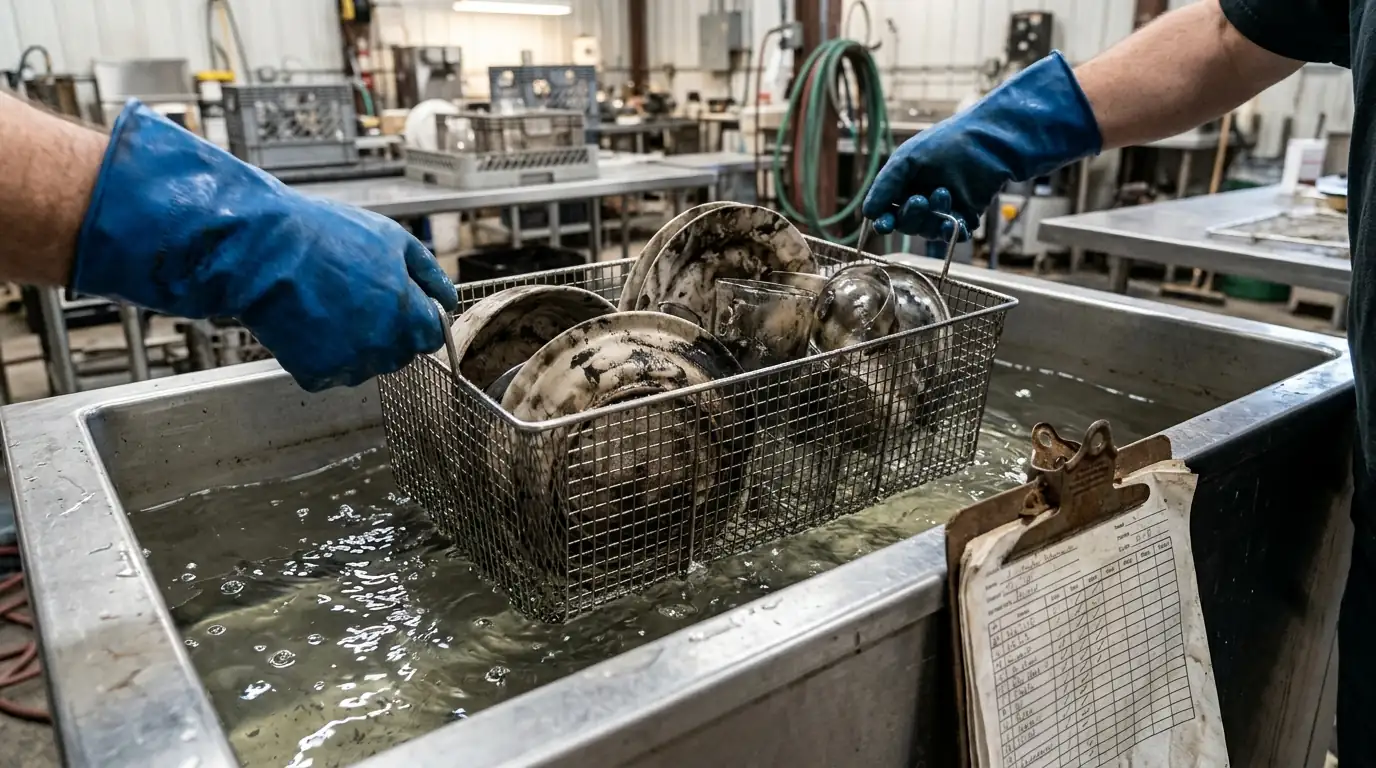
- Hard goods such as dishes, glassware, decor and toys: hand cleaning or ultrasonic tanks that lift soot from crevices.
- Clothing, linens and curtains: specialty laundering or dry cleaning made for smoke and soot.
- Upholstered furniture: hot water extraction or dry cleaning, depending on the fabric.
- Electronics: exterior cleaning, with a technician's check for anything exposed to heat or corrosive residue.
- Documents and photos: drying and cleaning where possible, with irreplaceable items handled first.