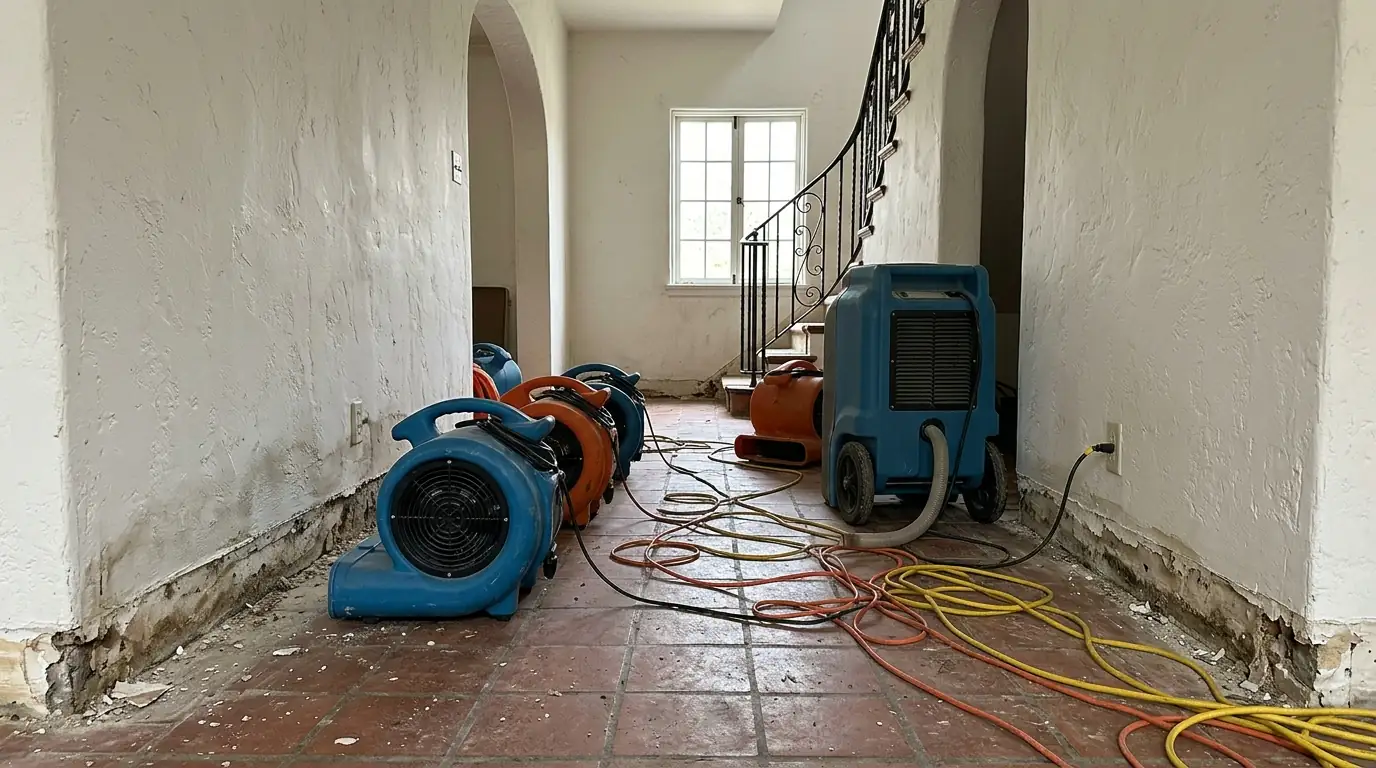
If bay water, rain or a roof leak gets into a Morningside home, call (786) 664-2643 any time. We extract the water, rinse away salt residue, and dry masonry and plaster at a steady pace with daily moisture readings. Exterior work on a house in the historic district may need City of Miami preservation review, so we photograph original finishes first.
When the Bay Shore Investment Company laid out this neighborhood starting with a 1922 plat, its deed restrictions banned wood houses. That is why the streets between Biscayne Boulevard and the bay are lined with keystone, oolitic limestone, stucco and Mission barrel tile.
Our crews come up from Brickell, about 4 to 5 miles south, for floods, roof leaks, pipe failures and mold. Work here also means respecting a historic district, so we record original materials before anything comes out.
Masonry houses that hold water longer than you expect
The historic district holds 218 buildings, all detached houses. Most are two-story Mediterranean Revival, with late-1930s Art Deco, Mission, Tudor Revival and masonry vernacular mixed in. About 146 of them went up between 1922 and 1941, and roughly 70 came after 1946.
Thick block and limestone walls with plaster finishes do not dry like modern drywall. We use dehumidifiers to pull moisture from the room air, take readings at the same spots each day, and keep the pace steady so old plaster does not crack.
Barrel-tile roofs from the 1920s to the 1940s are the other usual source. A cracked tile lets rain under the field, often showing first as a brown ring on a second-floor ceiling. Our roof leak water damage work starts at that stain and follows the water back.
Living with the bay at the end of the street
Morningside Park, at the southeast corner of the neighborhood, floods often in heavy rain, and king tides have made it worse. In 2023 the city sought more than $4 million in grants to raise the bayside walkway, improve drainage and build a living shoreline.
Farther north, the city's Morningside seawall project, roughly $5.18 million, raises or replaces three bay seawalls between NE 59th and NE 62nd Streets and adds tidal valves. It covers 49 properties, with construction estimated for July 2026 to January 2027.
The neighborhood also flooded in the late-May 2020 rains, when roughly 18.5 inches fell on the city over about four days. Bay or street water that enters a home is treated as contaminated, so we use flood damage cleanup methods: remove soaked porous materials, clean, disinfect and dry.
Exterior repairs inside a historic district
Morningside became the City of Miami's first locally designated historic district in 1984 and was listed on the National Register of Historic Places in 1992. Exterior changes such as roof, window or facade replacement on a house here can require review by the city's historic preservation office before the work starts. Check with the city for your address.
Interior drying and cleanup usually go first, because water will not wait for paperwork. We photograph tile, ironwork, trim and plaster details before removal, keep salvageable pieces where we can, and write notes that help your contractor, your adjuster or the city understand what was there.