Call (786) 664-2643 any hour. For a Miami Beach flood or surge job, the crew extracts the water, removes wet drywall and flooring that cannot be saved, treats anything touched by salt or street water as contaminated, and runs dehumidifiers until moisture readings reach dry goal. Every reading and photo is logged so you can hand the file to your adjuster.
Western South Beach sits at roughly zero feet above normal high tide, and the city as a whole averages about 4.4 feet above sea level. That is why a king tide can push salt water into streets, garages and ground-floor lobbies with no storm anywhere in sight. In late September 2026 a king tide flooded the lobby and garage of the Sunshine Bay condo on West Avenue and left some residents without power for days.
New Kingston crews come over the MacArthur or Julia Tuttle causeway from the Brickell office to deal with what that water leaves behind: wet drywall, swollen baseboards, soaked carpet and a musty smell. We pull the water out, dry to a measured goal and rebuild what had to come out.
Art Deco walls, oceanfront towers and bay island homes
Housing here comes in three very different shapes, and each one gets wet in its own way. The Art Deco Historic District holds hundreds of hotels and apartments built between 1923 and 1943, many with plaster and masonry walls that hold moisture longer than modern drywall. Along Collins Avenue, mid-century and newer condo towers stack units on top of each other, so one failed supply line can reach three floors.
Then there are the single-family homes on the bay islands, in La Gorce and in North Beach, which sit close to seawalls and take water at the ground floor first. Most households rent (Data USA puts the homeownership rate at 40.9%), so a tenant, an absent owner and a building manager often share one job. We keep notes all three can read.
King tides, rain floods and surge are three different jobs
King tide water is salt water, and it tends to return on the next high tide, so drying cannot start until it stops coming back. Rain floods behave differently: on August 1, 2017, during Tropical Storm Emily, pump failures left streets flooded. Surge is the third version. Hurricane Irma pushed 2 to 3 feet of water onto the immediate oceanfront that September.
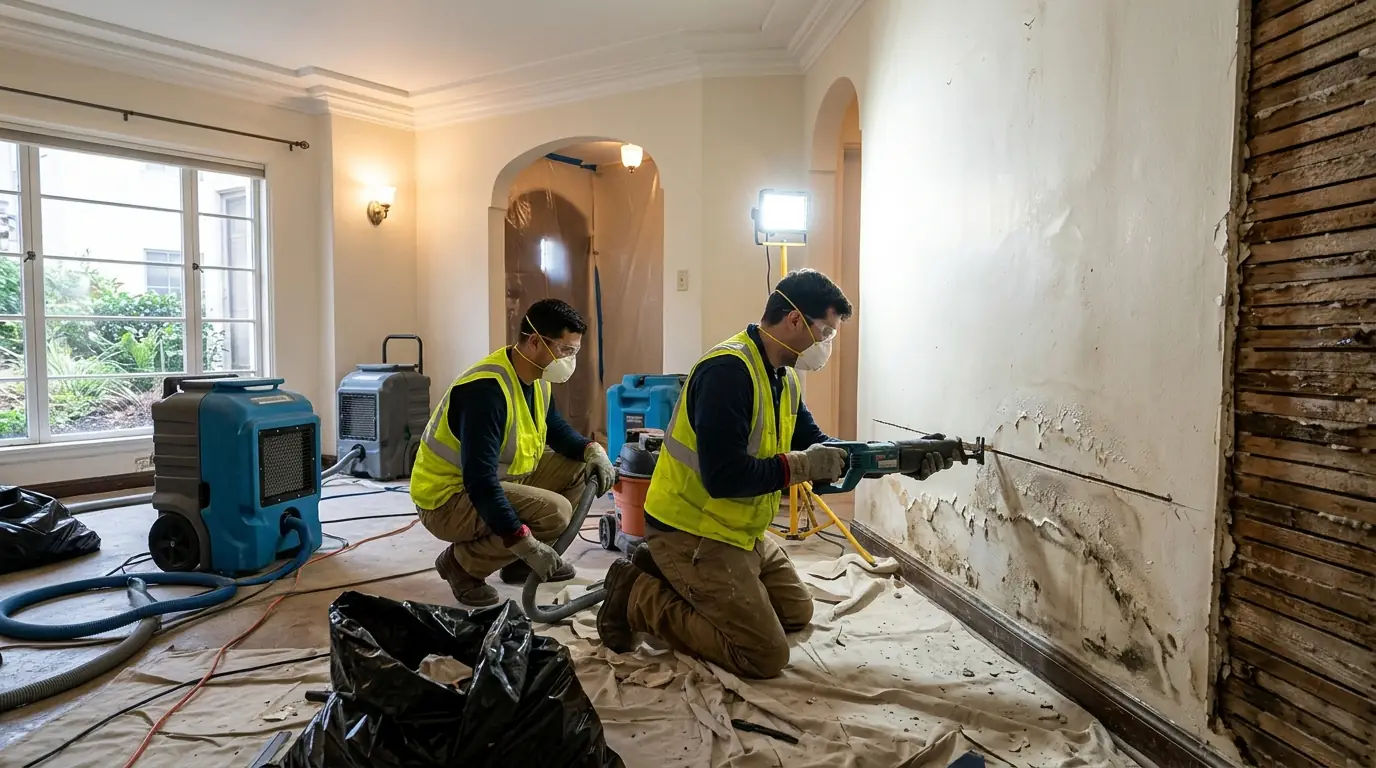
Water that crossed a street or a beach before it reached your floor counts as Category 3 under the IICRC S500 water damage standard. Porous materials it touched, like carpet pad, drywall and insulation, come out rather than get dried in place. Our flood damage cleanup crews make flood cuts above the waterline, then clean, treat and dry the framing, and storm surge cleanup adds a fresh-water rinse so salt residue does not keep pulling moisture out of the air.