Skip to content
Water, fire, storm and mold calls answered 24/7 across Miami-Dade and Broward(786) 664-2643
New KingstonWater & Restoration · Miami(786) 664-2643Answered 24/7
Miami, FL

Water, fire and storm restoration in Miami, FL 33131

Most of Miami sits about 6 feet above sea level on porous limestone, so water arrives from the sky, the bay, the ground and the pipes, and our Brickell crews answer the phone 24/7.

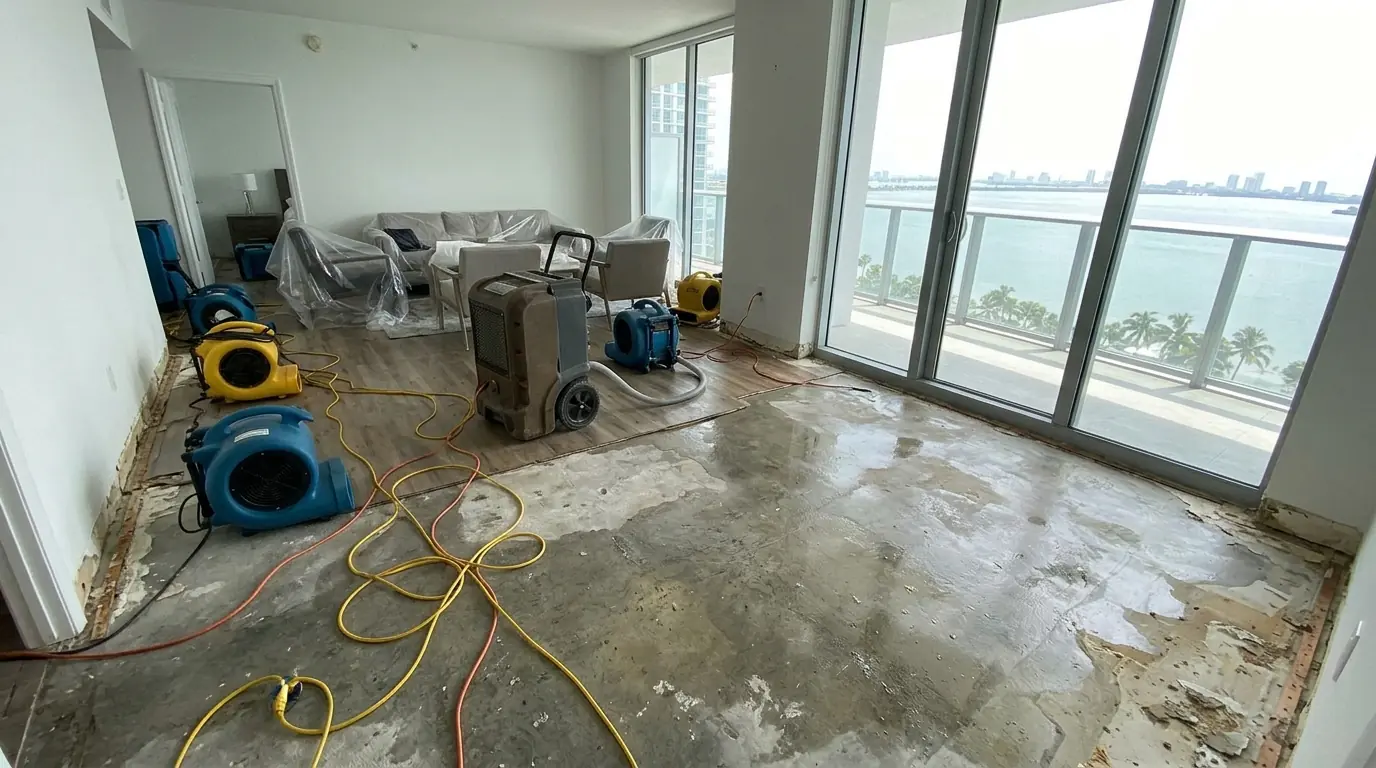
Air movers and a dehumidifier drying a wet living room floor in a Miami high-rise condo, baseboards removed, bay light coming through tall windows
ZIP33131
Quick answer

If water, smoke or storm damage hits a Miami home or condo, call (786) 664-2643 at any hour. A crew comes out, stops the source where it can, extracts standing water, sets drying equipment and records moisture readings and photos. Drying follows the IICRC S500 standard, and the notes are organized so you can hand them to your adjuster.

This is a hard city to keep dry. More than 300 high-rises crowd Downtown, Brickell, Edgewater and Midtown, while a few miles away you find 1920s Mediterranean Revival and Mission houses, 1940s to 1960s concrete-block homes and MiMo buildings along Biscayne Boulevard.

New Kingston works from 1450 Brickell Ave, near the mouth of the Miami River, so crews and drying equipment start from the middle of the city. From there we cover every Miami neighborhood plus the rest of Miami-Dade, Broward and south Palm Beach County. This page covers the city as a whole, and each neighborhood we serve has its own page with local detail.

From Brickell towers to 1920s bungalows

Most Miami households rent: only about 30.7% of housing units are owner-occupied, according to 2019 to 2023 Census survey data. A large share of those homes are condo and rental units stacked in towers, where one failed supply line or clogged AC drain can travel down several floors before anyone notices.

In a tower we map which units are wet and write notes the association and each owner can use. Our condo leak restoration work is built around that chain.

Single-family streets need a different approach. A 1920s house in a historic district may have plaster walls, oolitic limestone trim and a barrel-tile roof, while a 1950s concrete-block ranch hides cast-iron drain lines under the slab.

The storms that shaped how Miami rebuilds

Hurricane season runs June 1 to November 30 and peaks from mid-August to late September. The city still measures storms against Hurricane Andrew, which struck on August 24, 1992. Hurricane Wilma, on October 24, 2005, blew out dozens of windows on Brickell towers. Hurricane Irma, on September 10, 2017, put 3 to 5 feet of storm surge on Brickell Avenue.

Rain alone can do it too. Over about four days in late May 2020, roughly 18.5 inches fell on the city. Brickell Avenue, Mary Brickell Village, North Bayshore Drive, Morningside and Belle Meade all flooded, and the Belle Meade pump station had to be run by hand after its control panel failed.

Miami-Dade is a High-Velocity Hurricane Zone under the Florida Building Code. When a damaged older home is rebuilt with a permit, the repair has to meet today's wind and impact code, not the code the house was built under. We plan hurricane damage restoration with that in mind from the first walk-through.

Water that comes up from below

The city sits on Miami limestone over the Biscayne Aquifer, and that rock is full of holes. Water does not only top seawalls. It rises through the ground and backs up through storm drains, which is why a street can flood under a blue sky.

King tides arrive every fall, from September through November. The City of Miami says low streets near the bay and waterways can flood for about three hours around each peak tide, even with no rain.

What the crew does on a Miami call

The first visit is about stopping the damage. We shut off or isolate the source, pull standing water with truck-mounted or portable extraction, and open wet cavities only where readings say we must.

Next comes structural drying: air movers, dehumidifiers and a reading at the same points each day until materials reach their dry goal.

Fire jobs follow a similar order: secure the opening, remove soot and smoke residue, treat odor at its source, then rebuild. If mold has started after any loss, we contain and remove it, and a separate licensed mold assessor you hire handles any testing and clearance.

  • Daily moisture logs with dates and readings
  • Scope notes that list what came out and why
  • A clear rebuild list once the space is dry

A page for each neighborhood we cover

Miami is not one housing market. Bayfront Upper Eastside streets like Morningside worry about seawalls and king tides, the historic Buena Vista blocks deal with century-old roofs and pipes, and Grapeland Heights sits beside the Tamiami Canal near the airport. Each covered neighborhood has its own page.

If you want a rough idea of how long a job could take, the restoration time estimator gives a range based on the type of damage and the rooms involved. For a firm answer about your home, call and talk to the crew.

Around Miami

  • Brickell Avenue
  • Biscayne Boulevard
  • Miami River
  • Bayfront Park
  • Vizcaya Museum & Gardens
  • Coral Way
Map of Miami

Questions

Restoration questions from Miami

Do you handle both condo towers and single-family houses in Miami?

Yes. Tower jobs center on tracing a leak across units and writing notes for the association and each owner. House jobs more often involve old plumbing, tile roofs and plaster or concrete-block walls. The order is the same for both: stop the source, dry, document, rebuild.

Why does my Miami street flood on sunny days in the fall?

That is usually a king tide. The City of Miami says these highest tides come every September through November, and low streets near the bay and waterways can flood for about three hours around each peak. If salt water gets into your garage or ground floor, rinse and dry it promptly so it does not sit in baseboards and drywall.

Does a hurricane repair on an older Miami home have to meet the current code?

Generally, yes. Miami-Dade is a High-Velocity Hurricane Zone, so permitted major repairs on older homes must meet the current wind and impact requirements of the Florida Building Code.

Where is your Miami office, and when can I call?

The office is at 1450 Brickell Ave, Miami, FL 33131. The phone, (786) 664-2643, is answered 24/7, every day of the year, including holidays and storm weeks.

Need help in Miami tonight?

Call (786) 664-2643. A person answers at any hour, asks what happened, and tells you what to do while the crew gets moving.

Call (786) 664-2643 · 24/7