For water damage in Coral Gables, call (786) 664-2643 at any hour. The crew stops the source, maps the wet area with moisture meters and thermal imaging, dries what can be saved and removes only what cannot. Then the rebuild crew closes the walls, matches finishes and paints. Photos and moisture logs are kept for your adjuster from the first visit.
Coral Gables was incorporated in 1925 as a planned City Beautiful community, and George Merrick's plan called for Mediterranean Revival homes, many of them built with Miami oolitic limestone, the local coral rock. Those houses are handsome and solid, yet plenty of them still carry original-era supply lines, drains and roof framing.
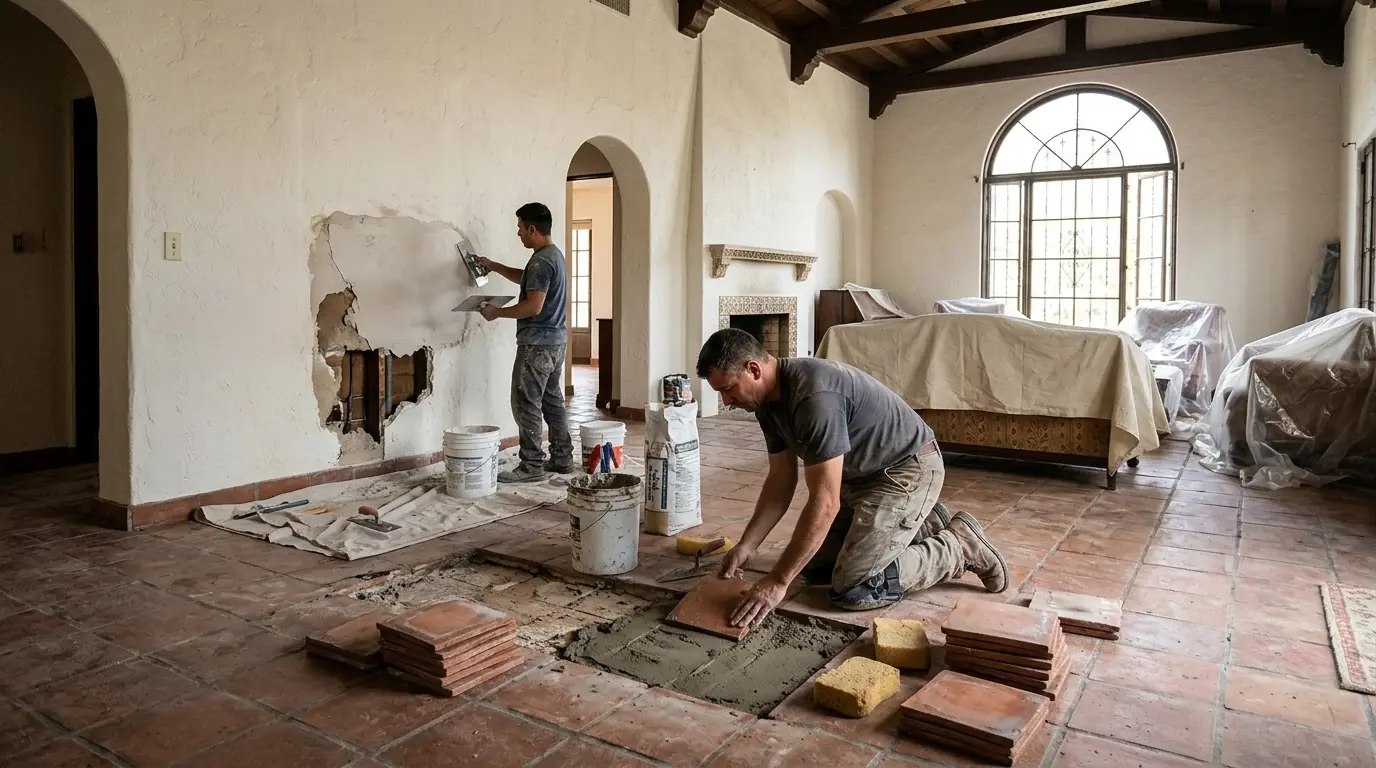
That is why rebuilding is as big a part of the job here as drying. New Kingston crews find the wet areas, dry them to a measured goal and then put back plaster, trim, tile and paint so the room looks like it belongs to the house again.
Old houses, old pipes and older roof framing
Nearly century-old homes tend to fail in predictable places. Old metal lines corrode from the inside, a joint under a bathroom finally weeps, and the first sign is a soft spot in the floor or a brown ring on the ceiling below. Roof framing from the same era can let a storm drive water into an attic nobody has opened in years.
Because the leak is usually hidden, we start with hidden moisture detection before anyone cuts. Thermal imaging and pin meters show how far the water traveled inside plaster, under tile and along joists, so openings stay small and land in the right place.
Rebuilding in the character of the house
Once the readings say dry, the house needs to look like itself again. That can mean plaster patches blended to the original wall texture, trim profiles matched to what was removed, floor tile chosen to sit close to the old pattern, and stain-blocking primer under fresh paint. Our reconstruction crews handle framing through finish, so you are not lining up separate trades.
If your home carries a historic designation, mention it on the first call. We save removed pieces we can reuse, photograph every surface before it comes out and plan interior work so it does not get ahead of any approvals you need.
Water from below: limestone, waterways and king tides
The city says it has more than 42 miles of coastline and waterways and sits on porous limestone bedrock, which lets groundwater rise from below when tides and heavy rain line up. Its own sea-level assessment models king tides and storm surge against the flood gates, outfalls and pump stations along those waterways.
For homeowners that shows up as damp slabs, wet baseboards in the lowest rooms and garages that take water during a long rain. Water rising from outside is treated as contaminated, so wet porous material it touched comes out and the slab and framing are dried with dehumidifiers and air movers.