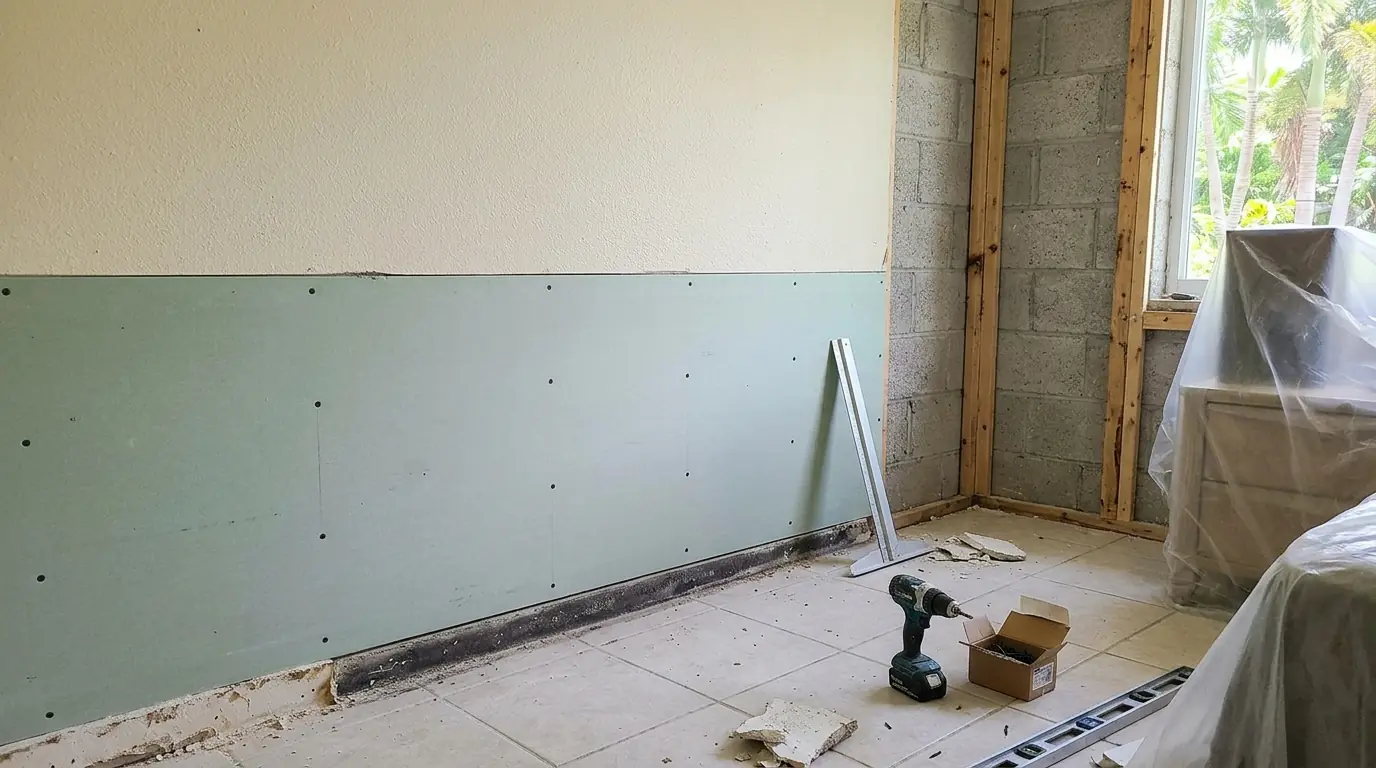
Drywall goes back only after the framing behind it reads dry on a meter. The crew replaces rotted furring strips, hangs new board at the cut line, tapes and finishes the seams in three coats, matches your wall texture, then primes and paints. Moisture-resistant board is used in baths, laundry rooms and near AC closets, where dampness keeps coming back.
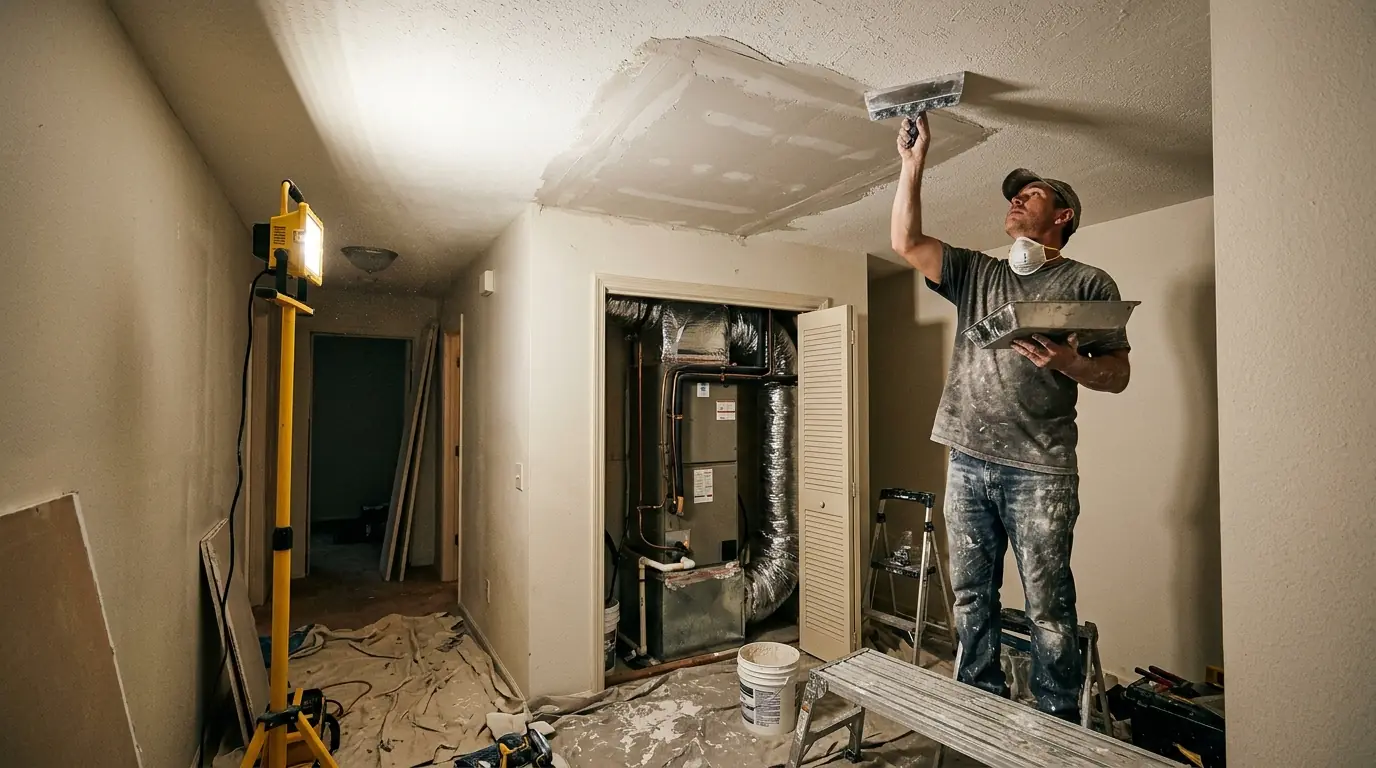
During water mitigation, crews cut wet drywall at a straight line, usually two or four feet above the floor, so air can reach the wall cavity. Ceiling board that sagged under a leak comes down in a clean rectangle. Those cuts are deliberate, and they are also the starting point for the repair.
Replacing drywall well is mostly about what you cannot see afterward: the furring or studs behind it, the joint where new board meets old, and a texture and paint finish that hides both. New Kingston crews do this on walls and ceilings in houses, townhomes and condo units across Miami-Dade and Broward.
Why the board was cut where it was
Water wicks up drywall faster than most people expect, so the cut line sits above the highest wet reading, not at the visible stain. Cutting in a straight, level line makes the repair simpler: one clean horizontal seam that a full sheet can butt against.
Ceilings are cut back to the nearest framing on each side so the new piece has something solid to fasten to. Smaller holes cut for meter readings or air flow get the same treatment, because a neat rectangle patches far better than a ragged edge.
Furring strips on block walls need checking first
On the outside walls of a typical Miami house, drywall is not fastened to studs. It is screwed to furring strips attached to the concrete block. Wood strips that sat wet can rot or swell, and metal strips can rust, so they are probed and replaced where needed before any board goes up.
Block also holds moisture longer than wood. A wall can feel dry on the surface while the block behind the furring still reads high. The board stays off until readings match a dry reference wall in the same house, which is why structural drying sometimes runs a day or two longer on exterior walls.