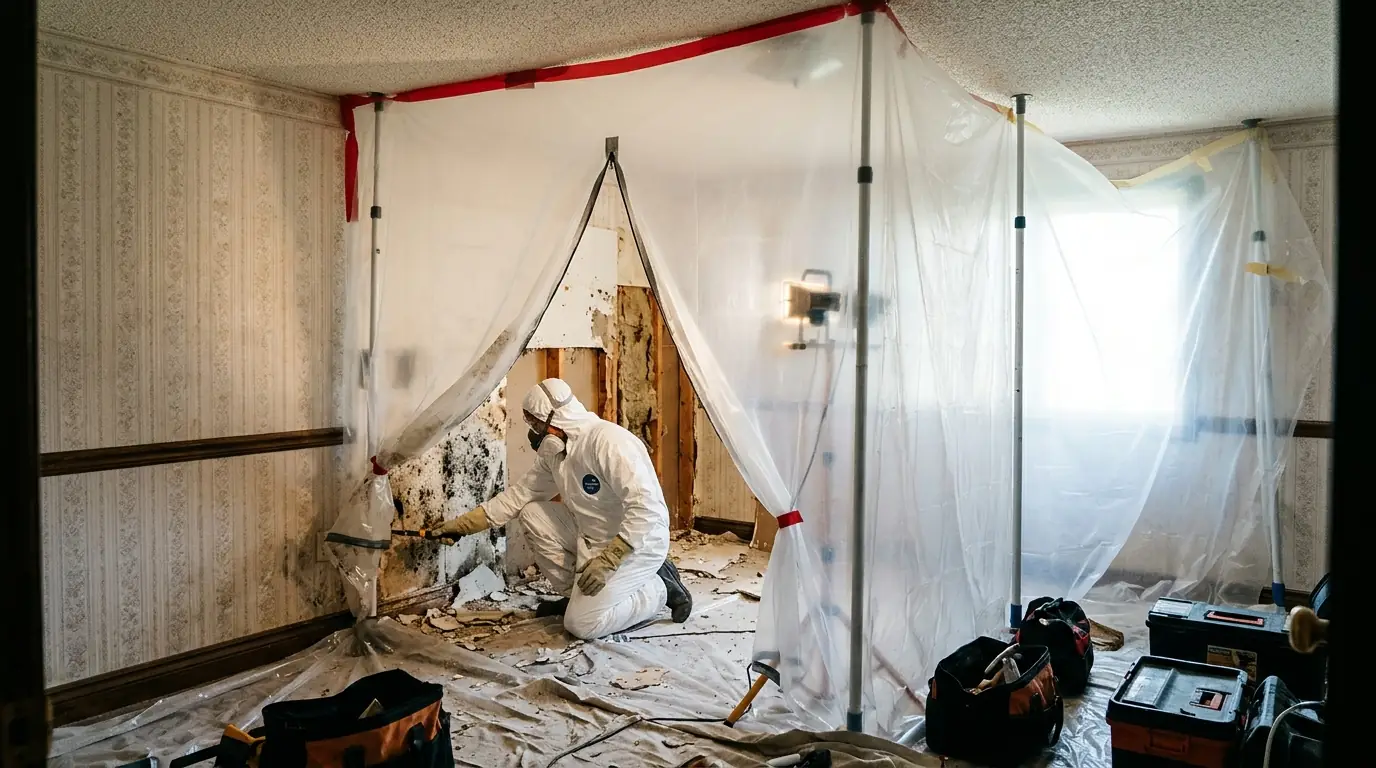
After a storm damages your Coral Springs home, secure it first: tarp roof openings, board broken windows and get standing water out. Then dry everything that got wet. If mold has already started, the crew sets up containment, removes damaged materials and cleans the framing. If you want testing or clearance, that is done by a state-licensed assessor who has no tie to our crew.
Coral Springs was chartered in 1963 as a master-planned city, and its first lots sold in July 1964. It then added more than 35,000 residents in each of the next three decades and reached residential build-out in 2003, so a large share of homes are now 40 to 50 years old.
Our crews drive north from Brickell and cover every part of town, from the Sawgrass Expressway edges to downtown at Sample Road and University Drive. Calls are answered at all hours.
Trees, roofs and what Wilma showed
The 2004 and 2005 storms cut the city's tree canopy by about a third. Many trees have grown back since, and big limbs over roofs are still a common source of storm damage.
When a tree or limb hits the house, it can crack trusses, puncture the roof and break windows in one blow. Fallen tree damage repair covers the structural and interior side once the tree service has the weight off the roof.
Rain usually follows through the opening. Getting a tarp on quickly limits how much ceiling, insulation and flooring has to come out later.
Original plumbing in 1970s and 1980s homes
Most housing here is single-family, built mainly in the 1970s and 1980s in areas like Country Club Coral Springs and Cypress Glen, with condos and townhouses mixed in. The median home dates to 1986. Aging roofs and original plumbing are the common thread.
Homes from before about 1974 may still have cast-iron drains that pinhole along the bottom. Later homes have their own wear points: old water heaters, washer boxes and AC drain pans. Slow leaks from any of these can feed mold inside a wall for months.
Mold removal, done the Florida way
In Florida, whoever samples the air in your home cannot also be the one who tears out the mold. Our side is the removal. If you want air or surface testing before or after, you hire a licensed assessor who works independently of us.
Black mold removal follows the IICRC S520 mold remediation standard: containment with plastic sheeting, negative air to keep spores in the work area, removal of moldy drywall and baseboard, HEPA vacuuming and cleaning of framing, then drying. Fixing the moisture source is part of the job, or the mold returns.
- Musty odor in a closet or behind furniture
- Dark spotting at the base of walls or around windows
- Paint bubbling near a bathroom or AC closet