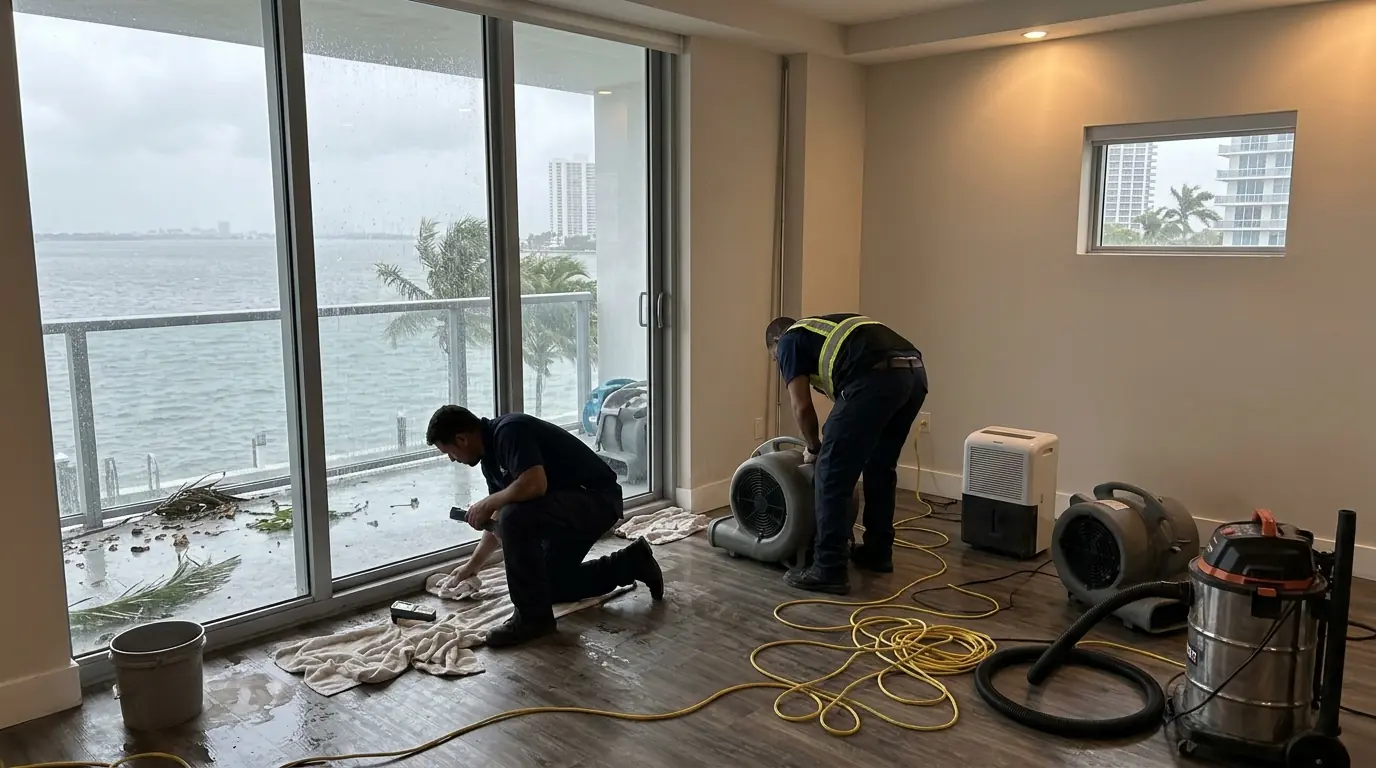
Yes. We handle hurricane and water damage in Brickell Key condos around the clock: extraction, structural drying, ceiling and drywall repair, and cleanup after bay water reaches lower floors. In a tower we document the source and every unit affected, so the association and each owner have the same record to give their adjusters.
The island traces back to 1896, when Henry Flagler had a channel dug from the mouth of the Miami River, creating two islands. Edward N. Claughton Sr. bought them in 1943 and joined them into one tract, which is why it was long called Claughton Island. Today about 11 condo towers hold nearly 3,000 units, alongside the Courvoisier Centre offices.
Our office is a short drive across the bridge on Brickell Avenue, so this is about as close to home as our crews work. Most jobs here are inside units: drying after a leak from above, after rain blown in around a window frame, or after water reached a ground floor or garage during a storm.
Wind-driven rain high in the towers
Wind gets stronger with height, and a hurricane can push rain sideways through window frames, sliding door tracks and balcony thresholds. When Wilma struck in October 2005, dozens of windows were blown out on Brickell towers just across the water. Even without broken glass, water often gets in around the frame and runs into the wall below.
After a storm, check the base of the wall under each window and slider, the flooring along the balcony door and the ceiling under any balcony above yours. Wet drywall there needs to be opened and dried, not painted over. If glass is broken, the first job is securing the opening so more rain stays out.
Surge, king tides and an aging seawall
With bay water all around and so little elevation, the island is directly exposed to surge and fall king tides. During Hurricane Irma on September 10, 2017, surge topped the seawall along Brickell Bay Drive and put 3 to 5 feet of water on Brickell Avenue. The island's own seawall dates to 1973, and owners face an estimated $42 million replacement, with construction expected to begin in 2026.
When bay water gets into a lobby, garage, storage room or ground-floor unit, it leaves salt and silt in drywall and on metal. That is storm surge cleanup: wet porous materials come out, surfaces are washed, then everything is dried. Salt keeps pulling moisture from the air, so a wall that looks dry may not be.
Getting your unit ready before a storm
Follow your association's hurricane plan and any evacuation order, and check which storm surge zone your building falls in using the county lookup. Then work through this list a day or two before landfall.
- Close and lock every window and slider, and fit shutters if your building uses them.
- Pull rugs, furniture and electronics away from glass and balcony doors.
- Bring in balcony furniture and plants as the building directs.
- Shut the water off at the unit valve if you are leaving.
- Walk each room with your phone camera so you can show its condition later.