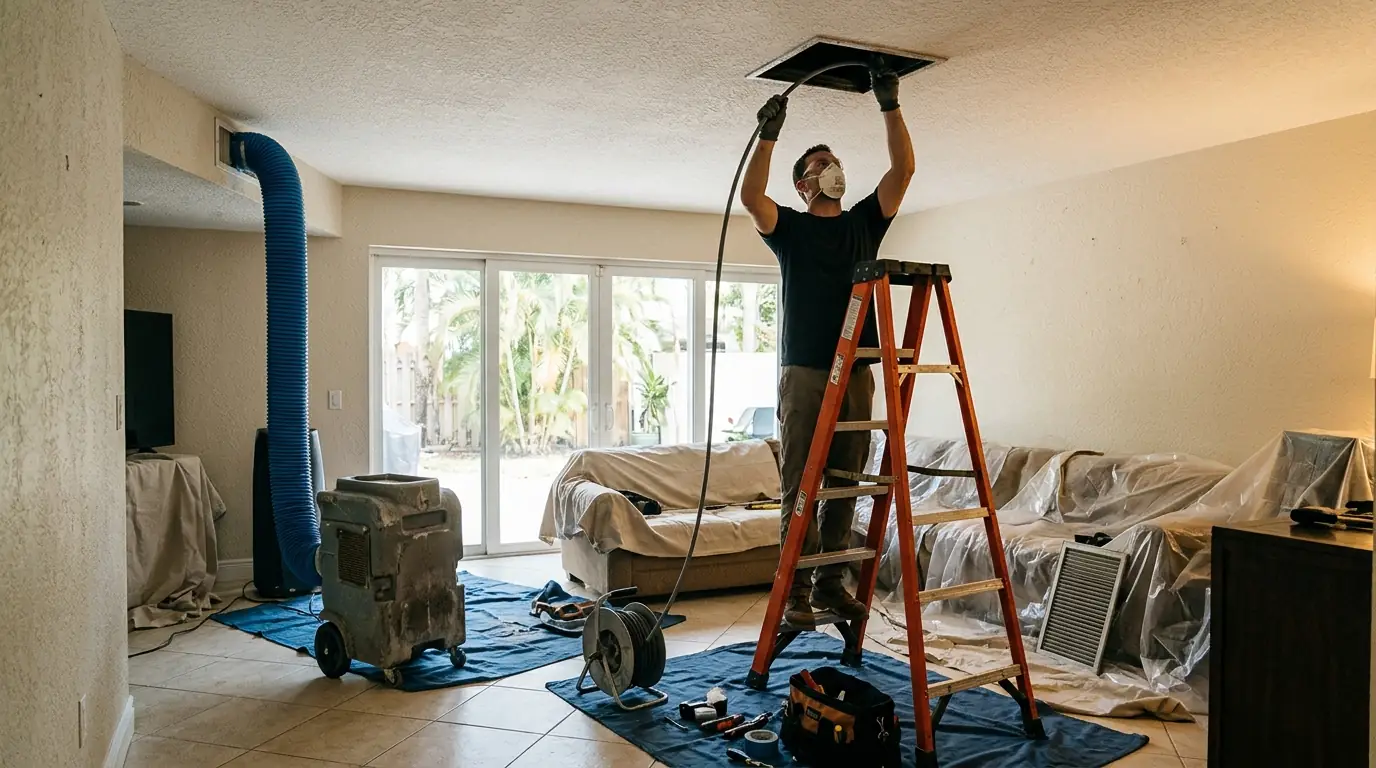
Duct cleaning after smoke or mold means cleaning supply and return ducts, boots and registers under HEPA negative air, then replacing sections that will not come clean. The coil, blower and drain pan go to an HVAC contractor, and after mold work, clearance testing belongs to an outside licensed mold assessor of your choosing.
That is the duct system doing what it was built to do, moving air from one place to every room. When soot or mold reached the return side, the ducts carried it through the house, and some of it stayed on the inside surfaces and in the boots behind each register.
In Miami, where the AC runs most of the year, those ducts move a lot of air, so a dirty run keeps resettling residue on rooms that were already cleaned. Cleaning them is the step that lets a smoke job or a mold job actually finish.
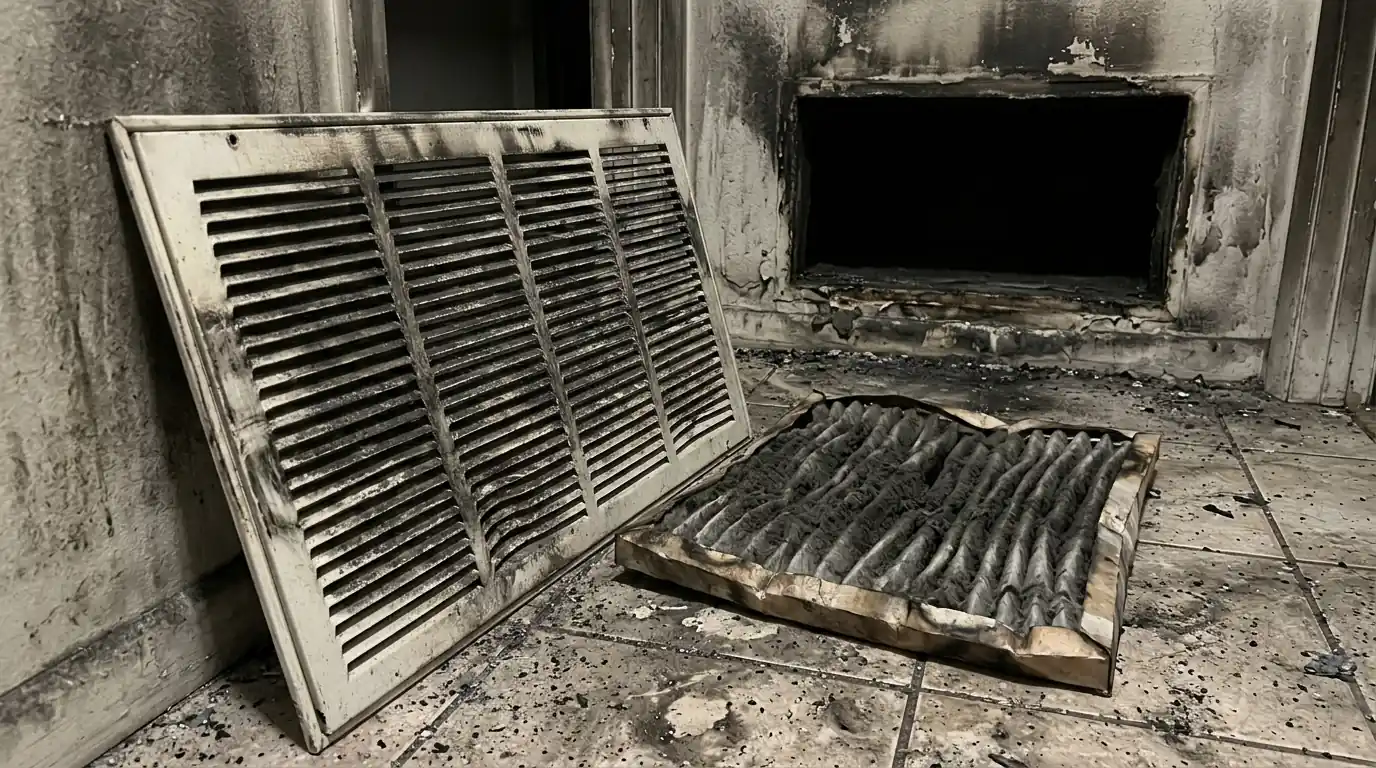
Why a cleaned house can still smell through the vents
The return pulls house air in through its grilles. During a fire that air carried smoke, and during a mold problem it carried spores, all of it passing the air handler and then every supply run.
Residue clings where air slows and turns: the return plenum, elbows, takeoffs and boots. Damp air helps it stick, and with the AC off during a cleanup the house can climb past the 30 to 60 percent indoor humidity band EPA suggests.
When the system restarts, the first rush of air stirs up what settled and the cleaned rooms slowly collect it again. That is why duct work belongs inside every smoke damage cleanup scope rather than after it.
What gets cleaned in the duct system
The scope covers the air distribution side: supply and return ducts, the return box and plenum, boots, registers and grilles. A HEPA negative air machine pulls on the system so loosened debris leaves through the machine instead of blowing into the house, and registers are washed or replaced.
Smoke jobs follow the S700 idea of removing residue before any odor treatment, and mold jobs follow ANSI/IICRC S520, whose scope includes HVAC remediation. Each duct material gets its own method:
- Rigid metal duct: brushed and vacuumed, then wiped where it can be reached
- Duct board: cleaned gently, since hard brushing tears the inner surface
- Flexible duct: cleaned when residue is light, replaced when the liner is coated or torn
- Boots and registers: cleaned or replaced, with gaps between the boot and the drywall sealed
Where an HVAC contractor takes over
The air handler, coil, blower, drain pan and condensate line are mechanical equipment. Coil cleaning, blower service, drain repair and refrigerant work go to an HVAC contractor, scheduled with the duct work so the whole system is clean at once.
When the trouble began in the closet itself, our air handler closet cleanup handles the platform, walls and return opening, and crushed or disconnected runs are photographed for your HVAC contractor to price.