Restoration timeline estimator for Miami homes
Pick what happened, the main material that got wet or damaged, the size of the area and how long it has been wet, and you get a rough day range for each phase of the job.
A planning guide, not a quote. Your real schedule comes from the moisture readings and what we find behind the walls.
How to read the estimate
The estimate splits a job into four phases: the emergency stop and safety step, removal and cleanup, drying (or cleaning and odor work for fire, and containment and removal for mold), and rebuild. Each phase shows a low and a high number of days, and the total adds them up.
The phases often overlap a little in real life, and the total is a planning range, not a schedule. The real timeline comes from the daily moisture readings and from what the crew finds behind the walls and under the floors. A sewage or flood job has more removal and disinfection than a clean leak, and wood floors or cabinets dry much more slowly than drywall.
- Low number: a job that started fast and stayed contained
- High number: more spread, denser materials or a slow start
- Rebuild days assume materials are available
Why drying takes longer in Miami
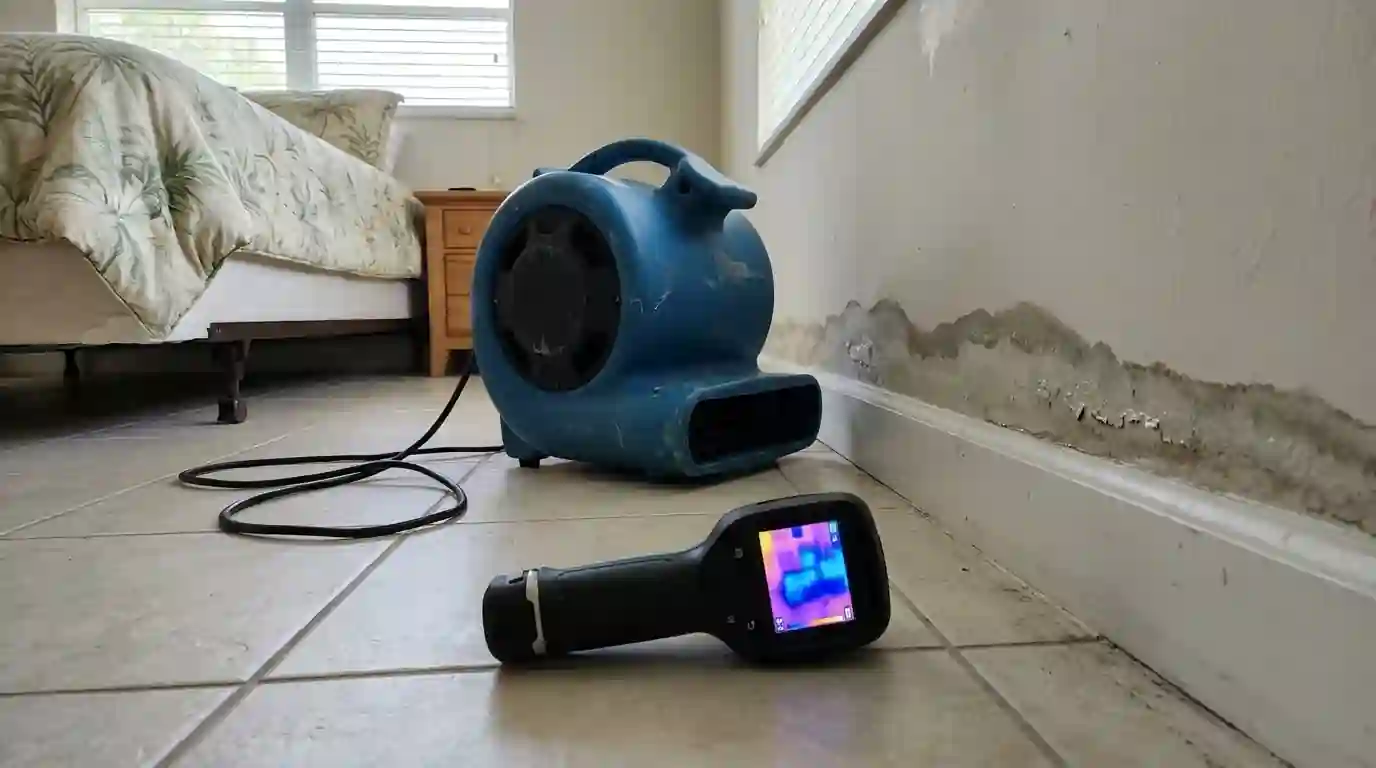
Drying is about pulling moisture out of a material and into the air, then out of the air with dehumidifiers. In Miami, the air already holds a lot of water. NWS Miami says dew points stay above 70 degrees from about late May to mid-October, and morning relative humidity averages about 84 percent.
So the crew keeps the work area closed off and runs dehumidifiers hard, and the AC system helps where it can. Waiting is what costs the most time. EPA advises drying wet materials within 24 to 48 hours to prevent mold growth, which is why the estimator adds days when a material has been wet for more than a day. More on that in our first 24 hours checklist, and see the pricing page for how time affects cost.
Keep in mind
- This is a planning guide, not a quote or a schedule.
- Mold testing and clearance by an independent licensed assessor can add time after removal.
- Category 2 water left untreated for about 48 hours can become Category 3, which means more removal.
- Insurance inspections, condo approvals and material orders can add days before the rebuild.
Questions
About the estimator
Why does the estimator ask what material got wet?
Different materials hold water differently. Drywall dries fairly fast once it is opened up, carpet and pad dry quickly or come out, while hardwood, cabinets and concrete slab hold moisture deep inside and take more days. The material changes both the drying time and what the rebuild involves.
Can I use the estimate to plan time off work or somewhere else to stay?
It works as a rough first guide, especially the high end of the range. Plan around the high number, and expect the crew lead to update the timeline after the first walk-through and again as daily readings come in. Sewage, flood and heavy smoke jobs are the ones most likely to need you out of the affected area.
What usually makes a real job run longer than the estimate?
Hidden water is the most common reason: moisture inside a wall cavity, under cabinets or in the slab that only shows up with meters. Others include waiting days before drying starts, waiting on an adjuster inspection or condo approval before rebuild, and special-order materials like matching tile or cabinets.
Water, smoke or storm damage right now?
Call (786) 664-2643. A person answers at any hour, asks what happened, and tells you what to do while the crew gets moving.