We cover Broward County 24/7 from our Brickell office in Miami. Crews handle flood extraction and drying, soot and odor cleanup, mold removal, storm damage and rebuilding in cities from Hallandale Beach and Hollywood to Fort Lauderdale, Coral Springs and Deerfield Beach. Rebuilds here meet the tougher hurricane wind rules that apply only to Broward and Miami-Dade.
The county was formed from parts of Palm Beach and Dade counties on April 30, 1915, and today holds 31 municipalities and about 1.94 million residents (2020 Census). It stretches from the Atlantic beaches and the Intracoastal Waterway west to the Everglades, with Fort Lauderdale as the county seat.
Our crews drive up from Brickell, and Fort Lauderdale is about 25 to 30 miles north. We take flooding, fire and smoke, mold and storm calls countywide, and each Broward city we serve has its own page here.
What the 2023 rain taught Broward homeowners
The April 2023 storm closed Fort Lauderdale-Hollywood International Airport for about two days and caused an estimated $1.1 billion in damage. In Fort Lauderdale's Edgewood neighborhood, residents reported nearly 3 feet of water inside their homes, and about 600 people sheltered at Holiday Park. Broward County describes it as a 1-in-1,000-year event.
In June 2024, more than 20 inches fell on Fort Lauderdale again. The lesson is that flooding here is not only a coastal or hurricane problem. Low inland areas and dredged-canal neighborhoods can take water from rain alone, and flood damage cleanup after a rain flood follows the same contaminated-water rules as after a storm.
Plan A and Plan B: how Broward evacuates
Broward does not use lettered zones. Plan A, for Category 1 and 2 storms, covers all mobile home residents, people beside tidal water or in low-lying areas, and everyone east of the Intracoastal Waterway. Plan B, for Category 3 and stronger, adds everyone east of US-1 (Federal Highway).
Check the county Evacuation Map for your address before the season starts, and use 311 for the county emergency hotline. When you return, photograph everything before cleanup.
Mold after the water goes down
In the weeks after a flood, mold is the damage people notice last. The EPA window for drying soaked materials is 24 to 48 hours, and humid Broward summers make it tight. Drywall, insulation and baseboard that stayed wet longer often have growth behind them even when the face looks clean.
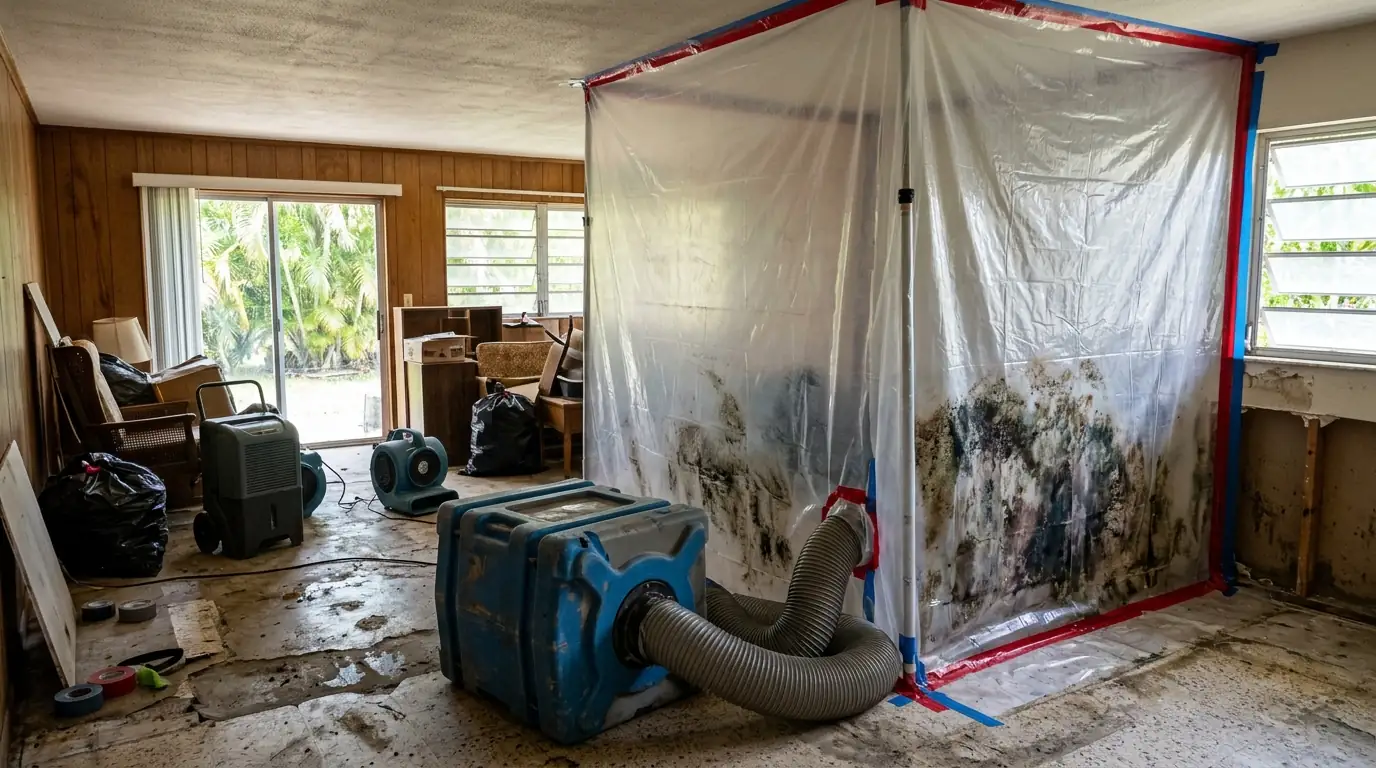
Our mold remediation work sets up containment, removes growth and contaminated material, cleans what stays and fixes the moisture source. Florida law keeps assessment and removal separate on the same job, so sampling and the final all-clear come from a separate assessor that you choose.