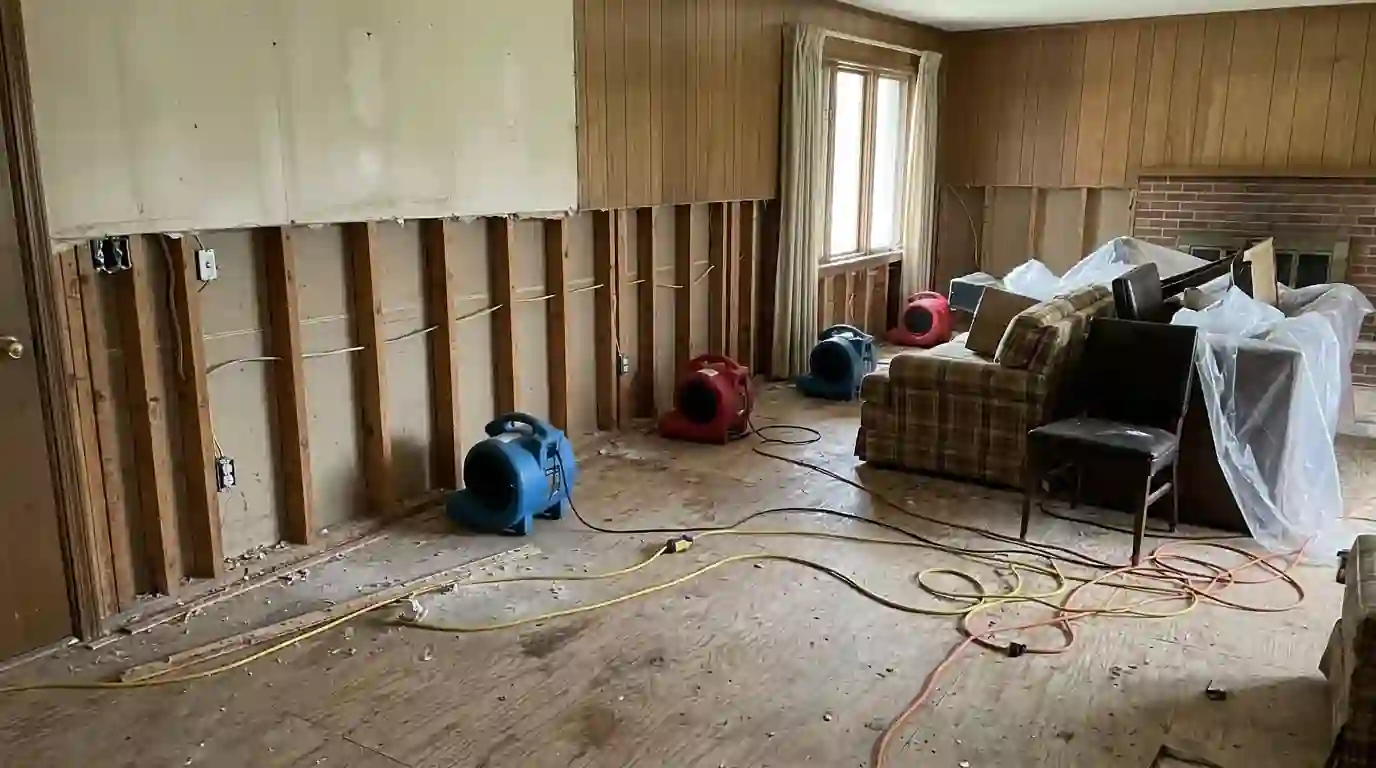
When water gets into a Plantation home, the crew extracts standing water, then checks the walls with moisture meters to see how high it wicked. Drywall is cut in a straight line above that height, wet insulation comes out, and the cavity dries with air movers and dehumidifiers. New board goes up only after the framing reads dry.
This city was built on drained Everglades land, with the North New River Canal running through it. The first homes went up in 1947 on one-acre lots along East Acre Drive, and Plantation was incorporated in 1953.
Water has been part of local history from the start. In the early years, 93 straight days of rain and two hurricanes destroyed many of those first homes, and two 1948 hurricanes brought flooding and a dike break. Our crews come up from Miami and handle the modern version of the same problem.
Why drywall gets cut, not just dried
Drywall is paper over gypsum, and it soaks up water like a sponge. Once wet, the paper face loosens and the core softens. Water also wicks upward, often a foot or more above the line where it stood.
Behind the board, fiberglass insulation in exterior walls holds water against the studs and the bottom plate. Leaving it in place almost guarantees mold. A clean flood cut lets the crew pull the wet material, dry the framing directly, and later patch in new board along a straight seam.
If the water was clean, from a supply line for example, and caught fast, some drywall can be dried in place. Readings decide that, not guesswork.
Ranches, Plantation Acres estates and older condos
The median Plantation home was built in 1979, and ranch and midcentury houses fill most of the city. Jacaranda was developed after 1964. Plantation Acres has one-acre estates, and the 55+ Lauderdale West community sits alongside condos such as Plantation Terrace (1970) and Lago West (1976).
That 1970s housing carries aging roofs and plumbing. In the condos, a single leak can involve walls in two units and a shared ceiling. In the ranch homes, the slab-on-grade layout means water spreads across tile and under baseboard throughout the main floor.
- Older drain lines in pre-1974 homes can thin and pinhole
- Original water heaters and washer hoses past their service life
- Roof coverings that let wind-driven rain into the attic
Getting the water out first
Emergency water extraction uses truck-mounted units when the truck can park close and portable units for condos and tight spaces. The more water pulled out at the start, the less the dehumidifiers have to remove later.
Carpet pad usually goes once soaked. Tile and concrete get extracted, cleaned and dried. Wood baseboard is pulled so air can reach the bottom of the wall.