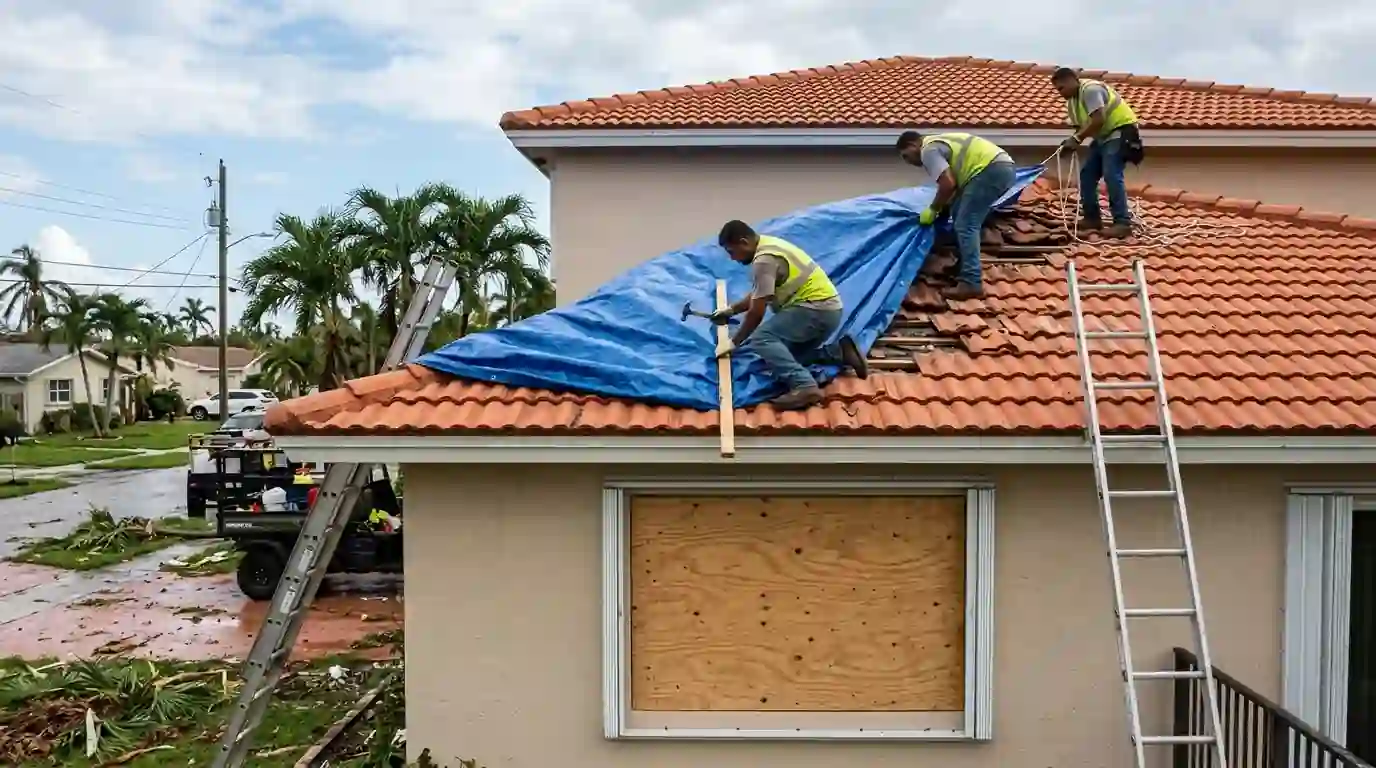
Hurricane restoration covers the work after a storm: securing the roof and openings, removing rain or surge water, tearing out wet drywall and flooring, drying the structure to target readings and rebuilding the interior. Photograph everything before work starts and notify your insurer early. In Florida, notice of a hurricane claim must reach your insurer within one year of the landfall date.
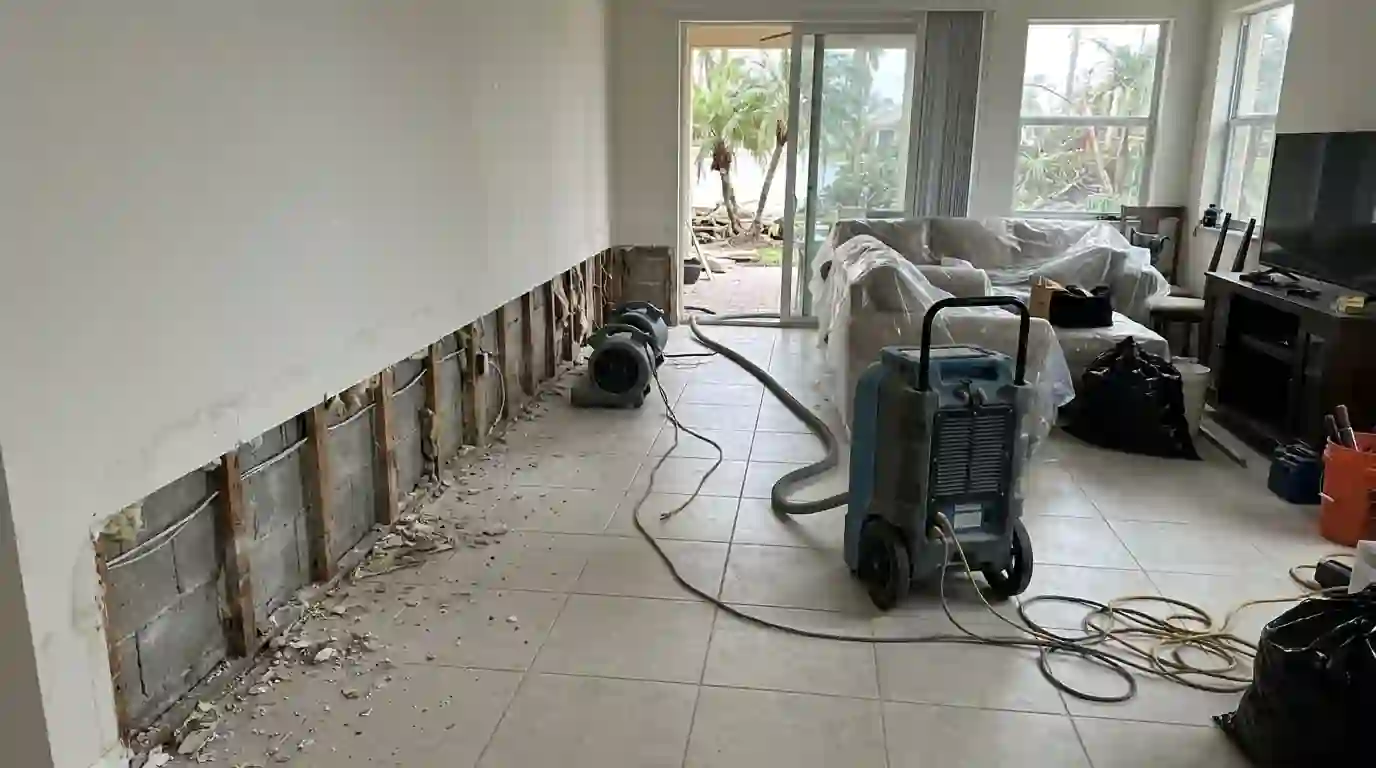
After a hurricane, the order of the work matters more than the speed of any single task. Openings get covered first so no more rain gets in, then the water comes out, then wet materials are removed before mold starts. The rebuild comes last, once the structure is dry and the adjuster has seen it.
New Kingston handles that whole sequence with its own crews: roof tarping, board-up, extraction, drying and interior rebuild. We are not a roofing company, so roof replacement goes to a roofer, but we keep the house dry and protected until they arrive.
The first 48 hours after landfall
Stay out of rooms with sagging ceilings and away from downed lines. If the power is out, as it was for over three-quarters of South Florida electric customers during Irma, the house warms up fast and wet materials start to smell sooner.
Take wide photos of every room and every side of the house before moving anything, then call to get the roof and openings covered. EPA advises drying wet materials within 24 to 48 hours to prevent mold, so even without power, getting soaked carpet and drywall out early helps.
Why some Miami homes take more damage than others
Miami-Dade and Broward make up the High-Velocity Hurricane Zone under the Florida Building Code, where many sections are stricter than in the rest of the state. Miami-Dade's review after Wilma in 2005 found that buildings built under the post-1994 code, written after Andrew, performed well, with damage concentrated in older or poorly maintained structures.
That review also called the shutter requirement the biggest mitigation success. In practice, homes with shutters or impact glass in place tend to come through with fewer broken openings, while older roofs, aging soffits and unprotected windows let the most water inside.
Keeping your claim on track
We document the job for your adjuster with photos, moisture readings and scope notes, but Florida law does not allow contractors to adjust claims or interpret coverage for homeowners. Since the 2023 reform, benefits under new property policies also cannot be assigned to a contractor, so the claim stays in your hands.
The deadlines are worth writing down. Notice of a new hurricane claim must reach the insurer within one year of landfall, and a supplemental claim within 18 months. Under SB 2-A, insurers must generally begin investigating within 7 days, inspect within 30 days and pay or deny within 60 days, with a possible 30-day extension during emergencies. Our claim documentation is built around that timeline.