Skip to content
Water, fire, storm and mold calls answered 24/7 across Miami-Dade and Broward(786) 664-2643
New KingstonWater & Restoration · Miami(786) 664-2643Answered 24/7
Records for your adjuster

Insurance claim documentation for Miami homeowners

After a leak, storm or fire, your adjuster will ask what was damaged, how wet it was and what had to come out. Clear records from day one make those questions easy to answer.

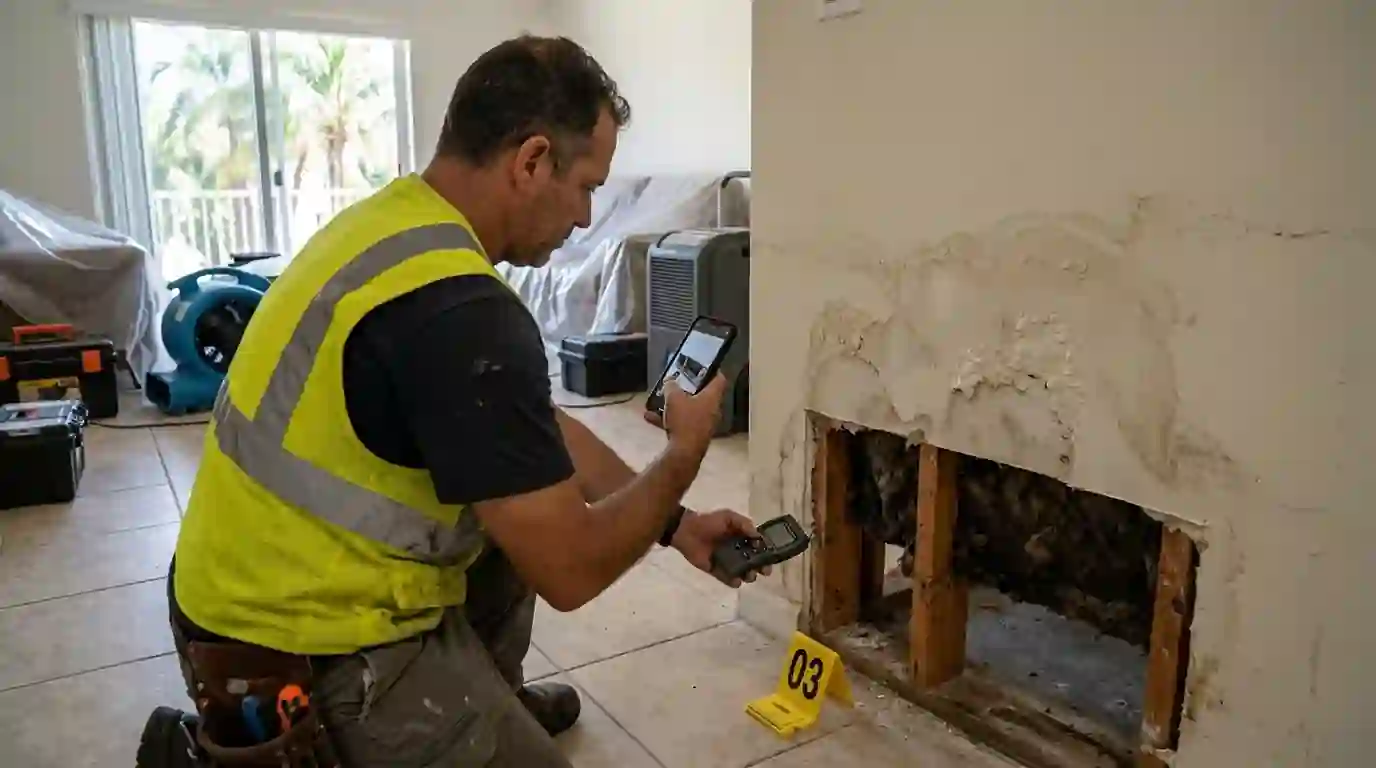
Crew lead photographing a water-stained drywall cut in a Miami living room while holding a moisture meter beside a numbered marker
Quick answer

The crew documents the damage and the work, and you own the claim. You get organized photos, daily moisture logs, a room-by-room list of removed materials and a written scope to pass to your adjuster. The crew does not interpret your policy, negotiate with the insurer or take an assignment of benefits, which Florida law no longer allows on policies issued since 2023.

A claim is your conversation with your insurance company. You, or a public adjuster or attorney if you hire one, handle that conversation. What the restoration crew can do is document the physical damage and the work clearly, so the facts are on paper when the adjuster looks.

That means dated photos before, during and after each stage, moisture readings that show where water went and when materials dried, and a written scope listing what was removed and why. You receive that file to share with your adjuster however you choose.
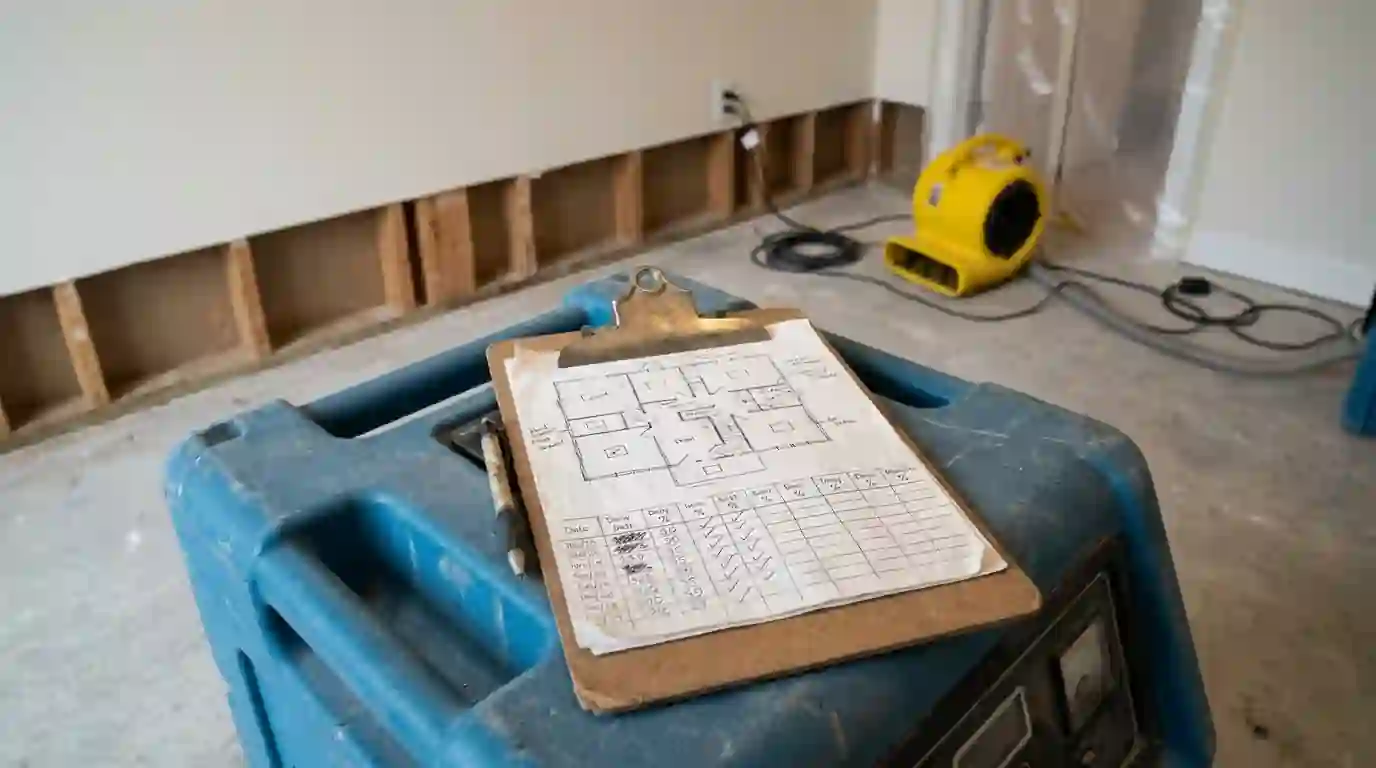
Clipboard with a hand-drawn floor plan and daily moisture readings resting on a dehumidifier in a drying room

What goes into the job file

The file is built as the work happens, not pieced together afterward. The adjuster may see the home only after drying has started, and the photos are the only record of how it looked before.

A typical file includes:

  • Dated photos of each affected room before work, during removal and after drying
  • A moisture map from hidden moisture detection showing how readings changed day by day
  • Water category and class notes, using the IICRC S500 categories for clean, gray and black water
  • A room-by-room list of removed materials with measurements
  • Equipment logs showing what ran, where and for how many days
  • A written scope for the rebuild that the adjuster can compare against their own estimate

What the crew will not do, and why

Florida Statute 489.147 bars contractors from interpreting policy coverage or adjusting claims for homeowners unless they hold a public adjuster license. So the crew will not tell you what your policy covers, argue with the insurer about a payment or speak on your behalf in the claim.

SB 2-A, signed in December 2022, bans assignment of post-loss benefits on residential property policies issued on or after January 1, 2023. That means you will not be asked to sign your benefits over to the restoration company. You stay in charge of your claim and your payments.

If you want someone to represent you in the claim, that is the job of a licensed public adjuster or an attorney, hired separately by you.

Deadlines worth knowing in Florida

Under Florida Statute 627.70132, notice of a new or reopened property claim must reach your insurer within one year of the date of loss, and a supplemental claim within 18 months. For a hurricane, the date of loss is the storm's landfall date.

SB 2-A also set insurer deadlines: acknowledge a claim communication and begin investigating within 7 days, inspect within 30 days, and pay or deny within 60 days, with a possible 30-day extension during emergencies. Keeping your own dated record of every call and visit helps you track those dates.

Signs to act on

When to call about insurance claim help

  • You are not sure what to photographThe damage is fresh and you want a record before anything is moved or cleaned.
  • The adjuster visit is days awayWater is still spreading and drying cannot wait, so the condition before removal needs to be recorded.
  • Materials had to be thrown outDrywall, carpet pad or cabinets were removed, and you need proof of what they were and why they went.
  • The adjuster asked for readingsYou were asked for moisture readings or a drying log and do not have one.
  • More damage turned up laterHidden damage was found during the rebuild, and you need it recorded for a possible supplemental claim.
  • Two units are involvedA condo leak touches your unit and a neighbor's, and each owner needs a clear record of their own side.

Flood, wind and water are often treated differently

FEMA notes that most homeowners and renters policies do not cover flood damage, which usually falls under a separate flood policy. Wind, a burst pipe and rising water from outside can all show up in the same house after a storm, and each may be handled under a different policy or deductible.

That is a coverage question for your agent and adjuster, not the crew. Documentation can record the source of water in each room, such as a roof leak, a broken window or flood water under the door, so the people deciding have clear facts.

What you should keep on your side

Take your own photos and video as soon as it is safe, before anything is moved. Keep receipts for emergency costs such as hotel stays, tarps or a plumber's repair. Write down the date and time of every call with your insurer and the name of the person you spoke with.

Ask for a copy of the restoration file and keep it with your policy documents. For questions about the work or the rebuild scope, call New Kingston at (786) 664-2643. Coverage questions go to your agent or adjuster.

How the job runs

From your call to a finished room

  1. Photograph before anything movesThe crew photographs every affected room and item before extraction or removal begins.
  2. Record the source and categoryThe cause of the water, its category and the rooms it reached are written down on day one.
  3. Log daily readingsMoisture readings are taken and logged each day at the same marked spots until materials reach dry goal.
  4. List what was removedEach removed material is measured and photographed, with a short note on why it could not be saved.
  5. Write the rebuild scopeA room-by-room scope describes what needs to go back, ready for your adjuster to compare.
  6. Hand you the fileYou receive the full set of photos, logs and notes to share with your insurer however you decide.

Questions

Insurance Claim Help questions

Can the restoration crew talk to my adjuster for me?

The crew can meet the adjuster at the property and answer questions about the damage and the work, such as what was wet and what was removed. It cannot interpret your policy or negotiate your claim. Those conversations are yours, or your public adjuster's.

Is it a problem that drying equipment ran before my adjuster saw the damage?

Generally no, as long as the condition before work was photographed. Most policies expect you to take reasonable steps to prevent further damage, and wet materials can grow mold within a day or two.

Why can't I sign an assignment of benefits anymore?

Florida's SB 2-A banned assignment of post-loss benefits for property policies issued on or after January 1, 2023. The change also ended one-way attorney fees in property insurance lawsuits. Your payments go through you.

What if my claim is denied or underpaid?

Your documentation stays useful whatever happens next. For a dispute, talk to your agent, a licensed public adjuster or an attorney. The crew can provide copies of records, but it does not argue the claim.

Does Citizens handle claims differently from private insurers?

Citizens Property Insurance is the state's insurer of last resort, created by the Legislature in 2002. Its claim process and policy terms are its own, so ask Citizens or your agent directly. The documentation you need from the job is the same.

Water, smoke or storm damage right now?

Call (786) 664-2643. A person answers at any hour, asks what happened, and tells you what to do while the crew gets moving.

Call (786) 664-2643 · 24/7