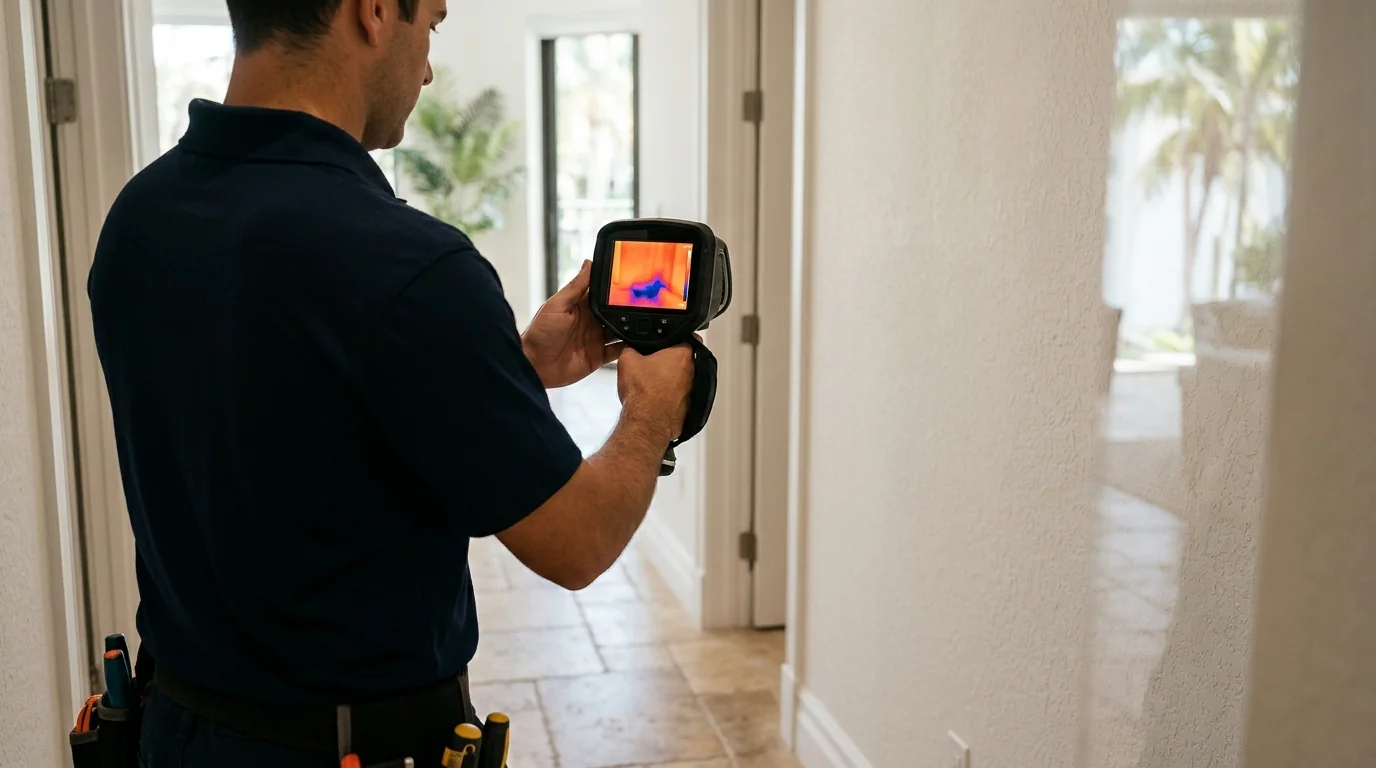
Hidden moisture detection maps wet materials without tearing anything out first. A thermal camera shows cool spots where water is evaporating, and pin and pinless moisture meters confirm the readings in drywall, wood, tile and concrete. The result is a marked-up floor plan and photos showing the wet area. If a pipe is leaking, a licensed plumber finds and repairs it.
Water rarely stays where it starts. It runs along the top of a slab, wicks up drywall, soaks into cabinet bases and pools inside wall cavities. Without instruments, it is easy to cut open the wrong wall or miss half the damage.
Hidden moisture detection uses moisture meters and thermal imaging to find out which materials are wet, how far the water spread and how wet it is. It shows where the damage is. Finding and fixing the leaking pipe itself is plumber work, and the crew coordinates with your plumber so the two jobs line up.
What a thermal camera actually shows
A thermal imaging camera does not see water. It sees surface temperature. Wet materials are usually cooler than dry ones because evaporation pulls heat away, so a damp patch of drywall shows up as a cool shape on the screen.
Other things also cause cool spots: an AC supply vent, a cold water line, missing insulation or a shaded exterior wall. So every thermal finding is checked with a moisture meter before it goes on the map. The camera points to the suspects and the meter confirms them.
Moisture meters for drywall, wood, tile and slab
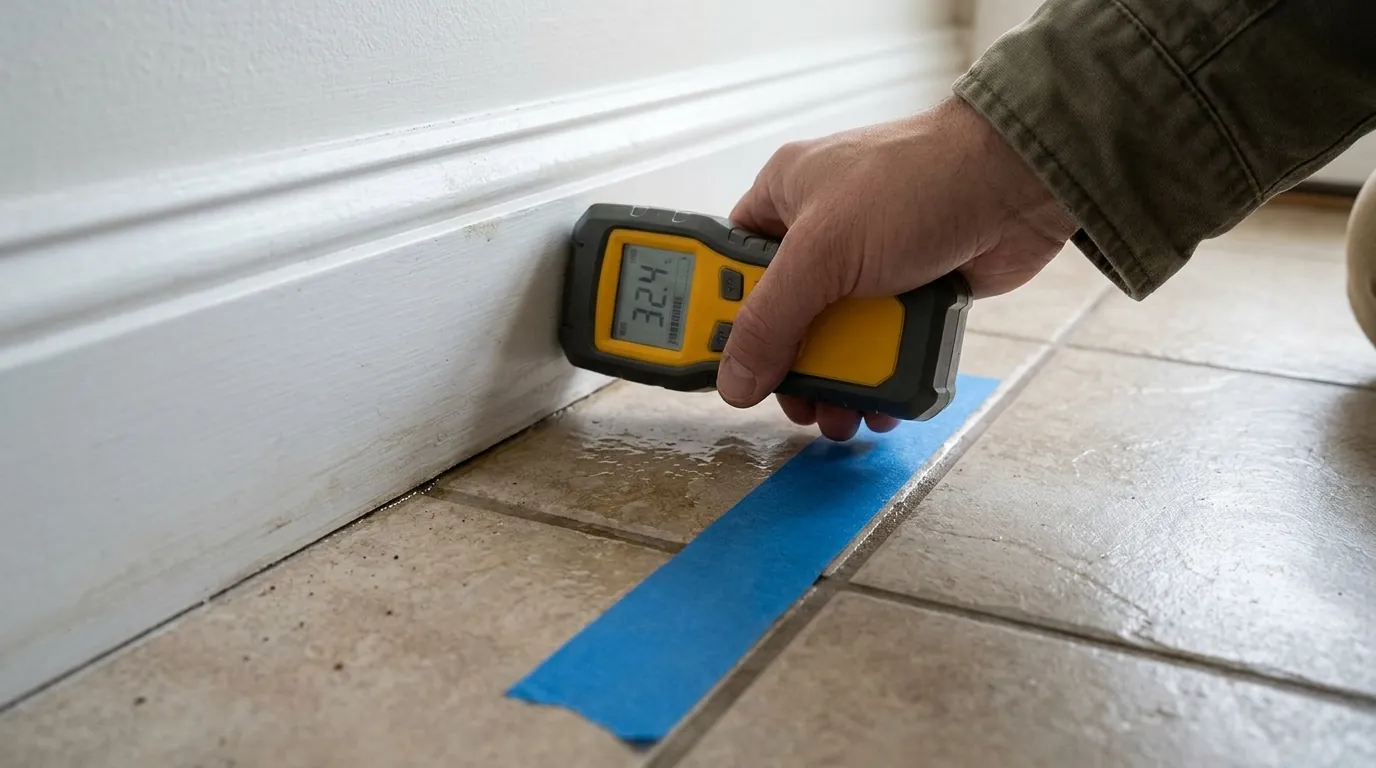
Pinless meters read through the surface without leaving marks, which makes them good for scanning a wall or floor quickly. Pin meters push two small probes into drywall or wood for a precise reading at a specific depth.
Every reading is compared with a dry reference from an unaffected part of the same house. Miami's humid air means indoor materials carry some moisture even when nothing is leaking, so a single number means little on its own. The difference between wet and dry areas is what counts.
Common hidden sources in Miami homes
Some sources come up again and again in South Florida houses and condos:
AC closet leaks are a common case, because the water often lands on a ceiling or carpet well away from the air handler. New Kingston crews follow that trail with the meter, and the AC leak water damage page covers the repair side.
- AC condensate lines clogged by algae, which spill from the drain pan into the closet and ceiling
- Aging cast-iron drain lines in homes built before about 1974, which can thin and develop pinholes
- Supply lines under the slab, which can wet tile and baseboards along a single path
- Shower pans and tub drains leaking into the wall behind the tile
- Window and slider frames in block walls letting wind-driven rain into the wall