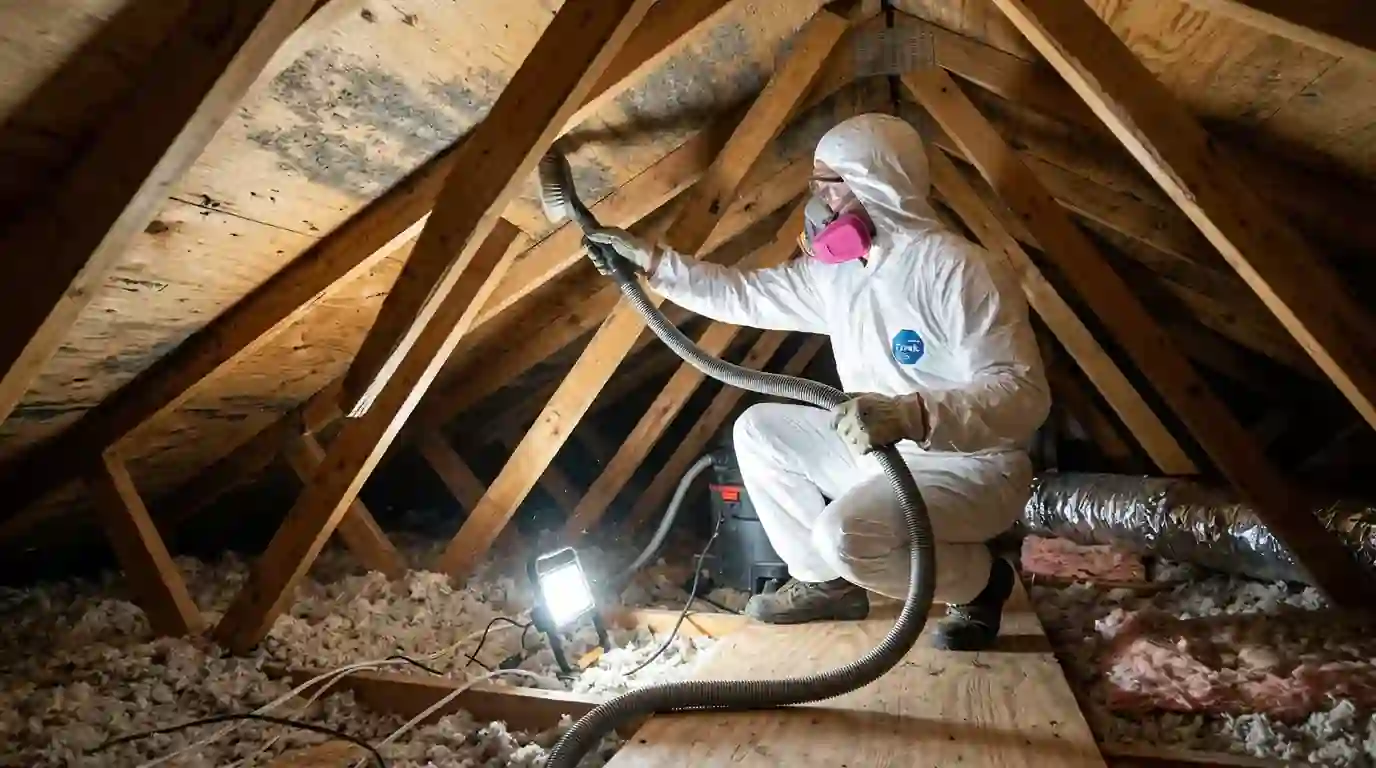
Attic mold removal means cleaning growth off sound roof decking and trusses with HEPA vacuuming and wiping, replacing wet or stained insulation, and drying the attic. Soft or delaminated plywood needs a roofer to replace it from above. Whether the cause is a leak or trapped humidity decides what has to change so it does not come back.
Attic growth in South Florida usually starts in one of two ways. Rain gets in through a worn roof, a lifted shingle or a failed flashing and soaks a patch of plywood, or warm humid air builds up under the roof deck with nowhere to go and condenses on the cooler wood overnight.
The pattern on the wood tells us which one you have. A ring of growth around a nail line or a valley means a leak. An even gray haze across many sheets of decking points to air and ventilation. The fix is different for each.
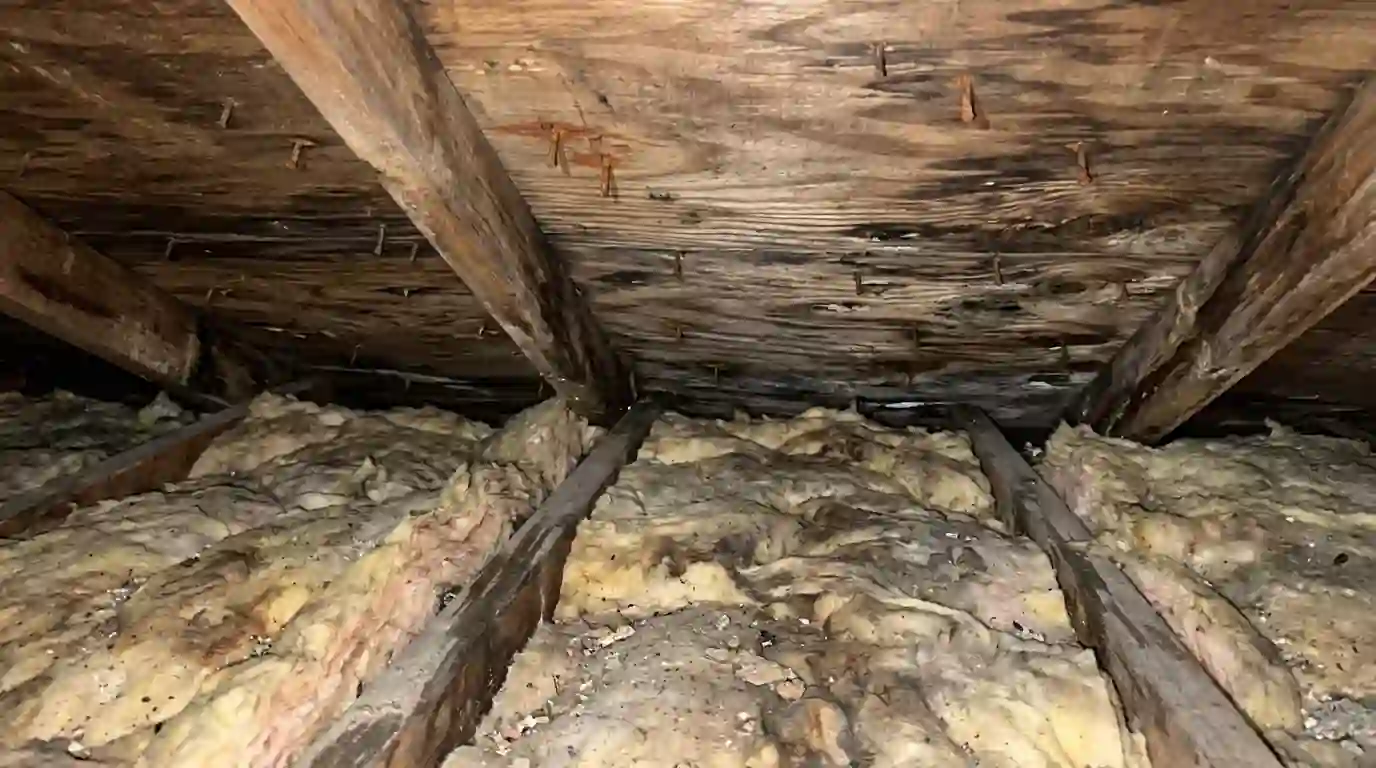
Reading the attic: leak growth versus humidity growth
A roof leak leaves a trail. Growth sits in one area, often downhill from a valley, chimney, skylight or plumbing vent, and the wood there may be darker, softer or water-stained. The insulation below that spot is usually the most damaged.
Humidity growth spreads wider and lighter. It shows up across the north-facing side, near the ridge, or over the AC equipment, because warm damp air rises and has nowhere to escape. In Miami, where average morning relative humidity runs about 84 percent, an attic with blocked soffit vents or too little exhaust can hold moisture for long stretches.
Some attics have both: a storm leak adds water and poor ventilation keeps it from drying.
Ducts, air handlers and bath fans in the attic
Many South Florida homes with a pitched roof have the air handler or at least the ductwork in the attic. Sweating duct runs, a disconnected supply boot or a drain pan overflow can all wet the insulation and the ceiling drywall below, then feed growth on nearby framing.
Bathroom exhaust fans that dump air into the attic instead of through the roof or soffit do the same thing every time someone showers. We often find a patch of growth on the decking right above a fan that was never ducted outside.
We point these out with photos so your HVAC contractor or roofer can correct them. New Kingston crews remove the damaged insulation and clean the framing, but rerouting ducts or venting fans through the roof is their work.
- Sweating or leaking duct runs
- Air handler drain pan overflows
- Bath fans venting into the attic
- Blocked soffit vents from insulation