- Florida law defines mold assessment and remediation as work involving more than 10 square feet of growth.
- Mold assessors and mold remediators are each licensed by the state.
- An assessor's company may not remediate a structure it assessed within the past 12 months, and the reverse is also barred.
- You hire the assessor directly; the remediation crew works from the scope and the moisture fix.
Homeowners are often surprised to learn that the company cleaning up their mold is not allowed to test it, and the company that tested it is not allowed to clean it up. It can feel like extra steps. The reasoning is simple once you see it: the person who decides how big the problem is should not also be the person who gets paid to fix it.
Here is how Florida draws that line, what each professional does, and how a typical job moves from discovery to clearance.
What the law says
Florida defines mold assessment and mold remediation under section 468.8411 as work involving mold growth of more than 10 square feet, and both mold assessors and mold remediators must be licensed by the state. Below that size, the statute's definitions do not apply, which lines up with EPA's guidance that an area under about 10 square feet can usually be cleaned by a homeowner.
Section 468.8419 adds the conflict rule. A mold assessor, or the assessor's company, may not remediate a structure it assessed within the past 12 months. A remediator may not assess a structure it remediated in that same window. Repeat violations can become a third-degree felony, so reputable companies take the separation seriously.
Why the separation exists
Picture the alternative. A single company inspects your home, tells you the mold is extensive, writes a large removal plan, does the removal, then tests the air and tells you it is clear. Every step of that process benefits from a bigger problem and an easy pass at the end. Even honest companies would face the temptation, and homeowners would have no independent check.
Splitting the roles gives you two sets of eyes with different incentives. The assessor has no stake in how much material comes out. The remediator works to a scope they did not write and knows an independent professional will check the result. That arrangement protects you, your insurer and the next buyer of your home.
It also gives you a cleaner record. When you sell the house, a buyer's inspector may ask what happened behind that patched wall in the hallway. An assessment report, a remediation scope with photos and a clearance letter from an independent professional answer that question far better than a contractor's word that everything was handled.
What a mold assessor does
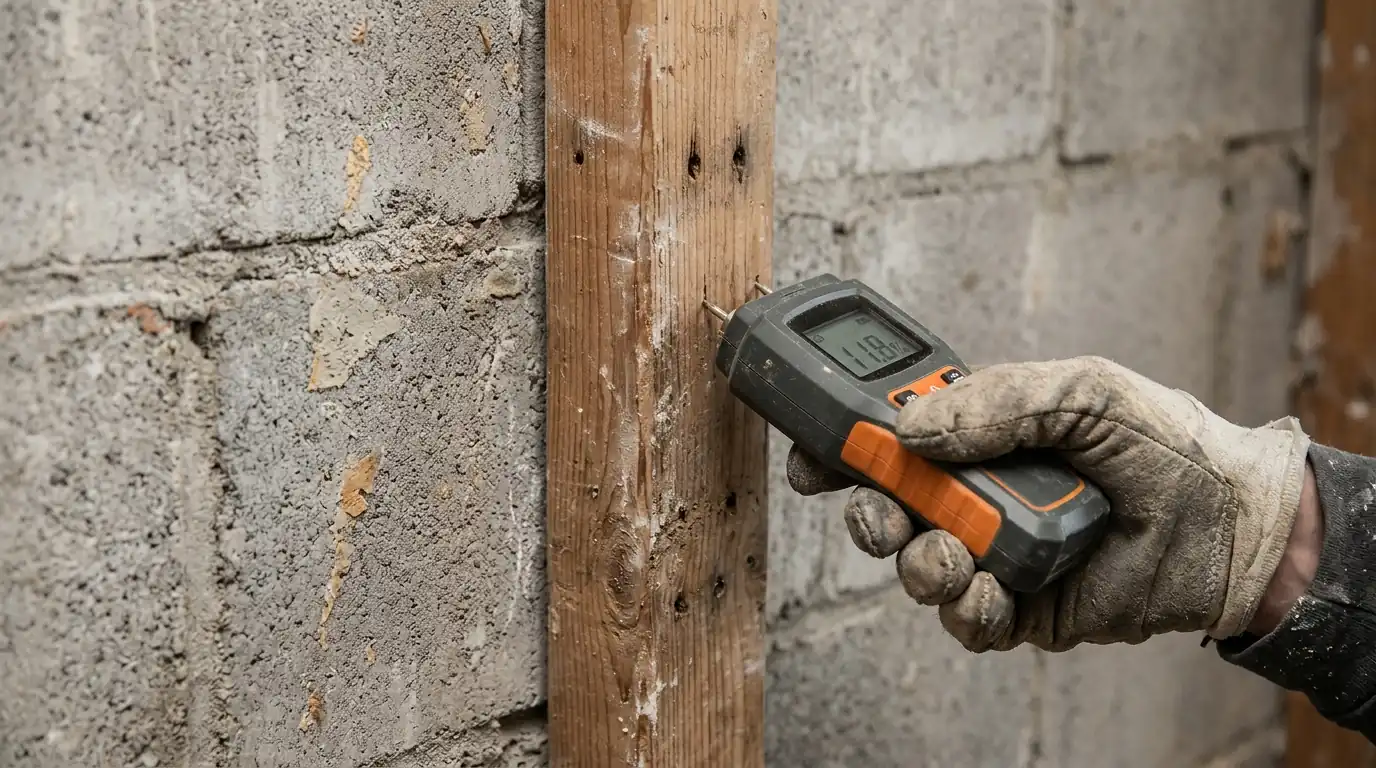
An assessor investigates. They look for visible growth, check for moisture with meters, consider odors and history, and may take air or surface samples for a lab. Their report describes where growth is, how far it seems to extend and, often, a recommended remediation protocol: what to contain, what to remove and what to clean.
After the remediation crew finishes, the assessor can return for post-remediation verification, sometimes called clearance testing. They inspect the work area and may sample again to confirm conditions are back to normal. The remediation company does not issue clearance on its own work.
You hire the assessor directly. Ask your insurer whether they have a preference, and ask the assessor for their Florida license number before they start.
What a mold remediation crew does
The remediation crew handles the physical work. Mold remediation, which follows the IICRC S520 standard for professional mold remediation, generally includes these steps:
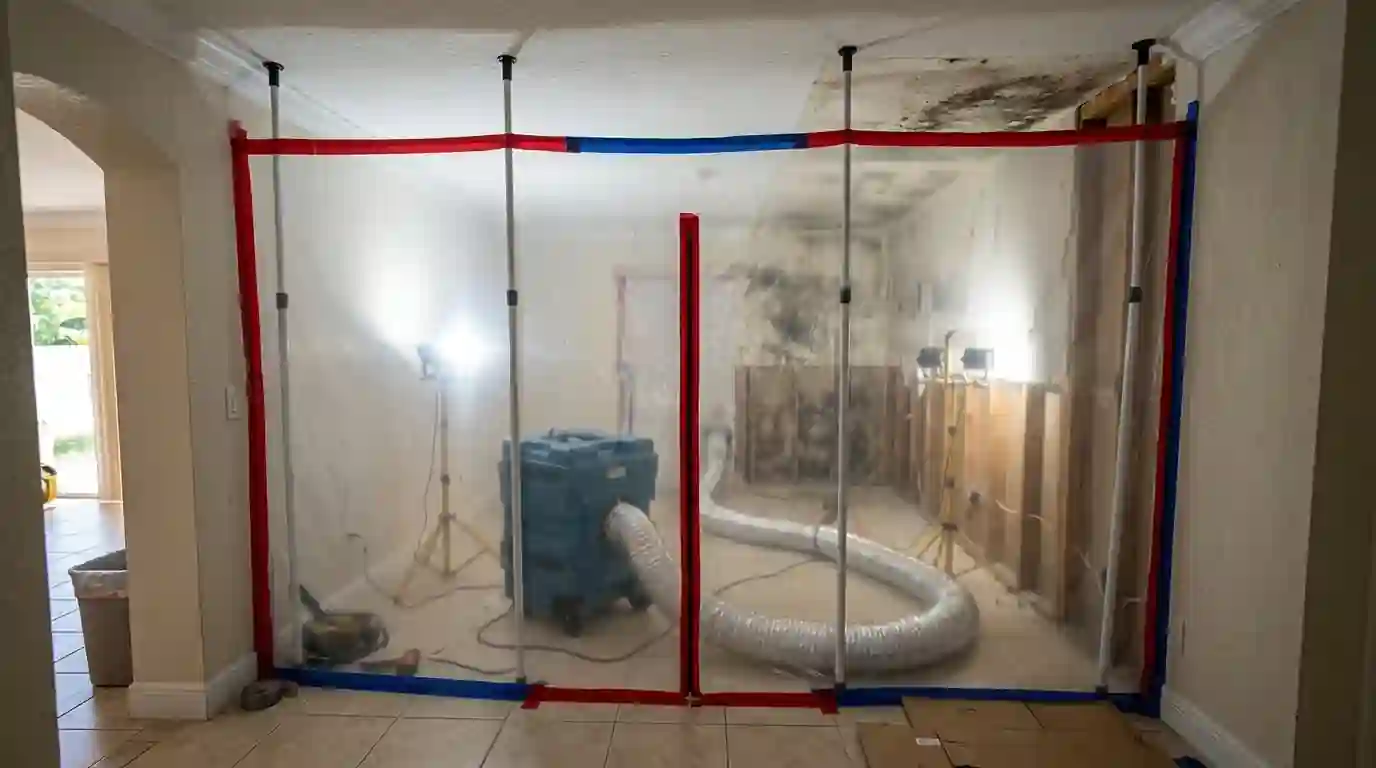
- Setting up containment with plastic sheeting and negative air pressure so spores do not spread to clean rooms.
- Running HEPA air filtration during the work.
- Removing materials that cannot be cleaned, such as moldy drywall, insulation and carpet pad.
- HEPA vacuuming and cleaning framing, subfloors and other materials that stay.
- Drying the area and confirming moisture readings are back to normal.
- Coordinating with your plumber, roofer or HVAC contractor so the moisture source is fixed.
How a typical job flows from start to finish
Most mold jobs start with water. A leak goes unnoticed, or the drying after a leak was not finished, as described in why mold starts fast in Miami. The homeowner notices a smell, a stain or visible growth.
If the area looks larger than about 10 square feet, the usual order is assessment first, then remediation, then verification. The assessor documents the problem and writes a protocol. The remediation crew, doing mold remediation, follows that protocol and fixes or coordinates the fix of the moisture source. The assessor returns to check the result. Then rebuilding can start: new drywall, paint and trim, through reconstruction after damage.
New Kingston handles the remediation side of that sequence and never tests or certifies clearance on its own jobs. When a homeowner calls about mold, the crew can explain the process, but testing is done by an independent licensed assessor the homeowner hires. You can get a rough sense of how long each stage takes from our restoration timeline estimator.
Smaller jobs and special cases
Not every mold situation needs an assessor. A few square feet of growth on bathroom grout or a window sill is usually a cleaning task. If you are unsure of the size, or the growth is inside a wall or ceiling where you cannot see its edges, an assessment is the safer route.
Some situations raise the stakes regardless of size: sewage contamination, someone in the home with asthma or a weakened immune system, or growth in a closet like the one around the air handler, where air handler closet mold cleanup has to be coordinated with the HVAC contractor so spores are not pushed through the ducts.
Common questions
Can the remediation company recommend an assessor to me?
Some homeowners ask for names, and a remediation company may share a few local options, but the assessor should be independent and hired by you. Look up any assessor's state license before you book, and ask whether they have any business ties to the remediation company.
Does my insurer have to accept the assessor's report?
Your insurer makes its own coverage decisions and may send its own adjuster or consultant. An independent assessment is still useful evidence of what was found and why work was recommended. Ask your adjuster early whether they want an assessment before remediation starts.
What if clearance testing does not pass?
The assessor's report should say what failed and where. Usually the remediation crew returns to re-clean or remove more material in that area, dries it again, and the assessor tests again. A failed clearance often points to a moisture source that was not fully fixed.