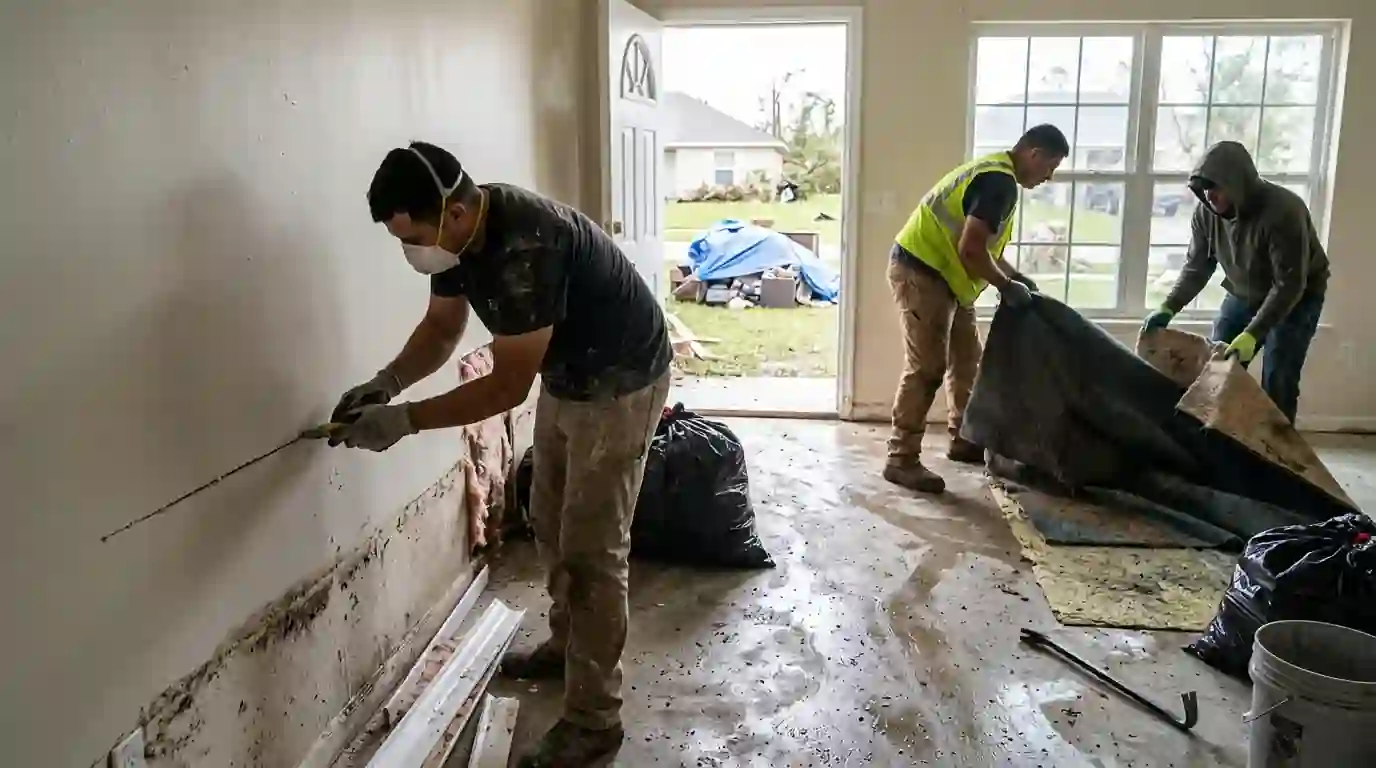
After a storm in Palmetto Bay, start with the roof and the openings: tarp or board what is broken so no more water gets in. Then crews extract standing water, remove wet drywall and flooring, and dry the structure to a measured goal before rebuilding. Call (786) 664-2643 at any hour once it is safe to go back inside.
Palmetto Bay was among the areas hit worst by Hurricane Andrew in August 1992, and rebuilding took years. Much of the village's single-family housing went back up in that stretch, which means a large share of roofs, water heaters and plumbing date from the same few years and are aging together.
Irma showed the other risk in 2017. The National Weather Service found surge along the Biscayne Bay shoreline from Homestead to Brickell averaged 3 to 5 feet of inundation, reaching 1 to 2 blocks inland, and the storm caused extensive damage to the village's parks. Estate lots near Old Cutler Road sit close to that water.
Estate lots by the bay and surge water
Homes on the larger lots east of Old Cutler Road take bay water first in a strong storm. Surge is Category 3 water under the IICRC S500 guidelines, so carpet, pad, insulation and drywall it touched come out instead of being cleaned in place.
Garages, pool equipment rooms and ground-level guest suites usually hold the worst of it. The crew clears debris, makes flood cuts above the waterline and treats exposed framing before drying begins. Storm surge cleanup walks through the full sequence.
Andrew-era rebuilds turning 30
A house rebuilt in 1993 or 1994 has a roof, water heater and supply lines that are now about three decades old. Those parts tend to fail during heavy summer rain or the first squall of a storm, when wind drives rain sideways under flashing that held through calmer weather.
When the county studied Wilma's damage in 2005, homes built to the post-1994 code held up well, and most of the losses showed up on older buildings or ones that had not been kept up. For an Andrew-era house, upkeep is the variable worth watching: roof flashing, AC drain lines and the pan under the water heater.
The order of work on a storm call
Most storm jobs in the village need several steps in a row, and the order matters more than speed on any single one.
- Secure the roof with a fastened tarp and board broken windows or sliders
- Extract standing water and lift contents off wet floors
- Map moisture in walls, floors and ceilings
- Remove wet drywall, insulation and flooring that cannot be dried
- Run air movers and dehumidifiers, checking readings daily