Skip to content
Water, fire, storm and mold calls answered 24/7 across Miami-Dade and Broward(786) 664-2643
New KingstonWater & Restoration · Miami(786) 664-2643Answered 24/7
Rain and street flooding

Flood damage cleanup in Miami

Water came in under the doors during a downpour, and now your tile floors, baseboards and lower walls are sitting wet in a house built right on the slab.

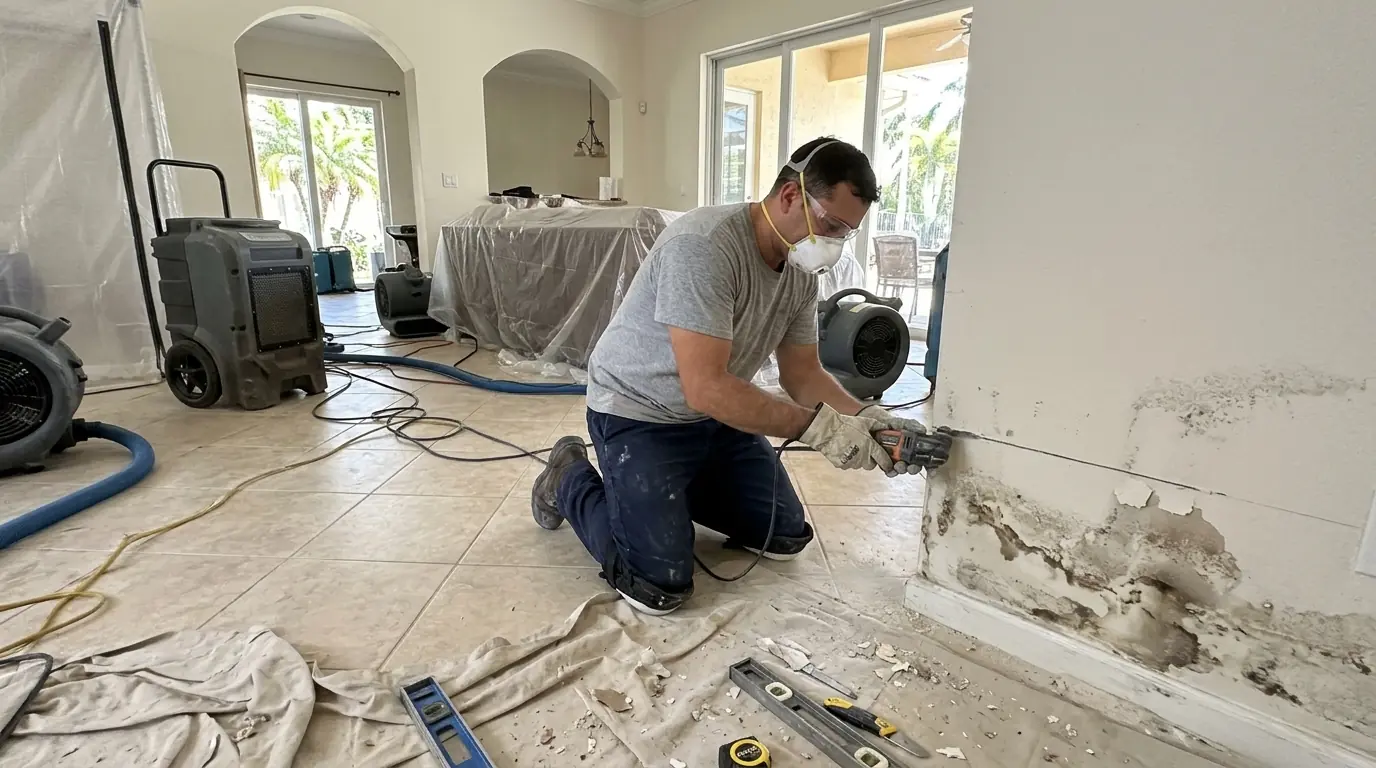
Restoration technician cutting wet drywall in a straight line above a flood waterline in a Miami tile-floored living room with dehumidifiers running
Quick answer

Flood cleanup means removing the water, cutting out wet drywall and insulation above the waterline, cleaning and disinfecting what remains, and drying the slab and framing to target readings. Because rising floodwater is treated as contaminated, porous items it touched usually go. Drying takes several days after the tear-out, and longer for plaster walls or wood floors.

Miami floods from the ground up. Miami-Dade County points to low elevation, a high water table and limited natural drainage as the reasons it is so exposed, and those same conditions mean the water in your living room usually crossed a street, a yard and a driveway first. That makes it Category 3 water under IICRC S500 guidelines, even when it looks clear.

Floodwater in a slab-on-grade home spreads sideways. It wicks up drywall, soaks the bottom plate of framed walls, gets under loose tile and settles into the grout lines. New Kingston crews pull the water, cut out what cannot be saved, clean what stays and dry the structure until the readings say it is done.
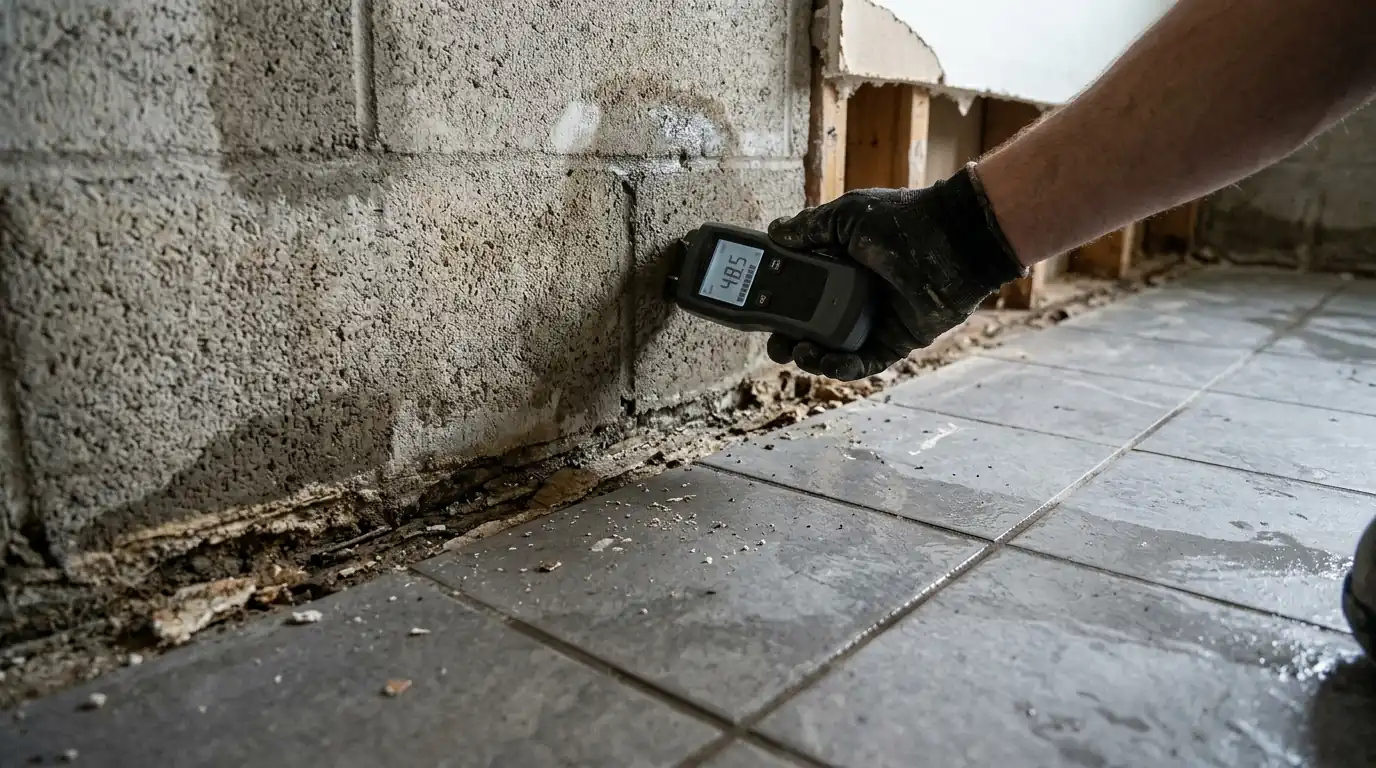
Moisture meter pressed against a concrete block wall after a flood cut, baseboards removed, gray porcelain tile floor still damp

Why rain floods homes outside the flood zone

Many flooded homes sit in zone X on the FEMA maps, which Miami-Dade describes as moderate-to-low risk. FEMA reports that over 40% of flood claims come from outside the high-risk zones, so a zone X address is no reason to wait and see.

The usual cause is simple: a heavy summer cell drops more rain than the storm drains can take, and the street fills until water pushes up the driveway and into the garage. The June 11-13, 2024 rain put 15 to 20 inches over two days across northern Miami-Dade and southern Broward. In April 2023, Fort Lauderdale recorded 25.91 inches in 24 hours.

Miami-Dade lists its rainy season as May 15 through October 15, so most flood calls arrive in that window, often after an afternoon storm parks over one neighborhood for an hour.

What the crew removes and what it keeps

Floodwater carries whatever was on the street: oil, lawn chemicals, sewer overflow and debris. Porous materials it soaked are removed rather than dried in place.

On a typical CBS block home, that means a flood cut: drywall and insulation removed in a straight line above the highest wet reading. Concrete block, the slab, tile that is still firmly set and solid wood framing are cleaned, treated and dried.

  • Removed: wet drywall, batt insulation, carpet and pad, MDF baseboards, particleboard cabinet bases
  • Usually kept: concrete block, the slab, firmly set porcelain or ceramic tile, solid framing
  • Judged case by case: laminate, vinyl plank, wood floors and plaster walls

Signs to act on

When to call about flood damage cleanup

  • Water across the thresholdAny water that crossed a door sill from the street or yard counts as floodwater, even an inch of it.
  • Swelling baseboards and trimMDF baseboards and door casings swell and split within a day of sitting in water.
  • A dark band on the drywallDarkening above the floor shows water wicking upward into the gypsum and its paper face.
  • Hollow or loose tileTile that sounds hollow when tapped can mean water got under it through grout and cracks.
  • Musty smell after it drainsAn odor a day or two later points to moisture trapped inside the wall cavities.
  • Garage or laundry room took waterLow rooms flood first, and boxes stored on the floor wick water into the walls behind them.

Drying a slab house in Miami humidity

Concrete holds water for a long time, and Miami air rarely helps. Average dew points at Miami International climb to about 74°F in August, so opening the windows usually pushes more moisture into the house than it takes out.

We close the home up, run the AC if it is safe, and set dehumidifiers and air movers sized to the wet area. Our structural drying logs readings on the slab, the block and the framing every visit, and the equipment stays until those readings reach dry goal.

EPA advises drying wet materials within 24 to 48 hours to prevent mold, which is why the tear-out happens on the first visit rather than after the weekend.

Flood insurance and your paperwork

FEMA notes that most homeowners and renters policies do not cover flood damage; that coverage comes from a separate flood policy. We do not tell you what your policy covers, but we document the job so your adjuster has what they need.

That record includes photos of the waterline before anything is removed, moisture maps, the height of the flood cut and a list of what was thrown out. A flood carrier will ask for exactly that, and our claim documentation is organized for it.

How the job runs

From your call to a finished room

  1. Call and safety checkTell us how high the water got and whether it is still rising. If outlets or the panel were underwater, keep the power off until it is checked.
  2. Pull the standing waterTruck-mounted and portable water extraction clears the tile, low rooms and the garage.
  3. Flood cut and tear-outWet drywall, insulation, baseboards and soaked cabinet bases come out, with photos and measurements taken first.
  4. Clean and treatExposed block, framing and the slab are washed down and treated with an antimicrobial as part of post-flood mold prevention.
  5. Dry to readingsDehumidifiers and air movers run with the house closed until every material reaches its dry goal.
  6. Close the wallsNew drywall, baseboards and flooring repairs put the rooms back in use.

Questions

Flood Damage Cleanup questions

Can I just mop up and run fans after street flooding?

For a small amount of clean water from a leak, maybe. Water that came in from outside is treated as contaminated, and it has already wicked into drywall and under baseboards where fans cannot reach. Without a flood cut, that wall cavity tends to stay wet and start to smell within days.

How high above the waterline do you cut the drywall?

Usually 12 to 24 inches above the highest wet reading, not the visible stain, because water climbs gypsum past the line you can see. We meter the wall first and cut straight so the repair goes back clean. If insulation is wet higher up, the cut goes higher.

Do I have to replace my tile floors after a flood?

Not always. Porcelain and ceramic tile that is still firmly stuck to the slab can be cleaned, disinfected and dried in place. Hollow-sounding tile, cracked tile and grout that keeps weeping water may need to come up so the slab underneath can dry.

Can my family stay in the house while it dries?

Many families stay if the bedrooms and one bathroom were not affected and the power is safe. The equipment is loud and runs around the clock, and floodwater cleanup uses disinfectants, so people with breathing problems, infants and pets may be better off elsewhere for the first few days.

My street floods every summer. What can I do before the next storm?

Keep valuables and electronics off garage and closet floors, clear the yard drain and gutters, and know where your main breaker is. Flood barriers at garage doors help with shallow water. Ask your agent whether you carry flood coverage, since NFIP policies typically have a 30-day waiting period.

Water, smoke or storm damage right now?

Call (786) 664-2643. A person answers at any hour, asks what happened, and tells you what to do while the crew gets moving.

Call (786) 664-2643 · 24/7