Skip to content
Water, fire, storm and mold calls answered 24/7 across Miami-Dade and Broward(786) 664-2643
New KingstonWater & Restoration · Miami(786) 664-2643Answered 24/7
After a house fire

Fire damage restoration in Miami

The fire is out and the trucks have left, but your house is now smoky, soaked and open to the weather, and it has to be secured, dried and cleaned before anything gets rebuilt.

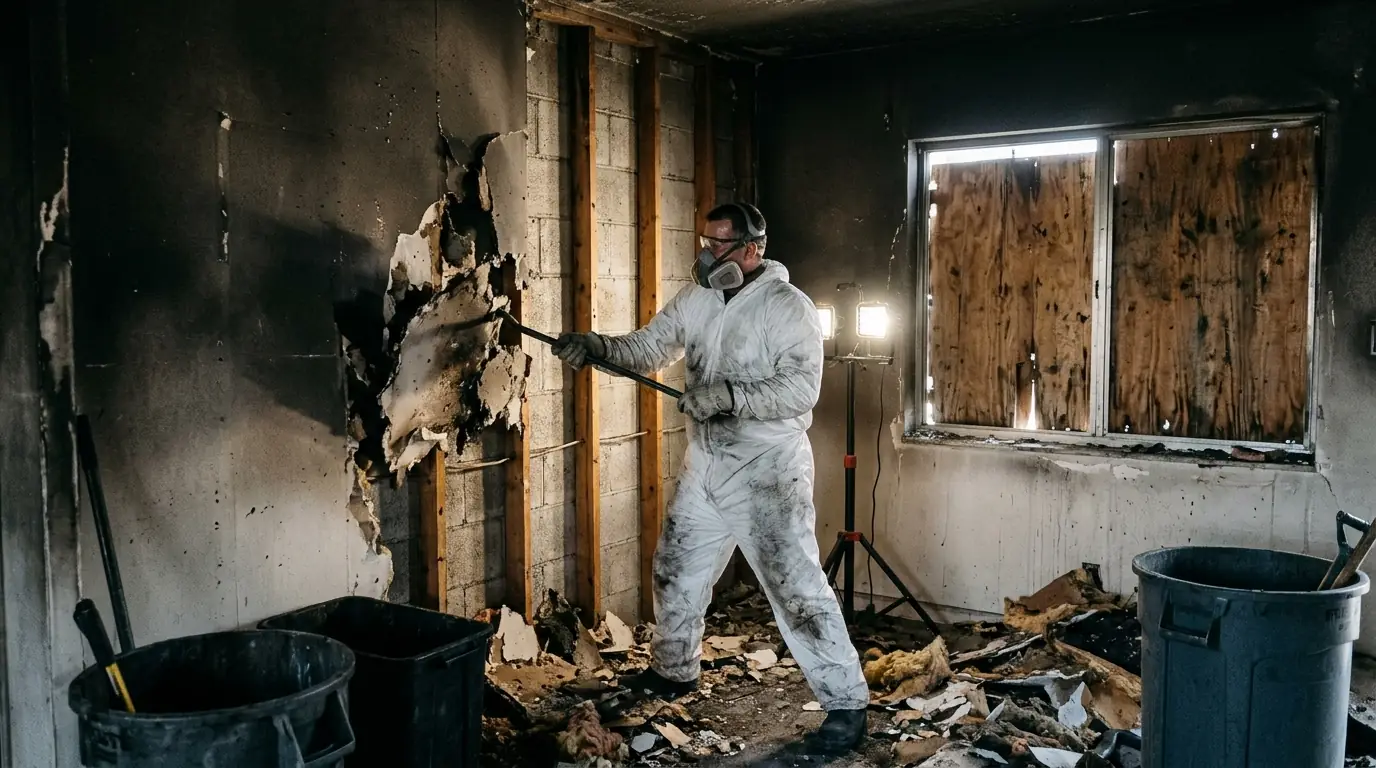
Restoration technician in a respirator removing charred drywall from a smoke-blackened living room in a Miami concrete block home, plywood over the windows
Quick answer

Fire damage restoration starts with securing the home, then removing the water left by firefighting, then cleaning soot and smoke residue from the structure and your belongings, treating odor at its source, and finally rebuilding what had to come out. A one-room fire takes weeks, not days, and a fire that reached the attic takes longer.

Most people expect the burned room to be the hard part. In practice, the bigger job is often everything around it: smoke residue on every surface in the house, water from the hoses soaking drywall and flooring, and broken windows or a vented roof that leave the home open to rain and theft.

New Kingston handles that whole chain with one crew: board-up and tarping, water removal, soot and smoke cleaning, odor treatment, contents and the rebuild at the end. Our work follows ANSI/IICRC S700, the fire and smoke restoration standard published in January 2025, which covers residue and odor assessment, source removal, HVAC systems and post-restoration evaluation.
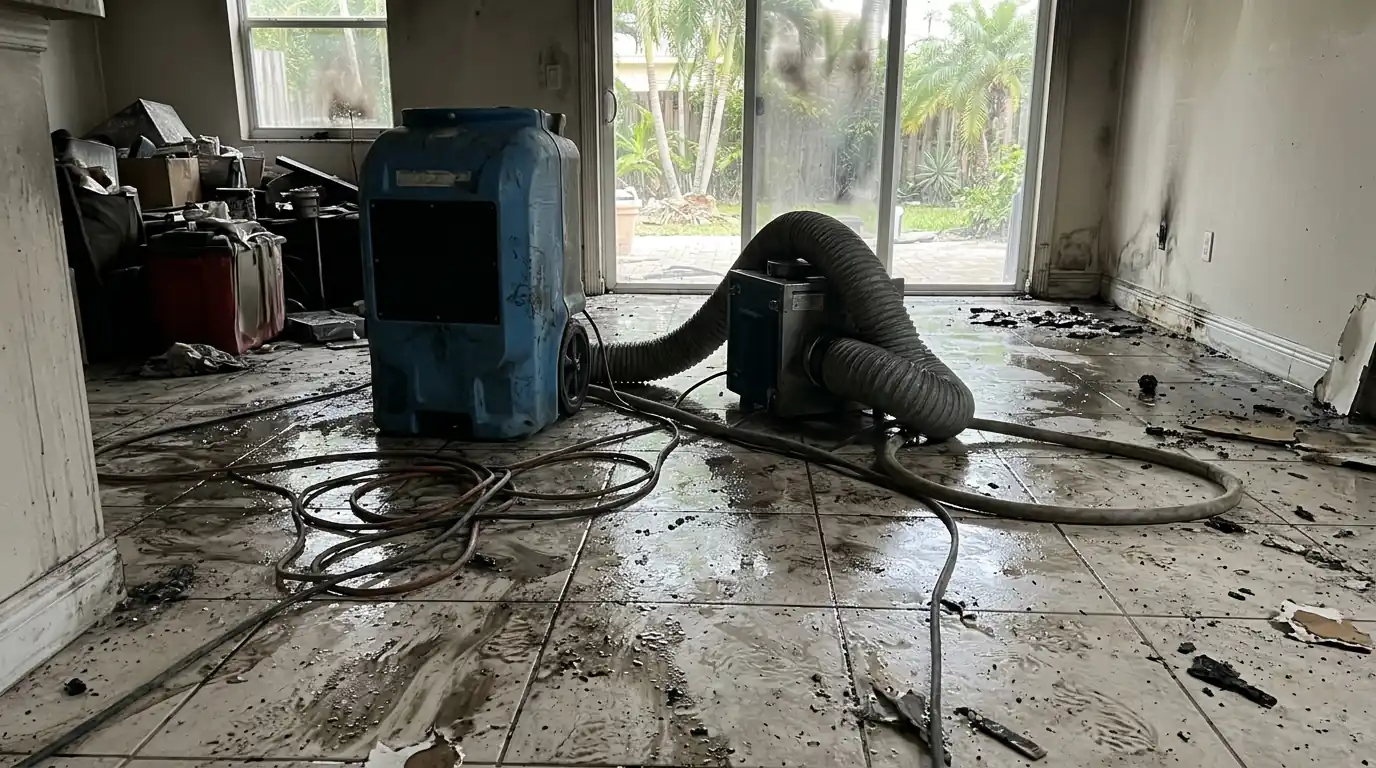
Air scrubber and dehumidifier running beside wet, soot-streaked tile floor left by fire hoses inside a Miami single-family house

What the first 48 hours look like after a house fire

The first visit is about making the home safe and stopping further loss. The crew lead walks the house with you, photographs every room before anything is touched, and marks what is structural, what can be cleaned and what is gone.

The same day, openings get plywood through our emergency board-up service, and a vented roof gets a tarp. Then hose water is extracted and drying equipment goes in, because a wet house in Miami will start growing mold long before the fire cleanup is done. EPA guidance is to dry wet building materials within 24 to 48 hours, and that clock started when the trucks left.

Why a block house still loses so much to one fire

Most Miami homes have concrete block exterior walls, so the shell usually survives. What burns and holds smoke is everything inside it: wood roof trusses, drywall, insulation, cabinets, interior doors, flooring and furniture.

Block walls also hold heat and moisture. Paint on the inside face of an exterior wall can look fine while the furring strips and drywall behind it are wet from firefighting, so we take moisture readings on every wall, not just the burned ones, before deciding where to open up.

Signs to act on

When to call about fire damage restoration

  • Windows broken or roof ventedFirefighters often break glass or cut into the roof to release heat, and those openings need plywood or a tarp before the next rain.
  • Wet drywall far from the flamesHose water runs into walls, insulation and subfloor several rooms away, and in Miami heat it starts to sour within a couple of days.
  • Gray film in untouched roomsSmoke travels down hallways and through the AC, so bedrooms with no flames still carry residue on walls, blinds and ceilings.
  • Power cut at the panelFire crews or the utility may shut off power, which means no AC, climbing indoor humidity and a refrigerator full of spoiled food.
  • Blackened trusses in the atticCharred roof framing has to be checked for strength before anyone decides whether it gets cleaned or replaced.
  • Odor that returns on hot afternoonsA smell that fades and then comes back when the house warms up means residue is still sitting in cavities, ducts or porous materials.

Condo and townhouse fires bring more people into the job

In a high-rise, smoke moves through the corridor, the trash chute room and sometimes shared ducts, so neighbors on your floor may have residue and odor even if their doors stayed shut. Water from sprinklers or hoses can also run down into the units below.

The association usually controls common areas and the building structure, while you are responsible for what is inside your walls. We keep photos, readings and scope notes separated by unit and by area so the manager, your adjuster and your neighbors' adjusters can each see their own part.

From a cleaned shell back to a finished home

Once tear-out, soot removal and deodorizing are finished, the house should smell like nothing at all. Only then do we seal the remaining framing and start reconstruction: framing repairs, insulation, drywall, cabinets, flooring and paint.

Rebuilding usually needs permits, and an older home may need some items brought up to the current Florida Building Code. We tell you early which of those are likely to come up so they are not a surprise in the middle of the job.

Throughout the work we keep a running file of photos, moisture readings and line-item scope notes that you can hand straight to your adjuster. Our claim documentation page explains what that file includes.

How the job runs

From your call to a finished room

  1. Secure the houseBoard up broken windows and doors and tarp any vented or burned roof so weather and intruders stay out.
  2. Document before touchingPhotograph and note every room, every damaged item and every moisture reading so the claim file starts complete.
  3. Remove water and start dryingExtract hose water, pull soaked carpet and pad, and set air movers and dehumidifiers that run until materials reach dry goal.
  4. Tear out what cannot be savedRemove charred drywall, insulation and framing, bagging debris so soot does not track through the clean rooms.
  5. Clean and deodorizeClean soot from every remaining surface and the ducts, then treat lingering odor in sealed cavities and framing.
  6. Rebuild and walk throughClose the walls, replace finishes and walk the house with you room by room before the job is called done.

Questions

Fire Damage Restoration questions

Can I stay in my house after a small fire?

Sometimes, if the fire stayed in one room, power has been safely restored and the smoke odor is light. If the AC spread residue through the whole house, or the power is off in the middle of summer, staying is usually miserable and not healthy. We will tell you plainly what we see on the first walkthrough.

Should I start wiping down soot before the crew arrives?

No. Wiping soot with a damp cloth or a household cleaner usually smears it deeper into paint and grout, and the wrong product can set the stain for good. Open windows if it is safe, keep people and pets out of the worst rooms, and leave the surfaces for the crew.

Do I need to call my insurance company before calling you?

You can call in either order, but report the claim promptly. Florida law requires notice of a property claim within one year of the date of loss. We do not interpret your policy or adjust the claim; we give your adjuster the documentation they ask for.

How long does a full fire restoration usually take in Miami?

A one-room fire with smoke through the house often runs from a few weeks of cleanup to a couple of months with rebuild. Attic and roof damage, permit approvals and waiting on cabinets or windows stretch that out. The restoration time estimator gives you a rough range for your situation.

What happens to the water damage from the fire hoses?

It is treated as a water loss inside the fire job. That means extraction, structural drying with daily moisture readings, and removal of wet materials that cannot dry in place, all logged alongside the fire work in the same file.

Water, smoke or storm damage right now?

Call (786) 664-2643. A person answers at any hour, asks what happened, and tells you what to do while the crew gets moving.

Call (786) 664-2643 · 24/7