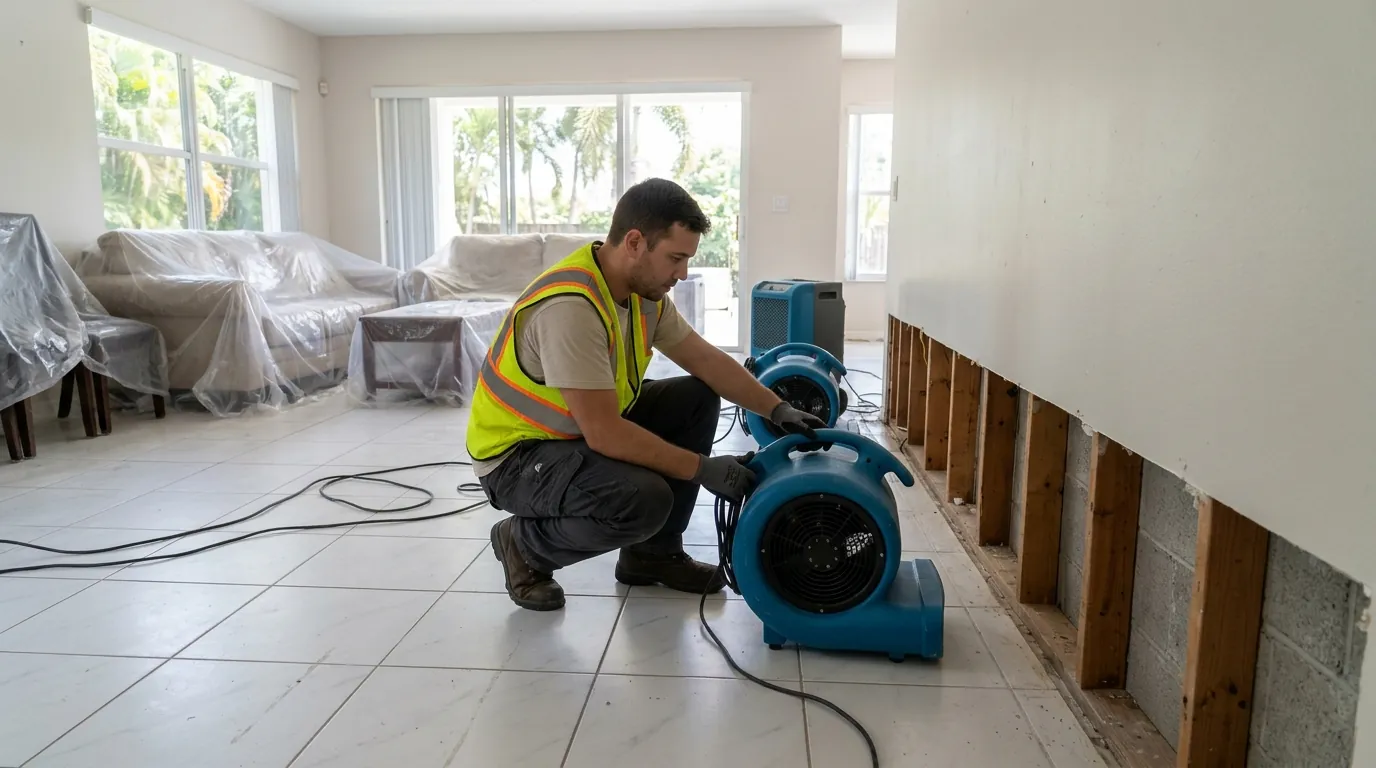
Shut off the water, move valuables off wet floors, then call a restoration crew the same day. EPA guidance says wet materials should be cleaned and dried within 24 to 48 hours to prevent mold, and in Miami's humid air that window is the one to respect. Full restoration covers extraction, drying, cleaning and the rebuild of anything removed.
Water damage restoration is the full sequence: stop the source, remove the water, dry the structure, clean what was touched, then rebuild what had to come out. Skip one, and a leak that looked handled returns as a musty closet or lifting floor.
New Kingston crews handle every stage in house, from the first extraction to the last coat of paint. That keeps one set of readings, one photo record and one point of contact from the night of the leak to the day the furniture goes back. Typical numbers are on our Miami restoration cost guide.
What category and class mean for your home
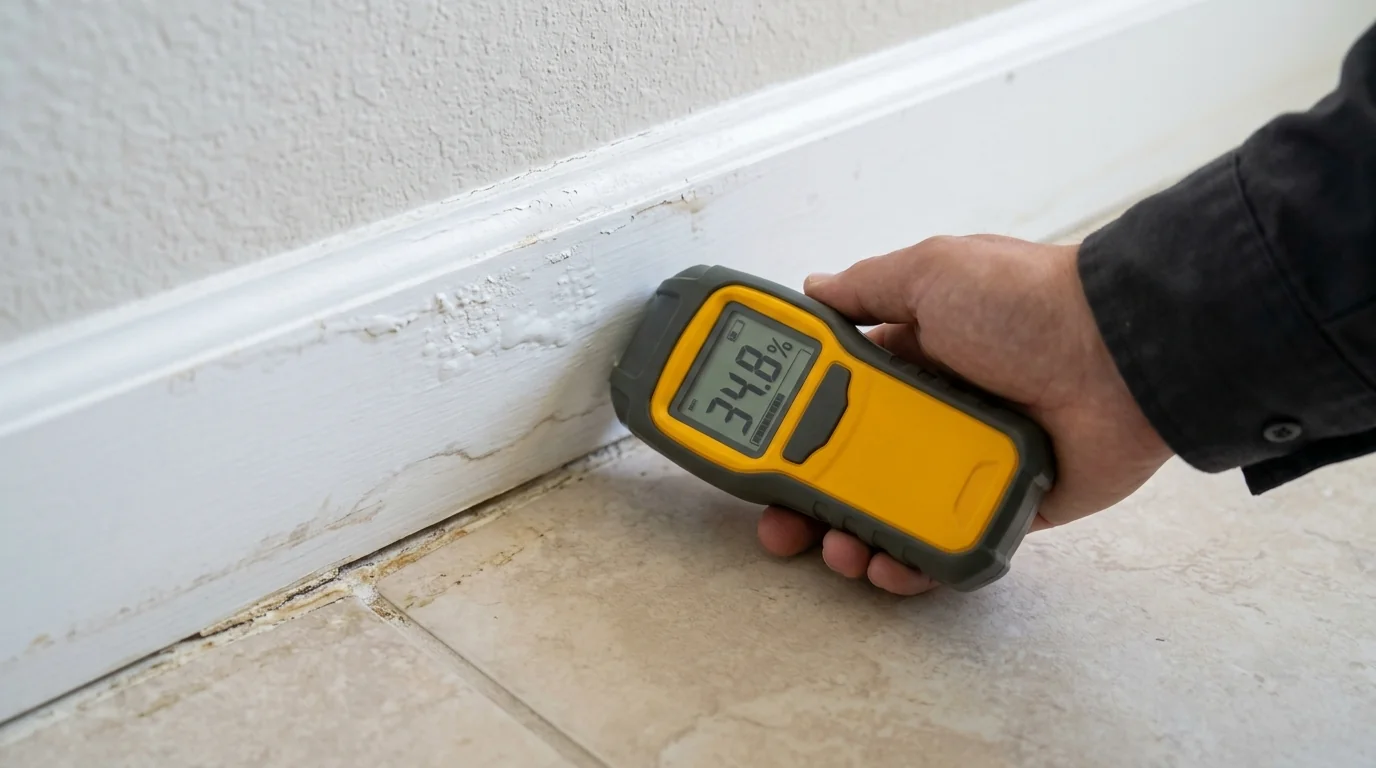
Restoration crews sort every loss by the kind of water and how far it spread. Following the IICRC S500 standard, Category 1 is clean water from a broken supply line, Category 2 is gray water such as washer discharge or AC condensate, and Category 3 is black water like sewage or rising floodwater.
Category decides what can be dried and saved. Drywall soaked by clean water can often stay in place, while drywall soaked by sewage comes out. Untreated gray water can turn into Category 3 after about 48 hours, which is one more reason not to wait for the weekend.
Class describes the drying load. Class 1 touches under 5% of surfaces, Class 2 roughly 5 to 40%, Class 3 more than 40% with saturated walls, and Class 4 covers dense materials like plaster and concrete, which Miami homes have plenty of.
Why Miami houses hold water differently
Most homes here sit on a concrete slab with tile on top and no basement or crawl space below. Water spreads sideways across the slab, slips under baseboards and into the bottom of the walls, and stays there because the concrete gives it up slowly.
Older CBS block houses add another layer. Many have plaster or drywall fastened to wood furring strips over the block, which creates a thin cavity where water hides and the strips start to rot. FIU research found about 70% of Miami-Dade housing was built before 1990, so a lot of homes have this construction and aging plumbing to match.
Then there is the air. At about 84% morning humidity, a room left to dry on its own barely moves, so structural drying with dehumidifiers does the real work.