Skip to content
Water, fire, storm and mold calls answered 24/7 across Miami-Dade and Broward(786) 664-2643
New KingstonWater & Restoration · Miami(786) 664-2643Answered 24/7
Supply line failure

Burst pipe cleanup in Miami

In Miami pipes rarely burst from freezing; they fail from age, corrosion and pressure, and a supply line under full pressure can put a lot of water across a slab floor before anyone finds the shutoff.

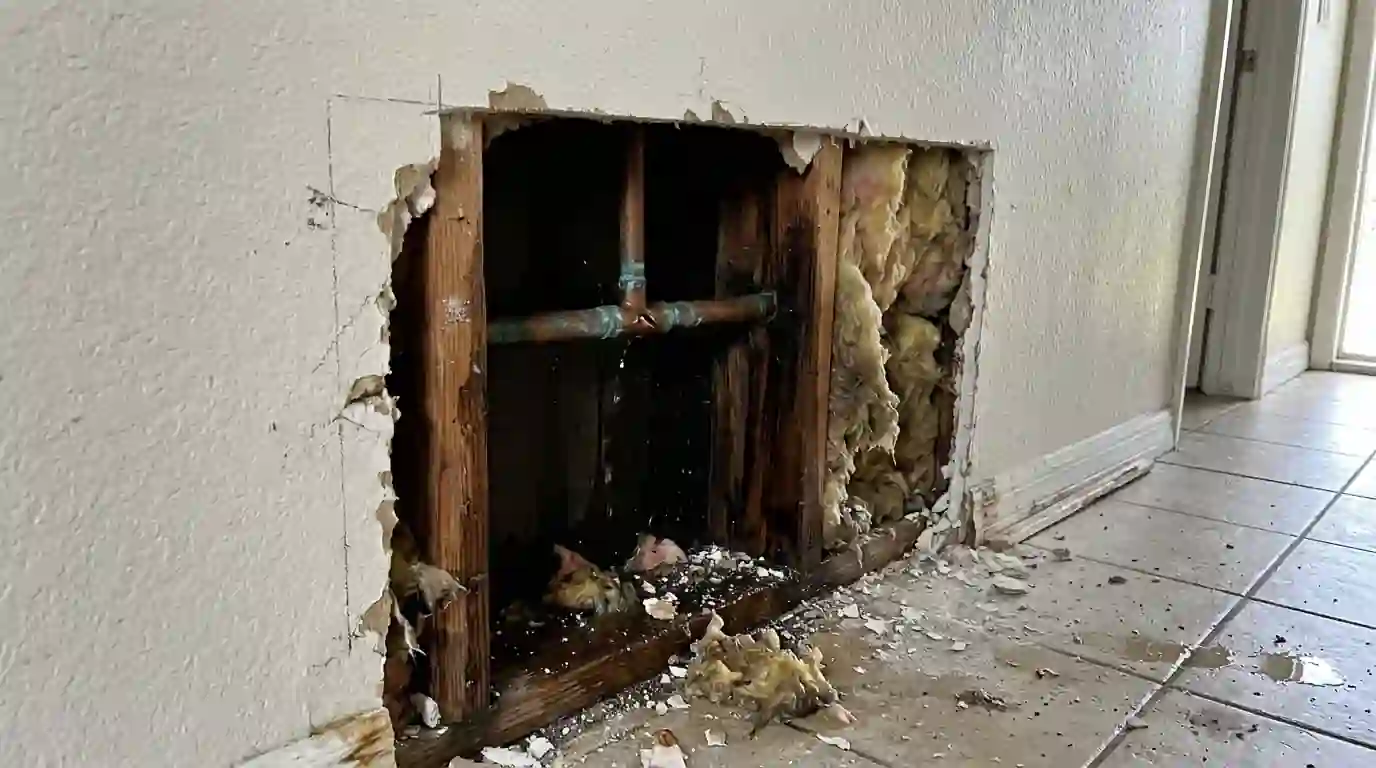
Open drywall section exposing a split copper supply pipe and wet wood framing inside a Miami home hallway wall
Quick answer

Close the main water valve, then call a plumber to repair the pipe and a restoration crew to handle the water. Clean supply water lets more drywall and cabinets be dried in place, as long as extraction and drying start quickly. The crew opens only what is needed to reach the wet cavity around the break and dries the rest where it stands.

A burst pipe is any pressurized supply line that splits, cracks or blows a fitting: the line to a toilet, a hot line inside a wall, a copper pipe with a pinhole that finally gave out. Because supply water is under pressure, it does not drip; it runs until someone closes a valve.

The good news is that supply water starts out clean, Category 1 under the IICRC S500 standard, so more of your home can usually be dried and kept. The catch is speed, because clean water does not stay clean for long in a warm, humid house.
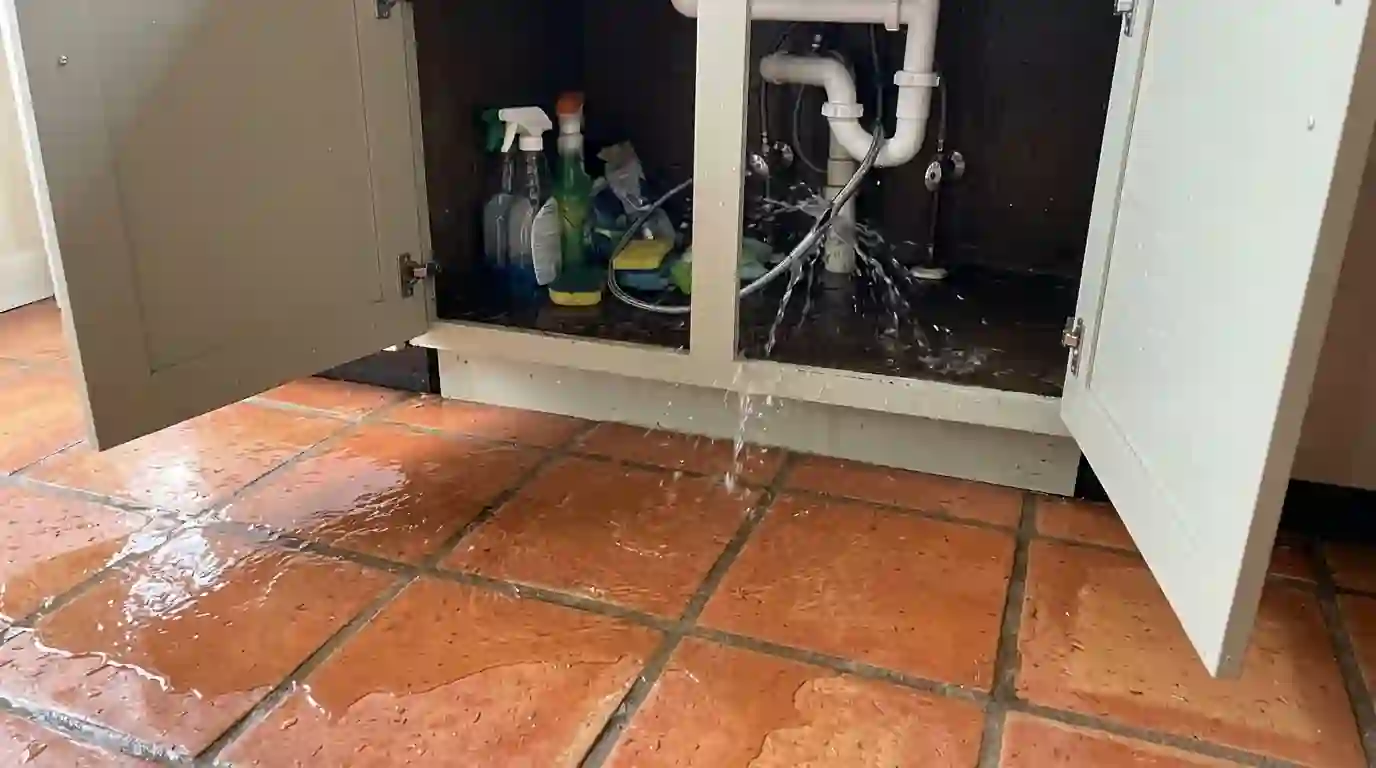
Water spread across terracotta tile in front of a kitchen sink cabinet with a burst braided supply line underneath

Why pipes fail in South Florida homes

Freezing is almost never the cause here. Instead, galvanized steel lines in older homes rust from the inside, copper can develop pinholes over time, and the plastic supply lines and braided connectors under sinks and toilets wear out at the crimp.

FIU research found roughly 70% of Miami-Dade housing was built before 1990 and more than a third was 50 or more years old. That adds up to a lot of original plumbing, patched in places, with valves and fittings that have held pressure for decades.

High water pressure makes every weak point worse. If several lines have failed in the same house, ask your plumber to check the pressure at the main.

Finding and closing your main valve

Know where your main shutoff is before you need it. In many single-family homes it sits in a box near the front of the lot by the meter, or on the wall where the line enters the house or garage. Condo units usually have a shutoff inside the unit, often in a utility closet or near the water heater.

Turn the valve fully and confirm by opening a faucet. If the valve is stuck, do not force it with a wrench until it snaps. Call your plumber and the crew, and keep soaking up water while you wait; emergency water extraction takes over when the van arrives.

Signs to act on

When to call about burst pipe cleanup

  • Hissing inside a wallA steady hiss or rushing sound with every fixture off is water escaping from a pressurized line.
  • Pressure drops at every tapWeak flow everywhere at once can mean a major line is leaking somewhere in the house.
  • A wet band on drywallA damp stripe running up or across a wall often follows the path of the pipe inside it.
  • Water at the garage wallMany Miami homes bring the main line in through the garage, so water on that wall or floor needs a look.
  • Green or white crust on fittingsCorrosion deposits on exposed copper or galvanized joints show where a fitting is close to failing.
  • Rusty water from the faucetBrown water in an older house can come from galvanized pipes that are thinning from the inside.

Opening walls only where the water went

A supply break inside a wall soaks the cavity around it and runs down to the bottom plate and the slab. The crew uses moisture meters and thermal imaging to find the wet zone, then opens a section large enough for the plumber to reach the line and for air to reach the framing.

Clean water means the rest of the wall can often stay. Holes behind removed baseboards let the crew dry the lower cavity without a full flood cut. When the break was on a hot line, expect more vapor and condensation inside the cavity, which the drying setup accounts for.

After drying, drywall replacement closes the access opening and interior painting blends it into the rest of the wall.

Keep the clock in mind

Clean water picks up contamination as it sits in wall cavities and on dusty surfaces, so a clean-water loss left alone for days may end up handled like gray water. In Miami's warmth that shift comes sooner than most people expect.

EPA guidance is to dry wet materials within 24 to 48 hours to prevent mold. That is the target for extraction and drying after any burst pipe, and it is why the first call matters more than the cleanup itself.

  • Close the main or the local valve
  • Photograph the water and the broken pipe before the repair
  • Keep the failed fitting or pipe piece for your adjuster
  • Move rugs and furniture off the wet floor

How the job runs

From your call to a finished room

  1. Confirm the shutoffThe crew checks that the main or local valve is closed and the line is no longer feeding the break.
  2. Extract the spillStanding water is pulled off tile and carpet, including the space under cabinets near the break.
  3. Follow the water inside the wallMeters and thermal imaging track moisture through the wall cavity and along the slab.
  4. Open access for the plumberA clean section of drywall comes out so your plumber can reach the damaged pipe.
  5. Dry the structureAir movers and dehumidifiers run with daily readings until framing and drywall reach dry goal.
  6. Close it upOnce the plumbing is repaired, the opening is patched, textured and painted to match.

Questions

Burst Pipe Cleanup questions

Does the restoration crew fix the broken pipe as well?

The pipe itself is repaired by your plumber. The restoration crew handles the water, the drying and the rebuild of the drywall, cabinets and floors around it, and can open the wall in the right spot so the plumber reaches the line quickly.

Should I keep the section of pipe that failed?

Yes. Ask the plumber to hand you the broken fitting, connector or pipe section and store it in a bag marked with the date. It shows the cause of the loss, and your adjuster may want to see it.

Is a burst hot water line worse than a cold one?

A hot line releases more vapor into the wall cavity, which can push moisture higher and into insulation. Warm, wet cavities also favor mold if drying is delayed. The drying plan is set up for both of those effects.

My house still has galvanized pipes. Should I expect more breaks?

Galvanized steel corrodes from the inside, so when one section fails, nearby sections are often in similar shape. Talk with your plumber about whether a repipe makes sense, especially if this is not the first leak.

Can a wall be dried after a pipe break without cutting it open?

Sometimes. If the break was small and caught fast, drying through holes behind the baseboards may be enough. If the plumber needs access to repair the line, that opening also becomes the main drying path.

Water, smoke or storm damage right now?

Call (786) 664-2643. A person answers at any hour, asks what happened, and tells you what to do while the crew gets moving.

Call (786) 664-2643 · 24/7